
La demanda de IA sigue siendo fuerte, ASML prevé una tasa de crecimiento promedio de ventas del 8%-14% en los próximos cinco años

 Al mismo tiempo, ASML también estableció su propio objetivo: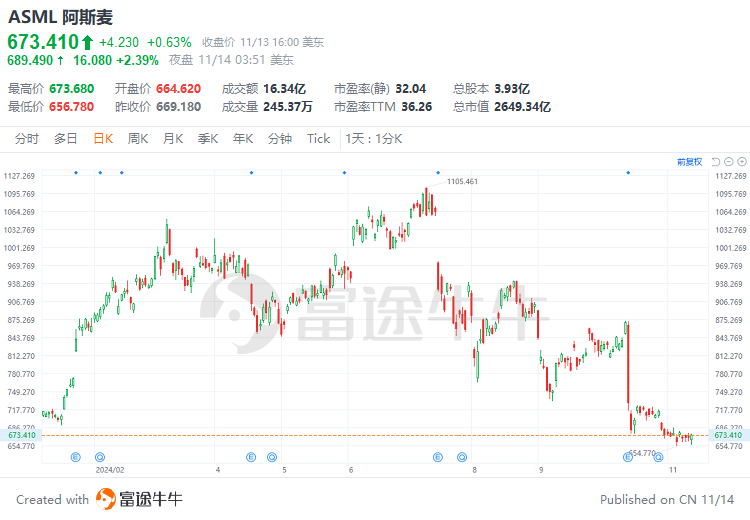
Source: Wall Street See
ASML reiterated its long-term growth prospects, announcing its sales target to reach 44 billion to 60 billion euros by 2030 unchanged, and committing to increasing dividends and share buybacks.
On Thursday, the Netherlands $ASML Holding (ASML.US)$ company reiterated its long-term growth prospects at the Investor Day, expecting global semiconductor sales to exceed $1 trillion by 2030, with a compound annual growth rate of about 9% from 2025 to 2030.
 At the same time, ASML has set its own target: keeping the sales target unchanged at €44 billion to €60 billion by 2030, with a gross margin of about 56% to 60% at that time. It is expected that in the next five years, the average sales growth rate will be between 8% and 14%, and a commitment to increase dividends and share buybacks.
Benefiting from the vigorous development of AI, the market has increased its strong demand for ASML's most advanced lithography machines.
ASML, as the world's only lithography machine manufacturer, holds a significant position in the semiconductor supply chain. Its lithography machines are essential tools for manufacturing advanced chips, used by apple, $NVIDIA (NVDA.US)$ Wait for the company's AI accelerator to provide support.
Therefore, ASML's performance is often seen as a benchmark for the entire semiconductor industry, and its long-term growth prospects also reflect the increasing global demand for advanced chips.
ASML's Chief Financial Officer, Roger Dassen, stated:
"We have reaffirmed our capital allocation strategy and expect to continue returning significant cash to shareholders through a combination of increasing dividends and share buybacks."
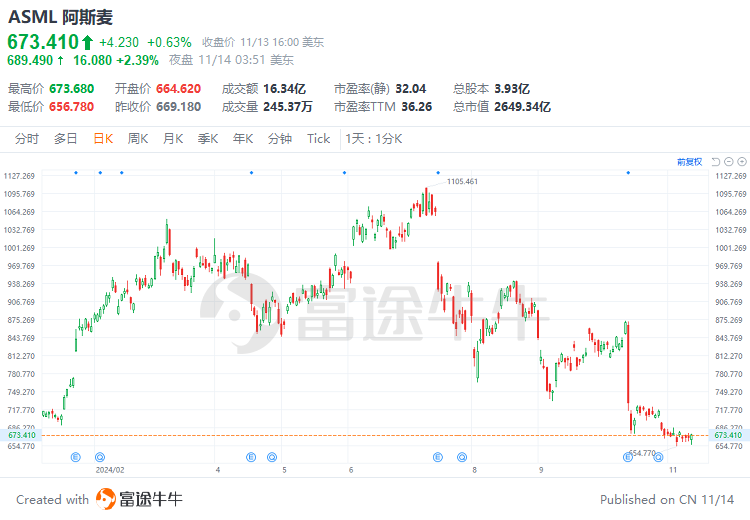
In October this year, ASML's third-quarter performance was disappointing, with orders only half of market expectations, causing the stock price to plummet by 17% on the same day. So far this year, the company's stock price has fallen by more than 5%.
The third-quarter financial report shows that China's sales were 2.79 billion euros, accounting for nearly half of ASML's total sales. The company expects that next year, Chinese sales will represent around 20% of total revenue.
Company CEO Christophe Fouquet previously stated in October that the slow recovery of the chip market will continue 'until 2025'. However, next year and 2026 will be the 'years of overall growth' for the industry and ASML.
Editor / jayden
Descargo de responsabilidad: El contenido de este artículo refleja únicamente la opinión del autor y no representa en modo alguno a la plataforma. Este artículo no se pretende servir de referencia para tomar decisiones de inversión.
También te puede gustar
Las historias de rentabilidad bruta de las empresas de aplicaciones de IA pasan su primer "chequeo médico": Canva reduce intencionalmente su crecimiento, Figma asume los costos de inferencia
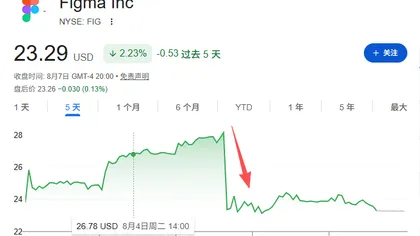
La experiencia de Canva y Figma revela una dificultad común entre las empresas de aplicaciones de IA: los altos costos de inferencia están erosionando seriamente el margen bruto y perjudicando la economía unitaria. Para controlar los costos, Canva ha decidido ralentizar la implementación de la IA, lo cual llevó a una desaceleración en sus ingresos; Figma, por su parte, sufrió una caída en el valor de sus acciones debido a que asumió los costos de las pruebas gratuitas de IA. Ambas compañías esperan romper este cuello de botella desarrollando sus propios modelos, aunque el camino hacia la rentabilidad de la IA aún necesita tiempo para ser comprobado.
Datos de empleo de EE.UU. en julio generan incertidumbre: menos puestos de trabajo, menor desempleo, ¿qué opinan los analistas de Wall Street?
Se publicó el informe de empleo no agrícola de Estados Unidos correspondiente a julio, y los datos presentan señales contradictorias, lo que genera confusión entre los inversores sobre la verdadera situación del mercado laboral.

Nvidia pone la mira en la empresa eléctrica detrás de la "Puerta Estelar" de OpenAI e invierte directamente 3.000 millones de dólares
Según informes, Nvidia planea invertir hasta 3 mil millones de dólares en la empresa de infraestructura eléctrica Lancium (con una inversión inicial de 2 mil millones de dólares, obteniendo aproximadamente el 20% de las acciones, y al sumar inversiones adicionales, llegando al 30%). Lancium es la proveedora de energía del parque de inteligencia artificial "Stargate" de OpenAI y ya ha asegurado 4 gigavatios de recursos eléctricos en Texas.
Precios de las criptos
Más


