
Lessons from History: Interest Rate Decisions of the European Central Bank and the Federal Reserve

Huitong Network, September 8—— When will the Federal Reserve start cutting rates? And when a rate cut finally arrives, how precarious will Trump's political standing become? In the next few months, these are two intriguing questions confronting both Europe and the United States.
Monetary policymakers at the Fed and the European Central Bank are about to make milestone decisions on September interest rates, and they should draw lessons from an intriguing historical event.
Forty-five and a half years ago, a newly appointed central bank governor faced the daunting dilemma of monetary governance. He refused to cut rates, incurring the wrath of his former benefactor—now the nation's top leader—who had once helped advance his career.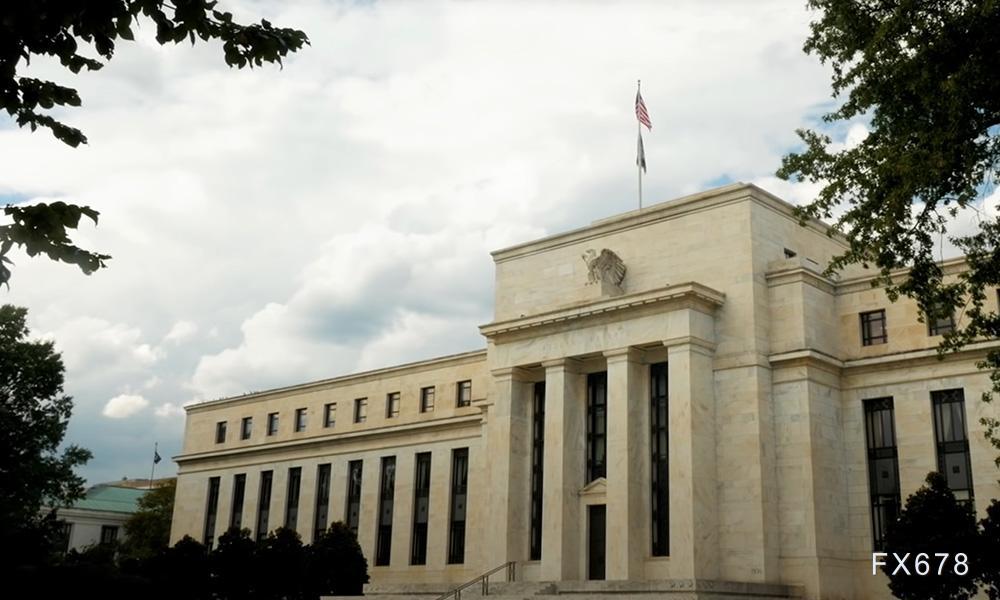
A financial storm swept across the Atlantic, forcing the new governor to implement tight monetary policy, which exacerbated the economic predicament and ultimately brought about the political downfall of his onetime patron.
On one side stands Donald Trump and the newly installed Fed Chair Kevin Warsh; on the other, West German Chancellor Helmut Schmidt and Bundesbank President Karl Otto Pöhl. The historical parallels between these two pairs are striking.
In 1981-1982, the global shockwaves from the monetary tightening begun at the end of the 1970s by Fed Chair Paul Volcker swept the world. At the time, Pöhl had served as State Secretary at the Finance Ministry under Schmidt’s ministry.
In 1977, Schmidt promoted his trusted confidant to Vice President of the Bundesbank, and in January 1980, Pöhl officially assumed the presidency. Facing a sharp depreciation of the Deutsche Mark against the US dollar, Pöhl, aided by his resolute deputy Helmut Schlesinger, had no choice but to maintain an extremely tight monetary environment. Even with public pressure from Schmidt and French Prime Minister Raymond Barre, he remained unmoved.
By 2026, although Europe finds itself geopolitically weaker, the causality seems to have reversed. On September 9-10, the ECB's Governing Council will meet in Berlin. With inflation fueled by ongoing US-Israel-Iran conflicts, the market expects the ECB to raise the deposit rate from 2.25% by 0.25 percentage points.
On September 15-16, the Federal Open Market Committee (FOMC) will meet in Washington to discuss raising the federal funds rate from the current 3.50% target range to 3.75%. Following Chair Warsh’s more hawkish stance at the Jackson Hole annual conference, the likelihood of another Fed rate hike has increased. Such an outcome is one Trump would hardly welcome.
The actions of the ECB are naturally not the core reason for whether the Fed will hike rates. But if the world’s second largest central bank takes the lead in making such a well-communicated, yet politically costly tightening decision, it will at least psychologically impact some FOMC members.
When deciding whether to hike rates, the Eurozone’s two core countries, Germany and France, are both mired in political turmoil. German Chancellor Friedrich Merz faces a tough local election test on September 6, while French President Emmanuel Macron is soon to exit the stage, with current polls showing populist left or right-wing candidates in the lead for the French presidential elections in April 2027.
Trump has always publicly criticized former Fed Chair Jerome Powell (still serving as a Fed Governor) for refusing to cut rates and for his unwillingness to cooperate with the President's demand to lower the government’s debt interest costs. (Trump has deliberately ignored an obvious reality: allowing inflation to rise actually drives up, rather than reduces, long-term borrowing costs).
In May 2026, Trump appointed Warsh as Fed Chair. Warsh had previously served on the Fed Board of Governors from 2006 to 2011. Part of Trump’s rationale for the appointment was his belief that the new chair would be more dovish than his predecessor. But last month, Warsh reiterated that the Fed would resolutely fight inflation, a stance clearly unwelcome in the White House.
Reports suggest Warsh “will do what he has to do.” If the Fed chooses to hike rates on September 15, Trump may react more cautiously than during the Powell era. But for the President—facing upcoming midterm elections in November and a series of credibility challenges—a rate hike remains bad news.
It is not uncommon for political appointees to diverge from their patrons after assuming leadership roles at central banks. Bank governors of all stripes have faced varied pressures, and this tradition of independence has been inherited by the European Central Bank.
To describe this institutional independence, Bundesbank insiders, with a sense of history, cite the story of England’s King Henry II. The analogy was first used by then-Bundesbank Council member Otmar Issing in 1992, who later joined the ECB in the same capacity. In 1162, Henry II’s chancellor, Thomas Becket, was appointed Archbishop of Canterbury, and then came into conflict with the king; in 1170, Becket was assassinated—a tragedy dramatized by T.S. Eliot in “Murder in the Cathedral.”
This phenomenon—where officials favored by those in power turn to monetary orthodoxy upon taking over central banks, setting themselves against their erstwhile sponsors—has come to be called “the Becket effect” by scholars. Between 1981-1982, this effect was on full display. Germany had implemented a series of sharp rate hikes; faced with continued Mark weakness, Pöhl—promoted by Schmidt—led the Bundesbank in suspending standard credit facilities to commercial banks, pushing money market rates up to 30% in 1981.
The Bundesbank’s tight money policy had significant political consequences. In the May 1981 French presidential election, Mitterrand emerged victorious. On the eve of the election, French Prime Minister Raymond Barre wrote to Schmidt, urging the Bundesbank to cut rates.
“I believe that a return to more moderate interest rates would greatly aid the German economic recovery and benefit other countries as well.”
Schmidt seized the moment, forwarding a copy of Barre’s letter to the Bundesbank in Frankfurt as a way to pressure Pöhl and Schlesinger.
After discussions with the Bundesbank board, Pöhl and Schlesinger wrote back to Schmidt, directly rejecting the call for rate cuts. Ironically, Schmidt—in his early years—had been a key advocate of US monetary tightening, only to become its political casualty in the end.
In his final weeks in office, Schmidt tirelessly but futilely lobbied the Bundesbank to ease credit conditions. Unpublished historical material reveals that Pöhl and Schlesinger even secretly visited Schmidt at his private residence in Langenhorn, on the outskirts of Hamburg. Schmidt pleaded for rate cuts, but the central bankers were only willing to make technical adjustments, such as lowering minimum reserve requirements for banks—far from the solution the embattled Chancellor wanted.
The decisive Bundestag debate in October 1982 marked the end of the Schmidt government, following a no-confidence vote that brought the Christian Democrat Helmut Kohl to power. During the debate, Schmidt admitted that his once-harmonious relationship with the central bank had broken down completely.
He called on the Bundesbank: “You must make a decisive contribution to lowering rates to stimulate investment,” warning, “I want to caution you about the consequences of deflation!”
The Bundesbank did not slash rates until the summer of 1983—by which time Schmidt was long out of office.
When will the Fed start cutting rates? And as those rate cuts arrive, how precarious will Trump’s political situation become? In the coming months, these intriguing questions will confront both Europe and the United States.
Disclaimer: The content of this article solely reflects the author's opinion and does not represent the platform in any capacity. This article is not intended to serve as a reference for making investment decisions.
You may also like
Advanced Micro Devices Stock Faces Crossroads as Data Center Revenue Jumps 50%
Palantir Taps Nebius as Preferred Partner for Sovereign AI Infrastructure
XLM defends major moving averages as buying pressure builds
High oil prices and AI trading retreat hit together! The US stock industrial sector is undergoing a momentum liquidation
Over the past three weeks, the previously surging U.S. industrial stocks have suddenly experienced a momentum reversal, leading some investors to expect greater pressure in the market going forward.

Crypto prices
More


