

The European Central Bank (ECB) is advancing plans to launch a tokenized euro, aiming to provide regulated blockchain markets with a direct central bank settlement asset. Executive Board member Isabel Schnabel outlined the ECB’s approach at the recent Jackson Hole conference, emphasizing that the initiative targets wholesale money used by banks and financial institutions rather than retail consumers.
ECB to launch tokenized euro for institutional markets in September
By:Cointurk
Bitget offers one-stop trading for cryptocurrencies, stocks, and gold. Trade now!
A welcome pack worth 6200 USDT for new users! Sign up now!
ECB aims for programmable wholesale cash
Schnabel described the tokenized euro as a programmable reserve directly issued by the ECB, designed to anchor new blockchain-based financial markets within Europe. She made clear that the project will not initially serve retail users, distinguishing it from the separate digital euro initiative aimed at the public.
This strategy signals a shift for institutional settlement in Europe, where ECB-issued digital cash could become the foundation for regulated securities transactions. Despite this, stablecoins are expected to continue serving roles in areas such as payments, trading, and international transfers.
Pontes project set for September launch
The ECB’s Pontes project is scheduled to launch in September, connecting market distributed ledger technology (DLT) platforms with TARGET Services, the Eurosystem’s financial infrastructure. The project will first cater to institutional participants, enabling securities settlement linked to central bank money before evolving to on-chain finality.
ETH
SOL
BSC
ROBINHOOD
PAY
USDT
RECEIVE
AAPL
Participants will be able to choose between settling transactions using cash tokens on a Eurosystem ledger or completing settlement within T2, the eurozone’s real-time gross settlement system. The Pontes design includes Hash-Link technology for synchronized delivery-versus-payment transactions. Planned upgrades will incorporate smart contracts, continuous processing, and enable full legal finality on the Eurosystem blockchain platform.
Mini dictionary: Pontes, the Eurosystem’s settlement project, will initially connect market DLT platforms to the ECB’s TARGET Services, ultimately aiming to enable programmable and atomic settlement in central bank money.
Isabel Schnabel questioned stablecoins’ resilience during moments of market stress, noting that stablecoin issuers cannot create new liquidity instantly as only central banks can. She referenced the 1907 US banking panic, illustrating the need for an elastic public backstop.
The ECB recently completed a pilot phase between May and November 2024, involving 64 institutions from nine countries and settling nearly €1.6 billion in central bank money using blockchain infrastructure. This experiment tested both payment and securities settlement use cases for the tokenized euro, according to ECB findings.
Pontes targets financial institutions and licensed market operators, offering programmable cash but not extending to individuals or non-compliant tokens. Its staged development suggests that the retail digital euro and tokenized euro will operate as separate solutions.
Impact on stablecoins and future roadmap
Current data from DeFiLlama estimates the total stablecoin market at approximately $304.6 billion, with dollar-denominated tokens holding a dominant share. Euro-pegged stablecoins, by comparison, account for less than $1 billion in circulation, highlighting Europe’s reliance on dollar-based liquidity for blockchain applications.
Stablecoin Market Global Total Dollar-Pegged Euro-Pegged
| Supply | $304.6 billion | Majority | Below $1 billion |
By offering settlement in ECB-issued digital money, the tokenized euro could appeal to institutional platforms seeking reduced counterparty and operational risk. Even so, Schnabel positioned stablecoins as useful complements to central bank money, particularly in providing liquidity, wallet transfers, remittances, and decentralized market access. The Markets in Crypto-Assets (MiCA) regulation gives compliant stablecoin issuers a framework for continuing payment services in the EU.
Looking ahead, Appia will determine the final architecture for the ECB’s digital solutions by 2028. Three alternatives are under consideration: one unified ledger, a central bank ledger linked to private blockchains, or multiple interoperable ledgers.
France’s Lise platform, recognized as Europe’s first licensed fully tokenized financial exchange, demonstrates the potential benefits of public infrastructure. Still, ECB officials believe that specialized private money will retain a role in technology-driven financial markets, even as the public sector strengthens settlement safeguards.
Appia’s ongoing review will weigh the tradeoffs between liquidity, resilience, governance, competition, and technical centralization, seeking to balance institutional needs and ensure system robustness.
0
0
Disclaimer: The content of this article solely reflects the author's opinion and does not represent the platform in any capacity. This article is not intended to serve as a reference for making investment decisions.
Understand the market, then trade.
Bitget offers one-stop trading for cryptocurrencies, stocks, and gold.
Trade now!
You may also like
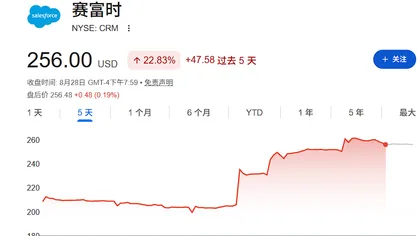
Using Salesforce as an Example, AI is Changing Software “Pricing Models”
华尔街见闻•2026/08/31 01:20
Nvidia and SpaceX Form a "Match Made in Heaven"! Rubin Computing Power Flies into Space Orbit, Musk Anchors SpaceX's Valuation to Kardashev Type II Civilization
In a parallel universe, Nvidia CEO Jensen Huang and "Mr. Everything" and the world's richest man, Elon Musk, might be a pair of cosmic superheroes.
智通财经•2026/08/31 01:06

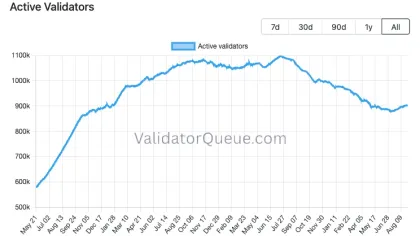
Why Ethereum’s exit queue hitting 0 may not be a good sign – Yet
AMBCrypto•2026/08/31 01:03
Crypto prices
More
Bitcoin
BTC
$77,756.73
-0.38%

Ethereum
ETH
$2,418.79
-1.53%

Tether USDt
USDT
$0.9999
-0.01%

BNB
BNB
$684.1
-1.18%

XRP
XRP
$1.35
-2.78%

USDC
USDC
$1.0000
-0.01%

Solana
SOL
$101.9
-3.18%

TRON
TRX
$0.3362
-1.29%

Hyperliquid
HYPE
$80.13
-3.75%

Zcash
ZEC
$835.09
-0.13%
How to buy BTC
Bitget lists BTC – Buy or sell BTC quickly on Bitget!
Trade now
Become a trader now?A welcome pack worth 6200 USDT for new users!
Sign up now