
Yen breaks 160 again! Besant speaks out: Yen is "under control," Bank of Japan "will do the right thing," and "Abenomics" has come to an end

The strengthening US dollar has once again pushed the yen past the 160 threshold, fueling market expectations of intervention. US Treasury Secretary Yellen has voiced her stance on the matter.
On Monday, the yen fell to 160.11, triggering widespread speculation about another round of coordinated intervention by the US and Japan. In an interview with Reuters on Sunday, Yellen stated that the recent movement of the yen “has been largely under control” and is not the sort of “disorderly” behavior that previously triggered intervention. She also said she expects Bank of Japan Governor Kazuo Ueda to “do the right thing” on monetary policy and plans to meet with him during the G20 finance ministers’ meeting this week.
Yellen’s comments have to some extent eased market expectations for immediate intervention, but she also sent a deeper policy signal—she clearly indicated that the era of “Abenomics” in Japan is over, and the Japanese economy is shifting to a new, more market-oriented stage.
Yen Breaks 160 Again, Yellen Says Yen’s Movement “Under Control”
The yen has once again fallen below the 160 threshold, widely viewed by the market as the intervention warning line. The direct trigger for this round of depreciation was the Federal Reserve’s hawkish remarks, with Chair Powell reiterating the commitment to the inflation target, boosting the US dollar.
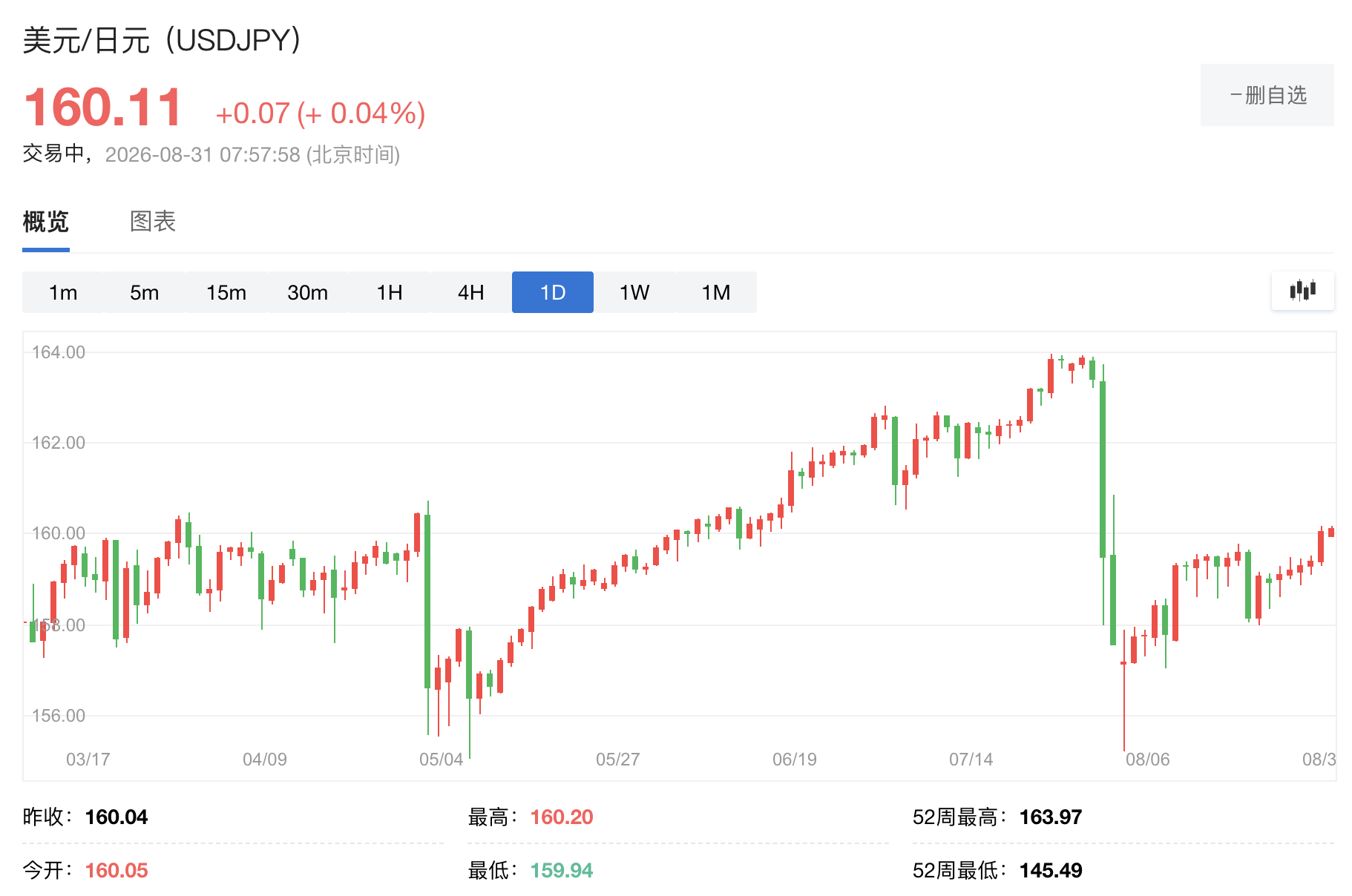
The 160 level holds significant psychological weight in the market. Just last month, the US and Japan conducted a rare coordinated yen-buying intervention to prevent the sell-off in the yen and Japanese government bonds from spreading globally. With the yen once again nearing and falling below this level, there is naturally heightened market attention to whether authorities might intervene anew.
However, analysts point out that the root of this round of yen weakness lies in the strengthening US dollar and expectations of rising US interest rates, rather than domestic Japanese factors, which may lead authorities to take a wait-and-see approach on intervention.
Facing speculation about intervention, Yellen clarified in her Reuters interview that the current movement of the yen is “to a fair extent under control,” different from the “disorderly” episode that triggered joint intervention last month. This statement signals to the market that the US and Japan currently do not believe the yen’s depreciation warrants immediate action.
Yellen: Bank of Japan “Will Do the Right Thing”
Yellen also disclosed plans to hold a bilateral meeting with Ueda during the two-day G20 Finance Ministers and Central Bank Governors meeting in Asheville, North Carolina, this week.
Yellen spoke highly of Ueda, saying, “I've known him for 15 years, he’s an outstanding economist, and the market underestimates his acumen.”
It is worth noting that Yellen has previously publicly urged the Bank of Japan numerous times to raise rates to address inflation and yen depreciation, and these remarks have nearly fully priced in the possibility of a rate hike at the September policy meeting.
Ahead of this G20 meeting, Yellen also made a public defense of last month’s coordinated intervention. She reportedly sent a letter to Democratic Senator Elizabeth Warren, explaining the US’s rationale for participating in yen intervention.
Yellen pointed out in the letter that disorderly yen depreciation could force Japan to passively sell US Treasury bonds, ultimately raising borrowing costs for American households and businesses. This clearly articulates the US interest in participating in intervention—stabilizing the yen ultimately stabilizes the US Treasury market.
End of “Abenomics,” Start of “Takaichi-nomics”
Another important signal from Yellen’s interview was her assessment of changes to the Japanese economic policy framework. She said Japan has “conquered” deflation, and the “Abenomics” re-inflation framework—centered on aggressive monetary easing, fiscal expansion, and structural reform—has reached its historical end.
“I think we’ve probably reached the end of Abenomics, which was a reflation plan,” Yellen said.
She added that Japan, under Prime Minister Sanae Takaichi, is transitioning to “Takaichi-nomics,” a new framework that is more shareholder-friendly and notably liberalizes labor market regulations, with less government intervention.
Yellen’s advice for Japanese fiscal policy was concise: “I think they should sit back, enjoy the fruits of Abenomics, and let it play out naturally.”
On monetary policy, while Yellen stopped short of giving direct instructions for aggressive rate hikes by the Bank of Japan, her wording reflected trust and expectation for Ueda: “I won’t tell them what to do, but I truly believe Governor Ueda, with Prime Minister Takaichi’s support, will do the right thing.”
Disclaimer: The content of this article solely reflects the author's opinion and does not represent the platform in any capacity. This article is not intended to serve as a reference for making investment decisions.
You may also like

Taking Salesforce as an Example, AI is Changing Software “Pricing Models”
Salesforce allows customers to pay based on business outcomes—not just measured tasks, but for example, "if we help you earn $20, we only charge $2." OpenAI, Sierra, and others are also following this "pay after task completion" model. However, outcome-based pricing carries attribution risks: should results be credited to AI or to marketing? This pricing experiment will determine whether established software giants can reinvent themselves amidst the AI wave.
Using Salesforce as an Example, AI is Changing Software “Pricing Models”
Nvidia and SpaceX Form a "Match Made in Heaven"! Rubin Computing Power Flies into Space Orbit, Musk Anchors SpaceX's Valuation to Kardashev Type II Civilization
In a parallel universe, Nvidia CEO Jensen Huang and "Mr. Everything" and the world's richest man, Elon Musk, might be a pair of cosmic superheroes.

Crypto prices
More


