

The chief investment officer at Franklin Crypto, Seth Ginns, has voiced strong opposition to the proposed reduction in Ethereum’s staking rewards, arguing that the network does not face an urgent issue that would justify such a move.
Franklin Crypto CIO opposes EIP-8363, warns against rush to slash Ethereum staking rewards
By:Cointurk
Bitget offers one-stop trading for cryptocurrencies, stocks, and gold. Trade now!
A welcome pack worth 6200 USDT for new users! Sign up now!
ETH
SOL
BSC
ROBINHOOD
PAY
USDT
RECEIVE
AAPL
Pushback against EIP-8363
Arguments for and against the proposal
Broader resistance within the Ethereum community
Pushback against EIP-8363
During an episode of the Bits + Bips show, Ginns directly addressed EIP-8363, also called the “Tapered Issuance Burn.” He described the proposal as a “solution looking for a problem” and questioned the necessity of the changes at this time. Ginns emphasized that he did not view the concerns behind the proposal as urgent and cautioned against implementing major economic changes without an extended period of open discussion.
EIP-8363, introduced on August 4 by six researchers including Justin Drake from the Ethereum Foundation, presents a new model for managing the issuance of validator rewards. The plan would gradually increase the proportion of new staking rewards burned as the total ETH staked grows, culminating in a 100% burn rate once staking reaches 60.25 million ETH, about half of Ethereum’s current supply. The mechanism would unfold over 18 months and only affect new rewards, leaving validator income from transaction fees and tips unchanged.
The proposal remains in draft status and is unlikely to be included in Ethereum’s impending network upgrade.
Mini dictionary: EIP-8363 (Ethereum Improvement Proposal 8363), dubbed the “Tapered Issuance Burn,” is a draft proposal to reduce staking rewards by burning a larger share of newly issued ETH as more coins are staked, aiming to address concerns about centralization.
Arguments for and against the proposal
Supporters of EIP-8363 contend that the gradual burn would help limit the amount of ETH locked in staking, thereby reducing the risk of centralization by large operators. They argue that too much staking could give disproportionate influence to a small number of powerful validators.
Ginns, however, dismissed the notion that large institutional participants have taken control of Ethereum. He highlighted that digital asset treasuries and spot ETFs have together contributed more than $10 billion into ETH over the past year. Ginns maintained that this “institutional wave of flows has been unambiguously positive” for the Ethereum network, and cautioned against viewing these inflows as problematic.
Ginns argued against labeling the influx of institutional funds as a sign of capture, stating that it is an oversimplification of Ethereum’s evolving landscape.
Broader resistance within the Ethereum community
Others within the Ethereum ecosystem have echoed Ginns’s concerns. Stani Kulechov, founder of Aave, referred to EIP-8363 as potentially one of the most strongly opposed proposals in Ethereum’s history. Mike Silagadze, who leads ether.fi, warned that implementing the burn could push solo stakers out of the network, favoring larger players.
Ginns concluded that instead of focusing on further modifications to tokenomics, Ethereum developers and stakeholders should prioritize encouraging real-world use cases and broad adoption.
Prominent community members have cautioned that EIP-8363 could harm network diversity and discourage participation by smaller validators.
0
0
Disclaimer: The content of this article solely reflects the author's opinion and does not represent the platform in any capacity. This article is not intended to serve as a reference for making investment decisions.
Understand the market, then trade.
Bitget offers one-stop trading for cryptocurrencies, stocks, and gold.
Trade now!
You may also like
Strong Demand for AI Optical Communication Becomes Growth Engine! Lumentum (LITE.US) Q4 Results and Q1 Guidance Both Exceed Expectations
Driven by strong growth in demand for AI optical communications, Lumentum delivered better-than-expected results for the fourth quarter of fiscal year 2026 and issued positive guidance for the first quarter of fiscal year 2027.
智通财经•2026/08/11 23:26

Super Micro Computer's sales nearly doubled last quarter, current quarter and new fiscal year guidance far exceeds expectations | Earnings Report Highlights
In the fourth fiscal quarter, Super Micro Computer's sales were slightly below analysts' expectations, while EPS more than tripled year-over-year and beat expectations by nearly 7%. Gross margin exceeded 17%, higher than the company's raised guidance. The midpoint of first fiscal quarter sales guidance is 25% above expectations, and the midpoint of EPS guidance is over 40% above expectations. The midpoint of fiscal year 2027 sales guidance is nearly 30% higher than analysts' estimates. After-hours stock price once surged over 10%.
华尔街见闻•2026/08/11 23:11
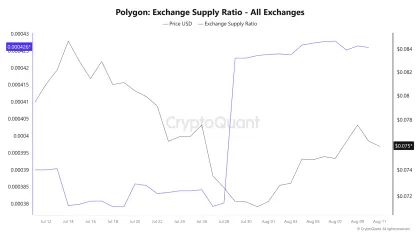
Polygon-linked wallets dump 18M POL as exchange supply surges: $0.70 support in play
AMBCrypto•2026/08/11 23:06
Crypto prices
More
Bitcoin
BTC
$63,514.45
-0.63%

Ethereum
ETH
$1,878.16
+0.30%

Tether USDt
USDT
$0.9991
-0.00%

USDC
USDC
$0.9998
-0.01%

XRP
XRP
$1.02
+0.70%

Solana
SOL
$76.18
+0.15%

TRON
TRX
$0.3348
+1.34%

Hyperliquid
HYPE
$54.32
-1.38%

Dogecoin
DOGE
$0.07194
+3.04%

Zcash
ZEC
$478.44
-3.59%
How to buy BTC
Bitget lists BTC – Buy or sell BTC quickly on Bitget!
Trade now
Become a trader now?A welcome pack worth 6200 USDT for new users!
Sign up now