
Rocket Lab (RKLB.US) Q2 Earnings Preview: Launch Cadence, Backlog Strength & Iridium Acquisition Progress
 2026/08/10 02:44
1. Investment Highlights Overview
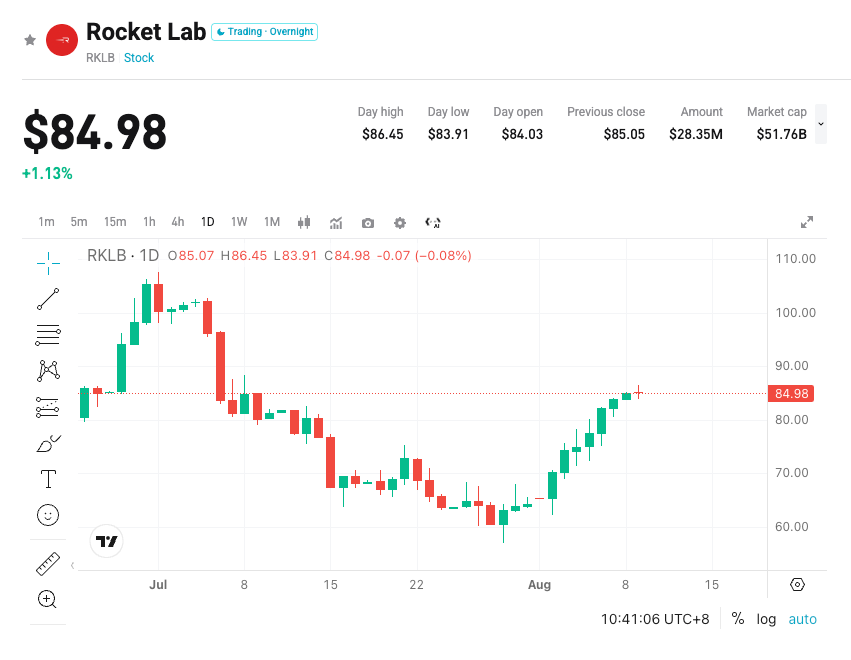
Rocket Lab is scheduled to report its second-quarter 2026 results after the U.S. market close on August 10, 2026. Wall Street consensus expects revenue of approximately $231–232 million (+59.8%–60% YoY), within the company’s own guidance range of $225–240 million. Adjusted EPS is expected in the range of -$0.06 to -$0.08, reflecting a meaningful narrowing of losses versus the prior-year period. Investors will focus on Electron launch cadence and success rates, Neutron first-flight timeline, and progress on the roughly $8 billion Iridium Communications acquisition. Recent large defense contract wins combined with broader space-sector sentiment swings make this print a key test of growth durability and valuation support.
2. Four Key Focus Areas
Focus 1: Launch Services — Electron Cadence and Neutron First-Flight Timeline
Launch activity remains the core near-term driver. The market will scrutinize the number of Electron missions flown, success rates, and per-launch contribution margins, while closely tracking Neutron development progress, engine testing, and the expected late-2026 first flight. Recent multi-hundred-million-dollar Space Force awards, including an approximately $397 million contract, and the assignment of a Neutron national-security mission with a 2028 deadline have raised expectations for medium-lift capability. Any upside in launch metrics or a reaffirmation of the Neutron schedule would strengthen visibility into the growth trajectory.
Focus 2: Space Systems Mix and Backlog Resilience
Space Systems (satellite manufacturing and components) typically carry higher gross margins than pure launch services, so its revenue contribution and delivery pace directly influence overall profitability. Backlog stood at a record roughly $2.2 billion at the end of Q1; investors will watch sequential order intake and conversion rates in Q2. Management previously guided Q2 GAAP gross margin to 33%–35%, slightly below Q1 levels due to a higher mix of lower-margin contracts. Confirmation that this is temporary rather than structural will be important for assessing the path to margin expansion.
Focus 3: Iridium Acquisition Progress and Valuation Re-rating Potential
The roughly $8 billion acquisition of Iridium, expected to close in mid-2027, is the most significant medium-term catalyst. It positions Rocket Lab to expand from hardware and launch into communications services and data subscriptions, bringing valuable spectrum and an existing customer base. Attention will center on integration timelines, preliminary commentary on revenue mix and margin implications, and any discussion of technical or commercial synergies (such as bundling launches with communications payloads). Positive integration language could support a shift toward higher, more service-oriented valuation multiples.
Focus 4: Full-Year Growth Sustainability and Guidance Updates
Rocket Lab has delivered successive record revenue quarters. A Q2 result near the midpoint of guidance that sustains approximately 60% year-over-year growth would continue that momentum. Markets will also watch for any update to full-year revenue expectations, the trajectory of adjusted EBITDA losses, and management’s tone on second-half launch and Space Systems delivery. In a high-volatility environment for technology and space stocks, guidance language often carries more weight than the single-quarter print itself.
3. Risks and Opportunities Coexist
Upside Catalysts:
- Electron launch volume and success rates exceed expectations, or the Neutron first-flight timeline is firmly reaffirmed with additional bookings.
- Revenue meaningfully beats the consensus midpoint while backlog continues to expand and gross margins outperform guidance.
- Constructive updates on Iridium integration that outline a clear path to service-model synergies and valuation re-rating.
Downside Risks:
- Softer-than-expected launch cadence or success rates, or any indication of delay in the Neutron schedule.
- Results that merely meet the midpoint of guidance without an upward revision to the full-year outlook, or margin pressure that raises questions about earnings quality.
- Spillover from SpaceX-related sector sentiment (elevated capital intensity and share unlocks) combined with high valuation scrutiny.
4. Trading Strategy Suggestions
Bull Case: Clear beats on revenue and launch metrics, resilient backlog, and constructive commentary on Neutron progress plus Iridium integration would reinforce the “commercial space leader + services transition” narrative and support valuation recovery.
Bear Case: In-line or slightly soft results, signs of growth deceleration, or cautious language around Neutron or the acquisition could trigger profit-taking, particularly given elevated options implied volatility (around the 100% level) and an expected post-earnings move of roughly ±15%.
Key Metrics to Watch:
- Total revenue and year-over-year growth rate
- Electron launch count, success rate, and Space Systems revenue mix
- Backlog change and new contract awards
- Neutron development updates and any full-year guidance revision
- Gross margin and adjusted EBITDA performance
Trading Considerations: If results and guidance are constructive, look for pullbacks as potential entry points. If the print is uneventful or guidance is cautious, respect short-term volatility and avoid chasing. Position sizing and stop-loss levels should always reflect individual risk tolerance.
Stock Limited-time Offer:August new user gift: Buy U.S. stocks and get free NVIDIA stock.Trade Now for Better Deals
Disclaimer: The above is for informational purposes only and does not constitute investment advice.
Disclaimer: The content of this article solely reflects the author's opinion and does not represent the platform in any capacity. This article is not intended to serve as a reference for making investment decisions.
You may also like
Shibburn reports $22 in SHIB burned, 4.71 million tokens sent to dead wallets
Morning Minute: Bitcoin ETFs See Biggest Inflows Since May
South Korea launches $3.5 billion fund to develop semiconductor chip supply chain
Pendle brings srUSDat fixed-yield trading to Monad, hits $111M TVL
Crypto prices
More


