
Labor market data in the US fluctuates ahead of Non-Farm Payrolls

Huitong.com, August 6th—— Multiple previous data sets suggested a cooling labor market, but the two labor market indicators before the Nonfarm Payrolls (NFP) report showed signs of a rebound.
ADP private employment weakened significantly, but initial jobless claims remain at a low level. The current U.S. job market shows a clear "polarization": on one hand, private sector hiring intentions are cooling; on the other hand, there is no deterioration in the scale of corporate layoffs.
The market is now awaiting Friday's NFP report to confirm the real direction of the labor market.
ADP data weakens significantly, dampening Fed hawkish expectations
The ADP report released Wednesday showed only 44,000 new private jobs in July, signaling a marked slowdown in corporate hiring momentum. Following this sharp decline, market expectations for further Federal Reserve tightening cooled rapidly. Pricing in the money markets for more rate hikes (or maintaining high rates) receded, and discussion of economic downside risks began to emerge.
However, ADP reflects more of the hiring intentions among private companies (especially SMEs) and does not indicate a wave of layoffs. It must be cross-checked with Department of Labor initial jobless claims data and others.
Initial jobless claims: Layoffs have not worsened significantly
U.S. Department of Labor data shows initial unemployment claims for the week ending August 1 were about 199,000, lower than expected and consistently below the historical low threshold of 200,000; the four-week moving average fell to 199,000, indicating that corporate layoff pressure has not visibly increased.
As of the week ending July 25, continued claims stood at approximately 1.801 million, slightly above expectations. The combination of "low initial claims + rising continued claims" suggests that companies are not laying off workers en masse (so people are not getting fired), but those who are unemployed are taking longer to find new jobs (slower reemployment). This further validates the current employment market’s core pattern of “low-hire, low-fire.”
Deep dive into employment structure: Coexistence of AI replacement in tech and recovery in physical hiring
Examining Challenger layoff data shows the job market has not weakened universally, but is exhibiting very strong structural polarization:
Layoffs are slowing and concentrated in AI transformation: In July, U.S. employers announced about 33,000 layoffs, down nearly 30% from June. Although the technology sector remains a layoff hotspot, "AI technology replacement and structural optimization" has been the main cause for several consecutive months. This type of layoff stems from sectorial technology iteration, not a recession-level job cut.
Layoff contagion not evident in non-tech sectors, robust hiring in physical industries offsets trends: There are no signs of layoffs spreading through the real economy. On the contrary, July's planned corporate hires surged nearly 50% from the previous month, largely concentrated on aerospace, energy, and advanced manufacturing.
Overall, the tech sector is shrinking structurally due to AI transformation, while hiring in physical sectors is rebounding. Together, these trends paint a picture of "sectoral divergence and alternating strengths."
Data discrepancies unresolved: Weak ADP ≠ NFP must disappoint
ADP private employment set a pessimistic tone, but initial jobless claims and Challenger layoff data remain strong.
This divergence is due to different sampling and statistical methodologies: ADP is more tilted toward SMEs and technology jobs, and is thus more susceptible to disruptions from AI-driven tech layoffs and hiring slowdowns. Therefore, weak ADP does not necessarily equate to a dramatic miss in the official NFP (Nonfarm Payroll) figures.
Institutional Viewpoints:
With regard to the current “polarization,” mainstream overseas investment banks and research institutions have offered a highly consistent interpretation.
Goldman Sachs and Barclays point out that ADP has weak predictive value for the official NFP and is easily affected by SME sampling noise; meanwhile, persistently low initial jobless claims prove that after experiencing a labor shortage, companies tend to "hoard labor," and that the market is in a classic "low-hire, low-fire" equilibrium.
With regard to tech layoffs, Morgan Stanley and JPMorgan argue that this does not signal a cyclical recession, but is instead "reconstruction of capital expenditure" driven by AI technology disruption—tech giants are reallocating budgets from traditional positions to computing infrastructure, a structural replacement; as long as employment in medical, energy, and advanced manufacturing remains stable, there’s little risk of a trend of massive unemployment.
On the NFP outlook, Bank of America and Citi caution that the weak ADP has already lowered market expectations; if the NFP report shows “mild cooling,” it will strengthen the “soft landing” outlook, but it remains crucial to monitor how average hourly earnings growth impacts inflation persistence.
Simplified NFP Preview (to be released Friday)
With current clues, focus mainly on the scenarios for new jobs added, unemployment rate, and average hourly earnings (wage inflation):
Base case (most likely): New jobs slow moderately, unemployment rate stays low, and wage growth is steady. The “low-hiring, low-layoff” structure continues. This scenario would reinforce expectations for a Fed policy shift (pause rate hikes/start cuts), lower U.S. Treasury yields and the U.S. dollar, and benefit gold and risk assets.
Colder scenario (recession narrative): New jobs added fall significantly short of expectations, with the unemployment rate rising more than expected. The market would quickly shift to “economic growth concerns,” which would depress rate expectations and potentially drive short-term risk-off volatility in U.S. equities and other risk assets.
Hotter scenario (inflationary pressure): New jobs added rebound beyond expectations, or average hourly earnings growth surprises to the upside. Even if job growth is modest, stronger-than-expected wage growth could reignite market fears around a “wage-inflation spiral,” pushing up U.S. Treasury yields and the USD, and suppressing tech stocks and gold prices.
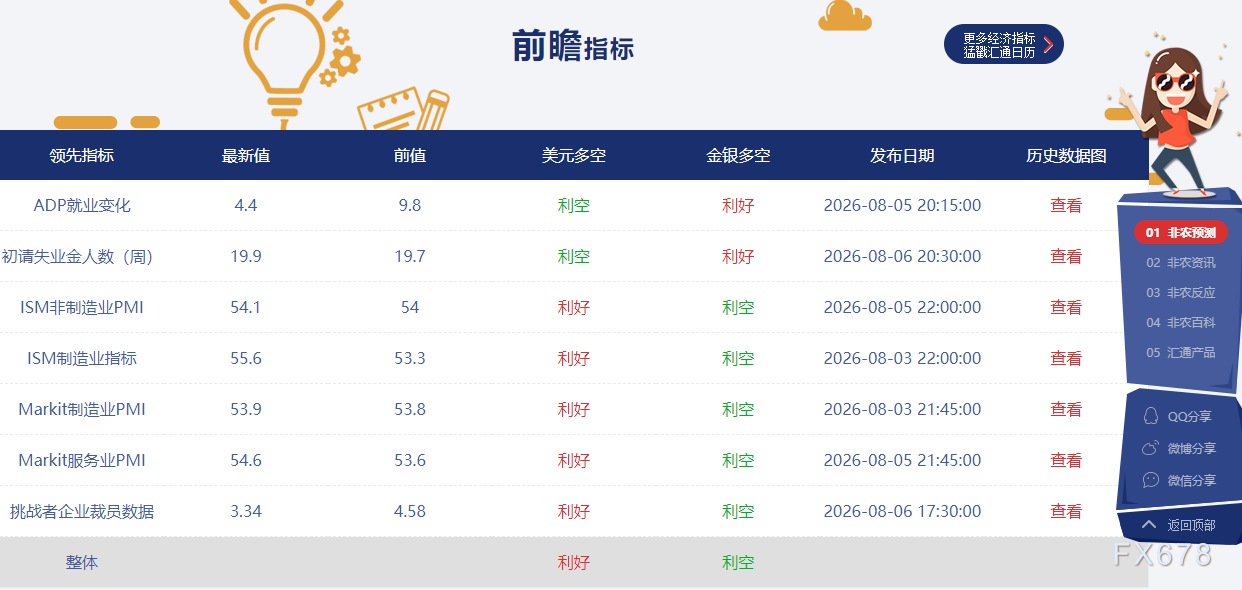
(Overview of recent forecast data, source: EasyHuitong)
Disclaimer: The content of this article solely reflects the author's opinion and does not represent the platform in any capacity. This article is not intended to serve as a reference for making investment decisions.
You may also like
SK Hynix's US NAND subsidiary Solidigm plans to go public, but its 4484% debt ratio is a major issue
Riding the wave of AI-driven storage demand, SK Hynix's subsidiary Solidigm plans to go public in the US. Though it holds the world's first 122TB SSD as its trump card, the company's soaring debt over 4,400% and its aging production lines hindered by export controls make its journey to ring the Nasdaq bell full of uncertainty.
Turning tumors into "in situ vaccines"! Replimune (REPL.US) oncolytic virus passes FDA, bringing a new generation of immune reactivation strategies for PD-1 resistant melanoma
U.S. regulators have approved Replimune Group's melanoma drug Tudriqev for patients who have failed immunotherapy treatments.

Ripple’s legal chief challenges Wall Street Journal’s crypto narrative, cites 67 million US owners
Tonight's U.S. Nonfarm Payroll Test: Will the "Weak July" Curse Repeat? Previous Three Years All Missed Expectations
The market consensus expects about 80,000 new non-farm payrolls in the US for July, although estimates range from as high as 157,000 to as low as 40,000. Due to the historical "weak July" curse and weaker ADP data, downside risks have emerged. While World Cup-related employment and low levels of layoffs provide some support, with the Federal Reserve prioritizing inflation, strong data could push interest rates higher, resulting in a "good news is bad news" scenario for the market.
Crypto prices
More


