
"Small Nonfarm" Halved Compared to Previous Value! Gold Soars by $4,200

Huitong Network August 5 – On Wednesday (August 5) at 20:15 GMT+8, the US ADP Private Sector Employment Report was officially released. The data showed that the number of private sector jobs increased by 44,000 in July, significantly below the generally moderate growth expected by the market. At the same time, June's figure was slightly revised down to 95,000. After the release, spot gold quickly broke through the $4,200/oz threshold, with its intraday gains expanding to 3.02%.
On Wednesday (August 5) at 20:15 GMT+8, the US ADP Private Sector Employment Report was officially released. The data showed an increase of 44,000 private sector jobs in July, significantly lower than the moderate growth widely anticipated by the market. At the same time, the June figure was Revised down to 95,000. Year-on-year wage growth for retained employees remained at 4.4%, while wage growth for job changers accelerated to 7%, the fastest pace since August 2025. The service sector added 47,000 jobs, while goods production industries fell by 3,000.
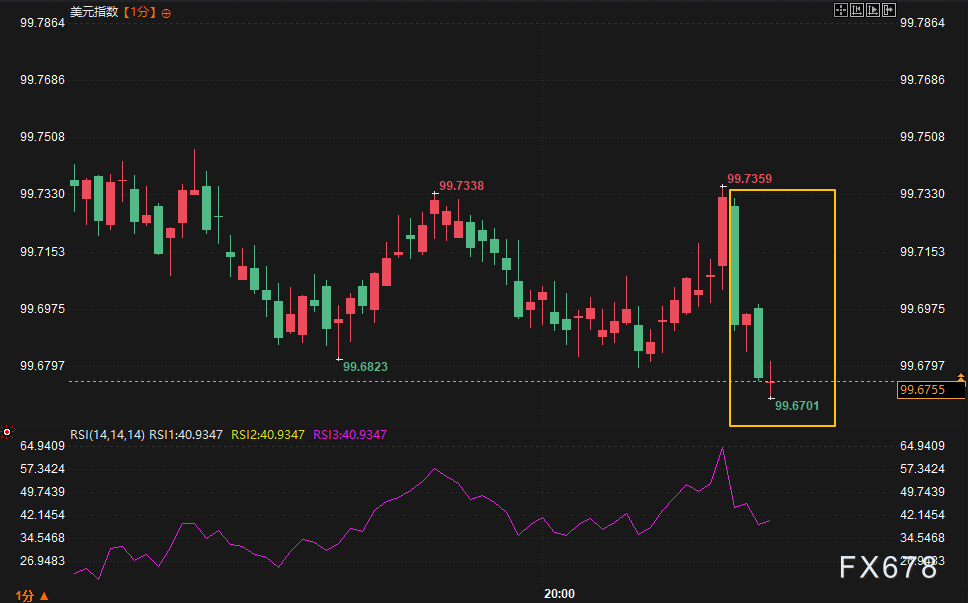
After the data release, the US Dollar Index quickly retreated about 5 points, hitting a low of 99.68; spot gold surged past the $4,200/oz threshold to $4,200.54, with intraday gains expanding to 3.02%. COMEX gold futures also strengthened in tandem.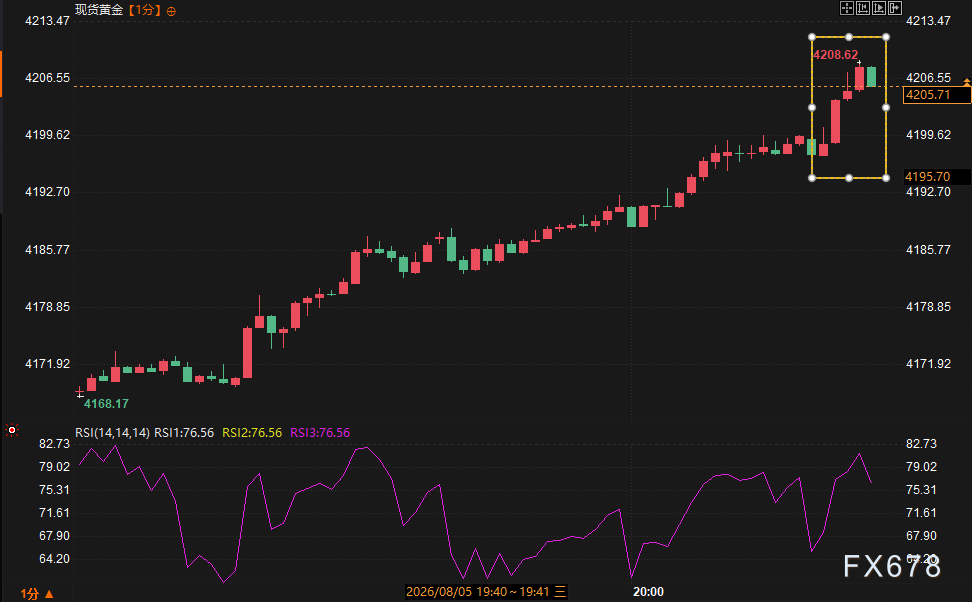
The main characteristic of this ADP employment data release is the clear cooling of hiring momentum, while wage structure has seen some divergence. Wage growth for retained employees remained stable, while it accelerated for job changers, indicating continued supply constraints for some experienced positions. ADP Chief Economist Nela Richardson pointed out that job seekers are highly sensitive to real-time economic conditions. Rapid wage growth means some supply constraints in the labor market, and employer hiring patterns are also adjusting to the macro environment.
From an industry perspective, growth was mainly concentrated in the services sector, with a slight decline in goods production. There were increases in financial services, professional and business services, while trade, transportation, and utilities saw declines. The downward revision of June's data further highlighted the recent cooling in private sector employment.
Compared to the historical trend, ADP data in prior months remained in a moderately high range, but July’s 44,000 increase was significantly lower. Latest quotes show the dollar index falling below the 100 mark, while gold broke through the critical $4,200 technical level with significantly expanded gains. Gold had already risen in anticipation before the release, with momentum further accelerated afterwards, showing the market’s sensitivity to real-time pricing of employment slowdown.
Prior to the data release, the market was overall in a wait-and-see mode. Gold had already increased by about 1%, reflecting some funds’ anticipation of an employment slowdown, while the dollar remained relatively stable. Institutions mainly highlighted wage stickiness potentially limiting policy flexibility, while retail participants focused on the potential support an employment slowdown provides for precious metals. Leading institutions expected a moderate but resilient employment growth slowdown with attention on whether wage growth would also decelerate; retail participants broadly discussed that weaker-than-expected data could increase gold’s safe-haven appeal. After the announcement, institutional commentary quickly shifted to highlight faster wage growth for job changers and the services-driven structural story, believing this reflects divergence within the labor market; retail sentiment turned clearly bullish for gold, believing the employment data directly catalyzed precious metals. Expectation deviation is mainly reflected in the greater-than-expected deceleration in total employment, while wage data still shows localized pressures.
Fundamentals and technicals mutually corroborate: cooling employment places short-term pressure on the dollar, while gold benefits from the expanded scope for rate expectations to be adjusted. The dollar’s weakness and gold’s strength form a typical linkage.
Trend Outlook
Extrapolating from market logic, after the employment data slowed, the US Dollar Index may continue to seek support below 100 and volatility could increase. Gold, having broken above $4,200, maintains strong short-term momentum, but it remains to be seen whether future wage data can provide ongoing support. The job structure led by the service sector and accelerating wages for job changers mean the market will focus more on locally tight supply-demand dynamics in the labor market rather than a single headline figure. Subsequent trends will depend more on macro cross-validation, and there may be divergent reactions among interest rate sensitive assets.
Overall, this data reinforced the trend of cooling in private sector hiring, while preserving structural features on the wage side. The market’s immediate response was reflected through the inverse movement of the dollar and gold.
Frequently Asked Questions
Q: Where was the main deviation between this ADP data and prior market expectations?
The increase in total employment was significantly lower than the previously anticipated moderate growth. The downward revision in June further confirmed the cooling trend, while accelerating wage growth for job changers exceeded some expectations for an across-the-board wage slowdown.
Q: What is the difference between institutional and retail perspectives before and after the data release?
Before the release, institutions focused on wage stickiness and policy space, while retail investors looked more for potential opportunities in gold; afterwards, institutions emphasized structural divergence and supply constraints, with retail discussion centered on gold’s immediate catalytic rally.
Q: What does the employment gap between the service and goods production industries indicate?
The growth was concentrated in the service sector, with a small decrease in goods production, indicating that current private sector job momentum is more dependent on the services industry, with a narrower basis for overall expansion.
Q: What does the divergence in wage growth between retained and job-changing employees mean for the market?
The stable wage growth for retained employees shows overall wage pressures are manageable, but faster growth for job changers signals localized shortages for experienced positions, which may impact cost expectations for highly-skilled labor for firms.
Q: How does the instant linkage between gold and the US dollar reflect the impact of this data?
The US Dollar Index’s short-term retreat, in tandem with gold's break above a key threshold, reflects the market’s speedy pricing of a slower employment outlook, with the moves in these rate-sensitive assets showing their typical inverse relationship.
Disclaimer: The content of this article solely reflects the author's opinion and does not represent the platform in any capacity. This article is not intended to serve as a reference for making investment decisions.
You may also like
Solomon Labs releases B1 transparency filing with zero gaps, but its token tells a different story
Plume joins DTCC working group on tokenized securities with Schwab and Nasdaq
After South Korea's strict leverage regulation, local retail investors flock to US 3x ETFs
After South Korea tightened regulations on single-stock leveraged ETFs, the trading volume of 16 domestically listed single-stock leveraged and inverse ETFs dropped by nearly 90%. Meanwhile, the net purchase of US stocks by South Korea soared from $630 million to $4.64 billion in July, with triple-leverage products like SOXL and TQQQ becoming new favorites, resulting in an actual increase in risk exposure rather than a decrease. The "balloon effect" of South Korean regulation has emerged, and academia directly questions the effectiveness of the policy.
FOMO sentiment reignites as investors rush to bet on further gains in the S&P 500; call option trading volume hits record high
The trading volume of S&P 500 call options surpassed 4 million contracts on Tuesday, setting a new all-time high, with the call/put ratio reaching its third highest level in nearly 15 years. FOMO sentiment is dominating the market, and a single aggressive $40 million bet brought in more than $23 million in unrealized profits overnight. Earnings season continues to exceed expectations, and the equal-weighted index repeatedly hitting new highs indicates that the bull market is spreading beyond AI. UBS has set a year-end target of 8,100 points, stating that “profit growth is not yet fully reflected in valuations.”
Crypto prices
More


