
South Korean stocks plunge over 4% but quickly narrow losses; US-Iran conflict pushes oil prices above $91, spot gold declines

The conflict between the US and Iran has escalated, causing Brent crude oil to surge over 3.8% and break through $91 per barrel, reaching a new high since June. The South Korean Composite Index dropped more than 4% at the opening, but later narrowed its losses to within 1%. The MSCI Asia-Pacific Index has fallen more than 9% from its June high, approaching the technical correction zone. The sell-off in technology stocks continues, with the Philadelphia Semiconductor Index entering a bear market last Friday.
The conflict between the US and Iran further escalated over the weekend, compounded by continued sell-offs in technology stocks, putting pressure on Asian markets on Monday—crude oil surged, Korean stocks slumped, and the MSCI Asia Pacific Index is just one step away from a “technical correction.”
In early Asian trading on Monday, South Korea’s KOSPI initially dropped by more than 4% before narrowing losses to below 1%. Japanese markets are closed today for a holiday, and cash bond markets are also suspended. Australia’s S&P/ASX 200 edged up 0.3%. The MSCI Asia Pacific Index has now fallen more than 9% from its June record high, nearing the technical correction zone (typically defined as a drop of 10% or more from a recent high).

Brent crude oil futures surged by more than 3.8%, breaking above $91 per barrel—the highest level since June; WTI crude rose about 2.3% to $84.41 per barrel.

The immediate trigger for the oil price spike was the latest round of clashes over the weekend between the US and Iran. According to Iranian media reports, US forces launched airstrikes on Qeshm Island in the Persian Gulf, as well as the southern Iranian cities of Shadegan, Sirik, and Hajiabad; according to China Central Television News, Kuwait stated that one of its power and desalination facilities was damaged in an Iranian attack.
Wee Khoon Chong, a macro strategist at BNY in Hong Kong, wrote in a client report: “Asia’s risk backdrop continues to deteriorate. Tech stock corrections, a strengthening US dollar, rising oil prices, and ongoing geopolitical tensions all point toward more defensive positioning.”
Tech Sell-off Continues, Semiconductors Enter Bear Market
The current market turmoil is not driven by a single factor. Even before the escalation in the Middle East, the tech sell-off accelerated last Friday—with the Philadelphia Semiconductor Index officially entering a bear market.
Nasdaq 100 futures posted a slight rebound of 0.1% on Monday, but overall market sentiment remains fragile.

Capital.com senior analyst Kyle Rodda noted in a report that the escalation in the Middle East “will be keenly felt in Asian markets today.” He wrote that further increases in oil prices will threaten economic activity in “regions highly dependent on energy imports,” while the decline in semiconductor stocks is “triggering a broad-based global deleveraging.”
Inflation Expectations Rise, Rate Hike Bets Increase
Oil prices have climbed more than 20% this month, reigniting inflation concerns.
Federal Reserve Chairman Waller has made it clear that curbing inflation is the central bank’s top priority. The market is now focused on the July PMI data to be released this week to assess whether the US economy is resilient enough to support a Fed rate hike in September or October.
Elias Haddad, Global Markets Strategy Director at Brown Brothers Harriman, wrote in a report: “If the July PMI data further confirms the relative strength of the US economy, the dollar could gain upward momentum this week.”
The US Dollar Index was little changed on Monday, with the euro at $1.1430 and the yen at 162.50.
Gold extended last week’s losses, with spot gold falling slightly, at one point dropping below $4,000; silver and platinum also fell in tandem—the rise in oil prices reinforced expectations that “interest rates will stay high for longer,” dampening the safe-haven appeal of precious metals.

Disclaimer: The content of this article solely reflects the author's opinion and does not represent the platform in any capacity. This article is not intended to serve as a reference for making investment decisions.
You may also like
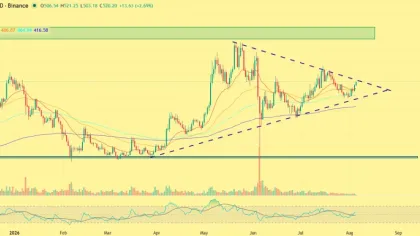
Bitcoin Tests Market’s Patience as Zcash Gives Holders Hope: Analysis
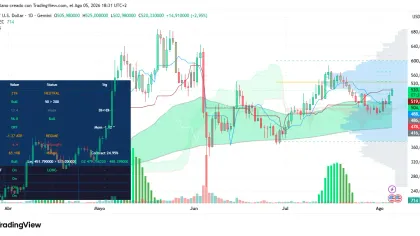
Alphabet Inc. stock plunges from $381 to $360 as bearish signals emerge
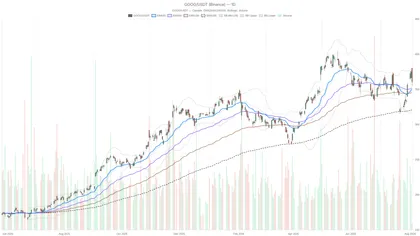
Heima crypto surges 2.6x past EMAs as RSI screams overbought
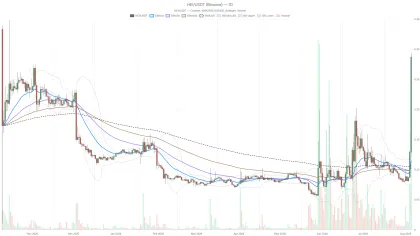
ZEC Price Surges 6% as Fortitude Mining Expands Zcash Network
Crypto prices
More


