
Will a bond market blowup trigger the next financial tsunami? Wall Street's big bear Peter Schiff warns: U.S. Treasuries under increasing pressure, stocks and crypto markets may face a "bloodbath"

According to Zhitong Finance, as global investors focus on the extreme volatility of risk assets, renowned pessimist economist Peter Schiff has issued a stern warning: the next global financial tsunami will not originate from turmoil in the cryptocurrency market, but rather from the seemingly calm U.S. Treasury market.
The well-known investor, who has long been bullish on gold, stated bluntly in his latest podcast that a collapse in the U.S. Treasury market could trigger a chain reaction affecting equities, real estate, and even cryptocurrencies. He anticipates that as various risk assets correct simultaneously, investors will eventually withdraw from these sectors and turn to gold for safe haven.
The real crash will start in the bond market
Schiff warned that cracks have already begun to show in the bond market. Currently, the yield on the 10-year U.S. Treasury is hovering around 4.57%, while the 30-year Treasury has surpassed 5%. In his view, this is only the beginning, as both have strong momentum to rise sharply.
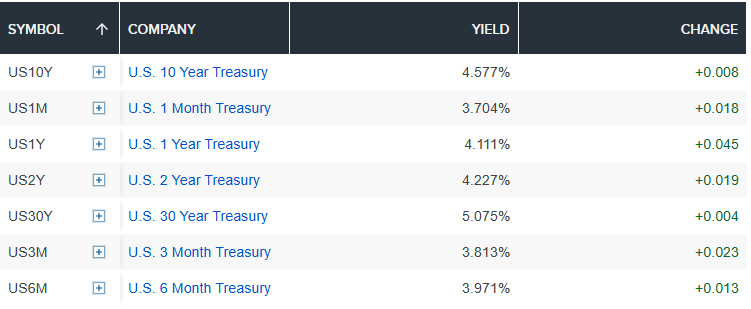
“Rising yields will comprehensively increase borrowing costs,” Schiff pointed out. This will directly pressure equity valuations and exacerbate the already severe housing affordability crisis. According to Freddie Mac’s latest weekly survey, the average rate for a 30-year fixed mortgage in the U.S. has climbed to 6.49%, causing many potential homebuyers to be shut out of the market.
He further analyzed that, once real estate declines significantly, the Federal Reserve will be forced to intervene to prop up the market, which means a new round of monetary expansion and greater inflationary pressure.
The bond market’s warning from the East: The chain reaction from soaring Japanese yields
Schiff’s concerns regarding U.S. Treasuries are not in isolation. Roger Montgomery of Montgomery Investment Management has issued similar warnings, believing that the U.S. stock and bond markets are on a dangerous collision course.
Against the backdrop of stubborn inflation, the yield on the 2-year U.S. Treasury has already exceeded the federal funds rate—a technical signal that in the past three decades has accurately predicted the Fed’s rate hikes every time. “The Fed is almost backed into a corner. If it hesitates to hike, the bond market will face even more intense selling as it falls behind the inflation curve,” Montgomery said.
However, a more likely variable to break the fragile equilibrium comes from Japan. The yield on Japan’s benchmark 10-year government bond recently climbed above 2.9%, a more than 30-year high, and faced nine consecutive days of selling, marking the longest losing streak in nearly two decades. Although the 2.9% absolute value is far below the U.S. Treasury’s 4.57% yield, as the world’s third-largest bond market, structural changes to the Japanese rate environment are causing a cross-market shock.
The core mechanism behind this shock is the yen carry trade. For years, investors borrowed yen at extremely low costs and invested in higher-yielding assets. As the Bank of Japan gradually raises rates and pledges to reduce support for the bond market, combined with repeated direct currency interventions by Japan’s Ministry of Finance, the funding side of carry trades is reversing. The events of August 2024 still unsettle the market: when the Bank of Japan unexpectedly raised rates together with weak U.S. employment data, the yen surged sharply, causing the Nikkei 225 Index to plunge 12.4% in a single day—the largest drop since “Black Monday” in 1987—and the S&P 500 also dropped 8.5% within several days.
“At that time, the market stabilized within a week, so this event was brushed aside as a one-off. But that’s not the case,” financial commentator Michael Gayed reminded.
Now, the same risk structure is taking shape again, possibly under even greater pressure. Japanese life insurance companies and pension funds hold $1.2 trillion in U.S. Treasuries, making them the largest foreign holders of U.S. debt. In the first quarter of this year, Japanese investors have already withdrawn nearly $30 billion from U.S. government, agency, and municipal bonds—the largest quarterly sell-off since 2022.
Albert Edwards, global strategist at French Société Générale, posed a soul-searching question: “If the 10-year Japanese government bond yield continues to rise and converges to the U.S.’s 4% level, do you really believe U.S. stocks can maintain a forward P/E above 20x? I seriously doubt it.”
How will the market withstand the shock from the bond market?
If the bond market storm does radiate outwardly from Japan, expanding through carry unwinds and U.S. Treasury sell-offs to the U.S., major global assets will face a dramatic repricing.
U.S. stocks and cryptocurrencies could soon face a correction
According to Montgomery’s data, the current rally in U.S. equities is almost entirely driven by a few artificial intelligence (AI) and semiconductor giants. Excluding the technology, media, and telecommunications sectors, the majority of S&P 500 stocks have already fallen below their February highs. Only about 55% of S&P 500 components are above their 200-day moving averages, and market breadth indicators have turned downwards.
Montgomery warns that history shows this extreme narrowing of breadth typically ends with a sharp downward correction. More worrying, U.S. high-yield corporate bond spreads are widening, indicating that credit markets have already sensed corporate cash flow pressures. Once arbitrage funds are forced to exit high-flying tech stocks, this fragile balance could rapidly break down.
As for the cryptocurrency market, Schiff, who has long been bearish on bitcoin, once again offered sharp criticism. Bitcoin has dropped over 28% this year, still down by nearly half from its record high of $126,080 set in October 2025. Schiff pointed out that this alone proves bitcoin does not possess safe-haven attributes. “I believe that when tech stocks fall, bitcoin will be highly correlated—when tech stocks rise, it doesn’t necessarily follow, but when tech stocks fall, bitcoin falls even more sharply.”
He also took aim at the hypocrisy of Wall Street institutions. Citi, Standard Chartered, Bernstein, JPMorgan, and Fundstrat have set bitcoin target prices ranging from $82,000 to $250,000, yet none of them have added it to their own balance sheets. A more direct example is listed company Strategy (MSTR.US). The world’s largest corporate holder of bitcoin, led by Michael Saylor, was recently forced to sell about $230 million worth of bitcoin to pay preferred share dividends. The discount for its common stock relative to bitcoin assets held has widened to nearly 40%, and a 13.7% yield on its preferred stock implies investors simply do not believe bitcoin can appreciate enough to cover the dividend.
Precious metals: the only shelter in the storm
In Schiff’s scenario, whether a bond market crash forces the Fed to print money to rescue the market, or inflation remains persistently high, the ultimate beneficiaries will be precious metals. After briefly dropping below $4,000 in June, safe-haven funds are now flowing back into gold and assets such as silver are also poised to surge.
Schiff expects silver to reach $200 per ounce, with $50 evolving into a long-term support level; gold should first target $5,000, ultimately aiming for $10,000. He also believes that as investors gradually accept high precious metal prices as the new normal, the valuations of mining stocks will be re-rated accordingly.
“I believe the precious metals market is preparing for a major upward move, while the stock market is preparing for a major downturn,” Schiff stated clearly.
But in any case, Schiff’s conclusions have sent a clear signal to investors: the trajectory of the U.S. Treasury market in the coming weeks will be the key litmus test for his predictions.
Disclaimer: The content of this article solely reflects the author's opinion and does not represent the platform in any capacity. This article is not intended to serve as a reference for making investment decisions.
You may also like
Bitcoin nears record high active addresses after Coldcard panic

Health Care Roundup: Market Talk
SHIB at Risk of Deeper Losses as Bearish Signals Strengthen

Crypto prices
More


