
AI Computing Power Surge Rekindled! US Tech Stocks Rally Across the Board, Micron Announces $250 Billion Investment Plan, Meta Denies "Excess Computing Power"

In the early morning of July 10, in the UTC+8 time zone, the US stock market experienced a rebound amid a mix of news events. After severe fluctuations in tech stocks over the past two weeks, the sector regained momentum thanks to concentrated positive developments in the AI industrial chain and easing geopolitical tensions. The Nasdaq index led the three major US stock indices, with all sectors in storage, optical communications, and semiconductors closing in the green. Meanwhile, rising tensions in the Middle East did not interrupt the recovery of market risk appetite, while the decline in international oil prices further alleviated inflation concerns. A repricing around AI commercialization and capex efficiency is quietly unfolding in the US stock market.
Tech Stocks Rebound Across the Board, Storage and Optical Communications Lead Gains
On July 9 EST, all three major US indices closed higher. At the close, the S&P 500 rose 0.81% to 7543.64; the Nasdaq Composite Index gained 1.30% to 26206.89; the Dow Jones Industrial Average was up 0.27% at 52487.41. The Philadelphia Semiconductor Index jumped 3.06% in a single day, becoming the strongest theme of the session.
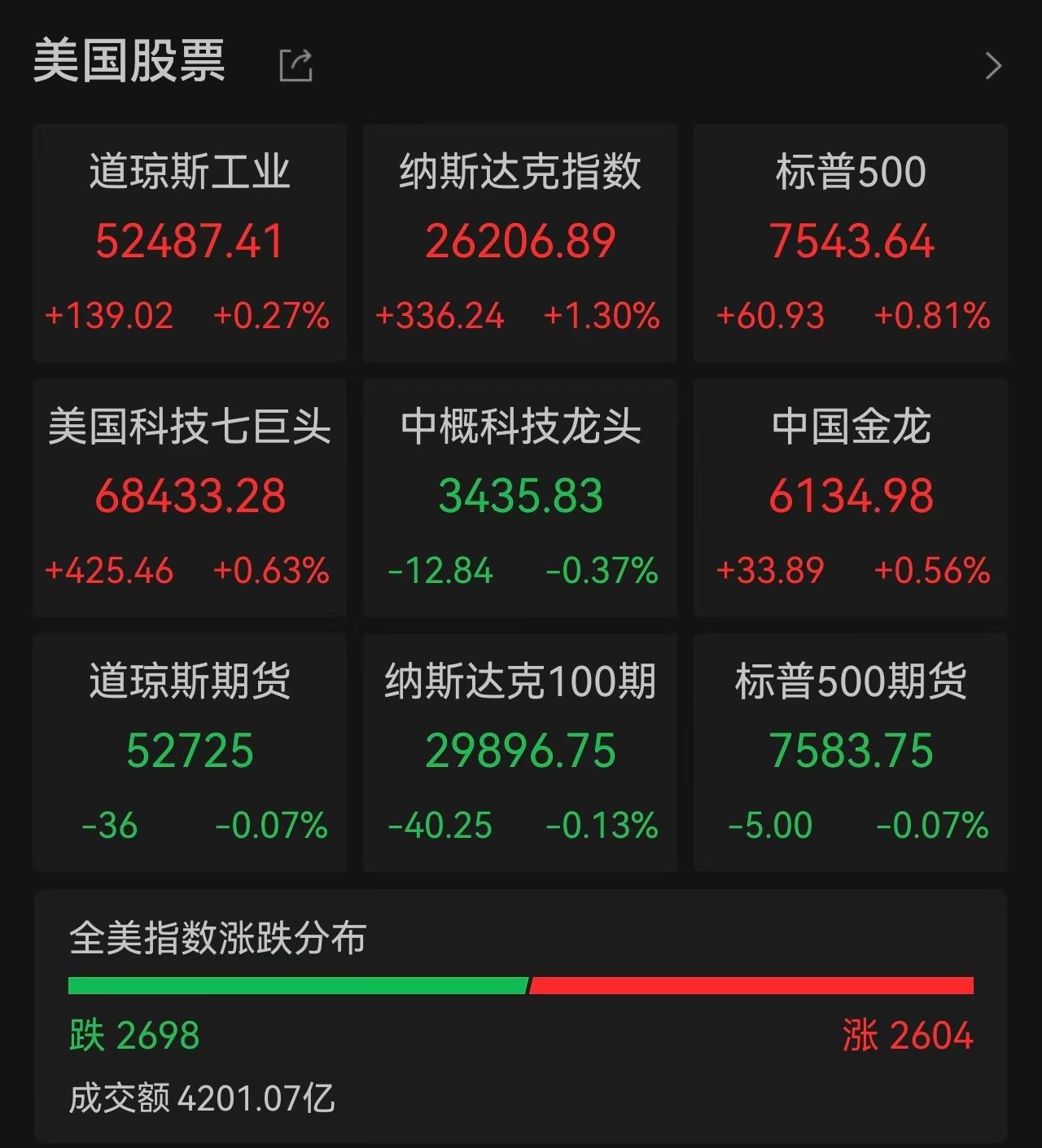
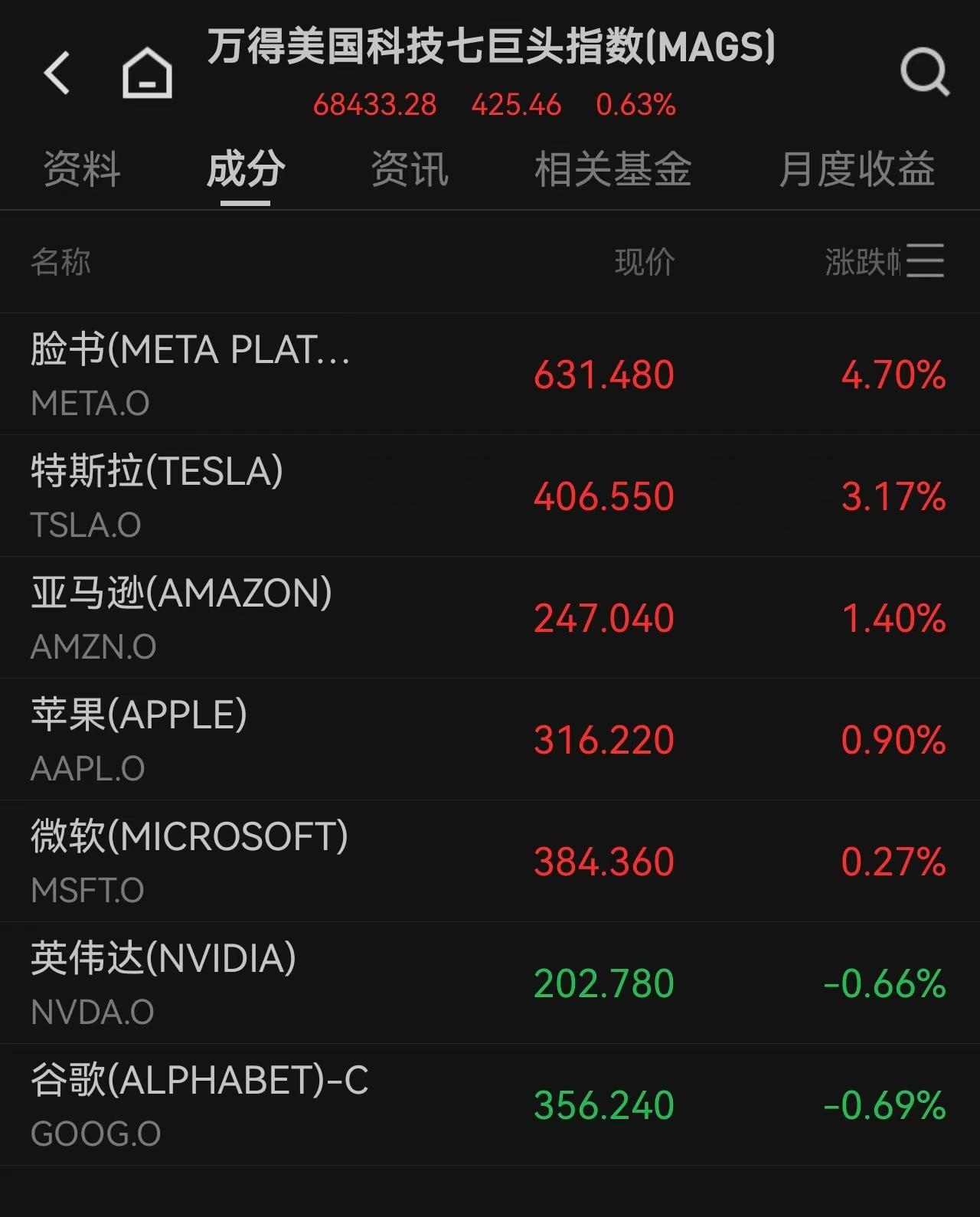
Most leading tech stocks moved higher: Meta closed up 4.70%, Tesla rose 3.17%, Amazon gained 1.40%, Apple was up 0.90%, Microsoft grew by 0.27%; Nvidia and Google closed slightly lower, down 0.66% and 0.84% respectively. The consumer sector showed divergence—PepsiCo, facing pressured snack sales in North America and Q2 adjusted EPS slightly below market expectations, saw its share price tumble 3.26% in a day.
The storage sector became the top gainer of the day in the AI rally. Micron Technology closed up 4.52%, bringing its total market cap to $1.12 trillion; SanDisk soared 7.59%, Western Digital gained 5.04%, and Seagate Technology rose 3.50%.
The direct catalyst for the sector's surge came from two major industry news: First, Micron Technology officially announced that it would raise its planned investment in the United States from $200 billion to $250 billion by 2035, addressing the surge in memory chip demand brought by AI infrastructure expansion. The company targets having 40% of its DRAM production capacity rooted in the US. Second, the US ADR offering of South Korean storage giant SK Hynix has been finalized. According to informed sources, the guidance price is set at $149 per share, about 3.10% premium to the Korean stock's Thursday close, equating to an offering size around $26.5 billion—a potential record for a foreign IPO in US history. The offering was oversubscribed by institutional investors more than sevenfold, highlighting global capital's strong pursuit of core AI storage assets.
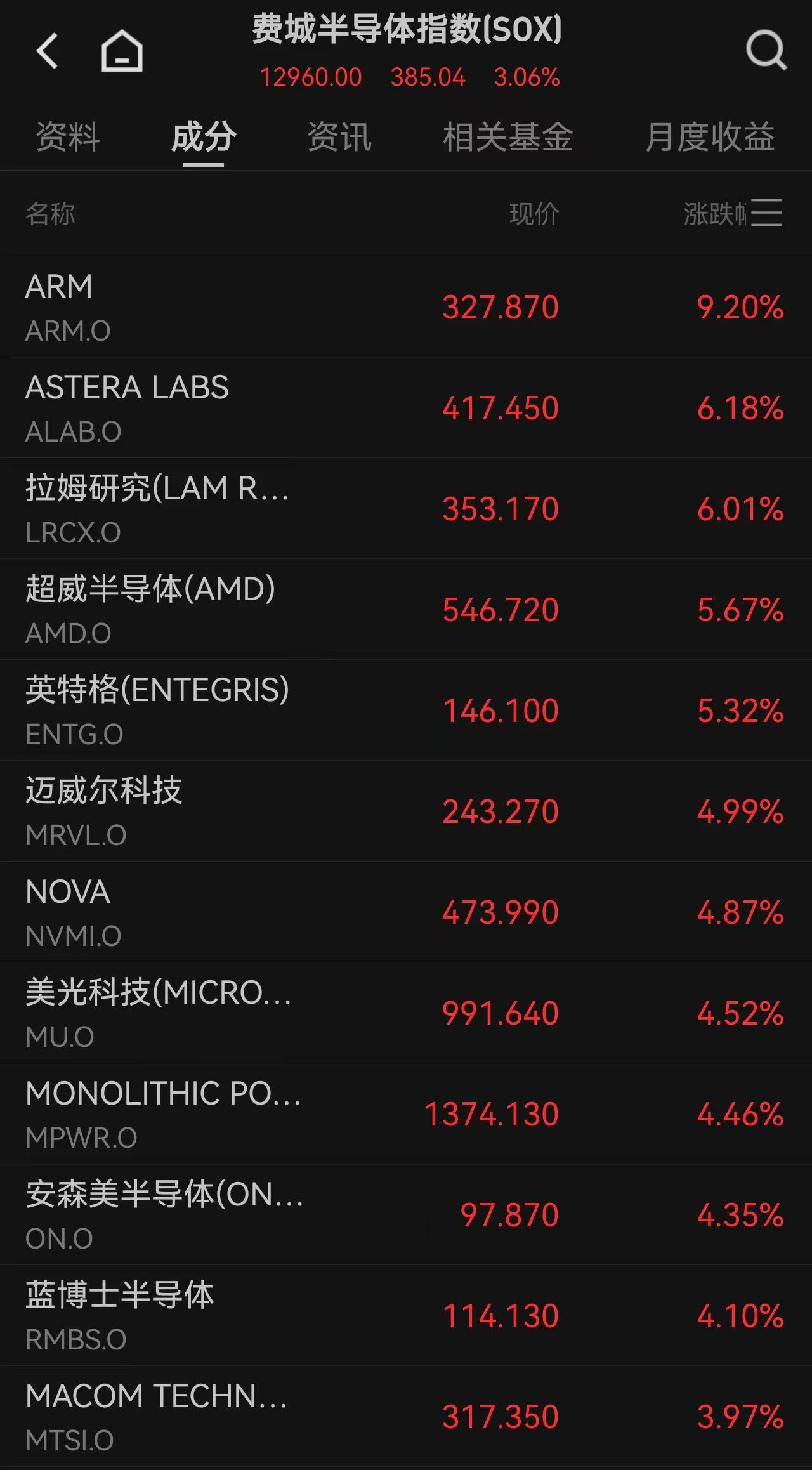
Sectors closely linked to AI computing power infrastructure, such as optical communications, also surged; Lumentum jumped 11.13%, Applied Optoelectronics gained 6.79%, and Corning rose 4.54%. Other semiconductor stocks: ARM up 9.20%, AMD up 5.67%, Marvell Technology and On Semiconductor both gained over 4%, while Applied Materials and Broadcom were up more than 3%. On the day, AMD announced a partnership with North American AI computing power provider 5C to build a next-generation gigawatt-level computing center, directly pushing up its share price. At the industry level, Tesla CEO Elon Musk publicly admitted to underestimating Anthropic, recognizing its leading position in the large-model field, also reflecting the ongoing dynamic changes in the AI competitive landscape.
As for Chinese concepts, the Nasdaq Golden Dragon China Index closed up 0.56%. iQIYI led with a rise of over 8%, Alibaba was up 1.98%, Pinduoduo gained 1.35%, Futu Holdings rose 1.45%; new energy automakers were generally pressured, with NIO down 2.45% and Li Auto down 1.73%.
International Oil Prices Fall Sharply, Precious Metals Strengthen
In line with the stock rebound, the commodities market showed signs of divergence. International oil prices dropped significantly on Thursday: NYMEX August light sweet crude futures fell 1.96% to close at $72.08 per barrel; September Brent crude futures dropped 2.20% to $76.30 per barrel. Although the situation in the Strait of Hormuz continued to deteriorate—maritime data showed that daily oil tanker traffic fell from 33 to just 13 on Wednesday, and from the night of the 8th to early morning of the 9th, only 5 passages were recorded, with commercial shipping from the Persian Gulf nearly at a standstill—markets generally view this round of conflict escalation as contained friction. US officials stated that the US remains committed to seeking solutions to the Iran issue, and related technical negotiations are ongoing, greatly easing market fears of full-scale war.
Precious metals also strengthened: COMEX gold futures closed up 1.24% at $4,133.10/oz; COMEX silver futures rose 3.14% to $60.38/oz. Bernstein raised its gold price forecast for 2026, believing continued central bank gold purchases and limited Fed hiking capacity would support gold prices, setting a second-half target of $4,375/oz, while also warning of the risk of aggressive rate hikes if inflation exceeds expectations. The US Dollar Index edged down 0.09% to 100.904.
Multiple Signals Dispel AI Capex Concerns
This tech stock rebound seems more like a collective repair of previous pessimism. Over the past two weeks, US tech stocks suffered severe turbulence—rumors that Meta would "sell computing power externally" raised concerns about "excess computing resources," followed by Samsung's share price plunge after overtaking as the world's most profitable public company. Core doubts focused on the return efficiency of massive AI capex—investors began to worry whether hundred-billion-dollar investments in computing power could be justified by matching income and profit.
A series of messages released this week directly addressed these core concerns. Firstly, Meta founder Mark Zuckerberg came forward and categorically denied claims about "excess computing power", emphasizing, "No company in the industry feels they have surplus computational resources; Meta is already using all available computing power." He also revealed that current market quotes for computing resources are extremely high: "In some cases, renting them or seeking such cooperation is actually more reasonable than internal use." This not only quelled excess capacity concerns but also sent a clear message to the market: Meta’s investment in computing power is not blind expansion—but retains commercial monetization flexibility. On the same day, Meta officially released the new generation of the AI model Muse Spark 1.1 and launched paid access tiers for the first time, with pricing significantly lower than Google's and OpenAI's flagship models, marking Meta's AI business’s official entry into the commercialization stage.
Secondly, the flurry of activity in the storage industrial chain once again validates solid upstream AI demand. Micron dramatically increased its investment plan, SK Hynix’s ADR was offered at a premium and oversubscribed, while US Commerce Secretary Gina Raimondo publicly called on Samsung and SK Hynix to expand US storage capacity to ease shortages of key AI components—all pointing to a global memory chip supply and demand still tightly balanced, with AI-driven incremental demand far from peaking. For markets previously worried about the "peak storage cycle," this is undoubtedly a strong booster.
Furthermore, the fading of geopolitical tensions and the fall in oil prices have created a supportive macro environment for the valuation repair of growth stocks. After several rounds of escalation and ceasefire, markets have gradually adapted to the pulsed volatility in the Middle East, generally assuming the conflict will not escalate into a full-scale war and that the Strait of Hormuz will not be closed long-term. Falling oil prices have directly alleviated inflation pressures and reduced market expectations for further Fed hikes, allowing rate-sensitive tech growth stocks to benefit first.
AI Narrative Shifts Toward Profit Realization
That said, institutions are not entirely aligned on the future path of the AI rally. Brock Weimer, analyst at Edward Jones, remains relatively optimistic: "We expect robust earnings growth for US stocks in 2026, with little indication that companies are significantly cutting AI-related spending." According to LSEG statistics, analysts broadly expect S&P 500 constituents' Q2 2026 EPS to grow by 24% year-on-year, with tech companies contributing most of the gains. The S&P 500 is currently trading at about 20x forward earnings, down from 21x a month ago, easing valuation pressures.
Cautious views are equally noteworthy. Ameriprise analyst Anthony Saglimbene points out, "For AI-related listed companies, merely beating expectations is no longer enough—their share prices need continued support from proven high profit margins and robust or even above-expectation guidance, with tech-led profit growth being sufficiently broad to sustain current market valuations." LPL Financial analyst Jeff Buchbinder believes AI will remain the market’s core driver into the second half of 2026, but the narrative is evolving: "Market focus is shifting from 'who spends the most' to 'who can get measurable returns on investment,'" which will bring a more selective environment with continued divergence within the sector.
Macro risks cannot be ignored. Verdence chief investment officer Megan Horneman warns that the current equity market may not have fully priced in the possibility of at least one more Fed rate hike in the second half of 2026. In her view, inflationary pressures from Middle East conflicts may persist throughout the year, and short-term superimposed strong AI investment and economic growth and consumer demand could actually push inflation higher; although AI has long-term disinflation potential, short-term inflation pressure may force the Fed to maintain higher rates longer, thereby suppressing growth stock valuations. According to CME “FedWatch” tool data, the market expects a 74.9% probability that the Fed will hold rates steady in July, and a 51.1% chance of a cumulative 25 basis point hike by September.
Disclaimer: The content of this article solely reflects the author's opinion and does not represent the platform in any capacity. This article is not intended to serve as a reference for making investment decisions.
You may also like
XRP Ledger Voting Shows Active Protocol Development

Top 3 Altcoins Set to Shine During the First Week of August 2026

Virtuals Protocol enhances AI agent transparency on Robinhood Chain
BNB Chain boosts testnet throughput by 88% with BEP-675 upgrade
Crypto prices
More


