Which Crypto Exchange Offers 24/7 Stock Trading? Features, Fees and How to Trade on Bitget (2026 Guide)
Key Takeaways
-
Bitget offers 24/7 stock-related trading in 2026 through tokenized stocks and stock perpetual futures, giving users continuous access to stock market exposure beyond traditional exchange hours.
-
Bitget also supports direct U.S. stock trading through Bitget Stock+, which allows eligible users to buy, sell, and hold real U.S. stocks and ETFs inside the Bitget app.
-
Bitget Stock+ operates on a 24/5 trading schedule, including supported pre-market, regular market, after-hours, and overnight sessions. This is different from Bitget’s 24/7 tokenized stock and stock perpetual futures products.
-
Bitget’s stock-related ecosystem includes direct U.S. stock trading through Stock+, 500 tokenized U.S. stocks and ETFs through Bitget Stocks 2.0 rTokens, and 40+ stock perpetual futures products for leveraged long or short trading.
-
Before trading stocks on Bitget, beginners should understand the differences between real stock trading, tokenized stock exposure, and stock perpetual futures, as well as key risks such as market volatility, leverage, liquidation risk, funding fees, spreads, and tax considerations.
Which Crypto Exchange Offers 24/7 Stock Trading in 2026?
As global financial markets become increasingly digitized, more traders are searching for ways to access stock-related opportunities beyond traditional exchange hours. Conventional stock markets such as the NYSE and Nasdaq still operate during fixed trading sessions, but crypto exchanges are helping bridge the gap between traditional finance and digital assets by introducing more flexible stock market products.
In 2026, Bitget is one of the crypto exchanges offering 24/7 stock-related trading through tokenized stocks and stock perpetual futures. These products allow users to gain exposure to publicly listed companies directly within a crypto-native trading environment, without relying only on traditional stock broker infrastructure.
At the same time, Bitget also supports direct U.S. stock trading through Bitget Stock+. This product is different from tokenized stocks and stock perps. Stock+ allows eligible users to buy, sell, and hold real U.S. stocks and ETFs inside the Bitget app. However, Stock+ follows a 24/5 trading model rather than full 24/7 trading, because it is connected to U.S. stock market structures and supported extended trading sessions.
This distinction matters. When traders ask which crypto exchange offers 24/7 stock trading, the answer usually refers to stock-linked products such as tokenized stocks and stock perpetual futures. When traders want real U.S. stock trading, Bitget Stock+ provides direct stock access, but on a 24/5 schedule.
Bitget’s stock market ecosystem is built around three different trading approaches:
-
Bitget Stock+, which supports direct U.S. stock and ETF trading on a 24/5 schedule.
-
Tokenized stocks, which provide crypto-native exposure to U.S. stocks and ETFs through Bitget Stocks 2.0 rTokens.
-
Stock perpetual futures, which are derivative contracts that support leverage, long and short strategies, and USDT-margined settlement.
With direct U.S. stock trading, 500 tokenized U.S. stocks and ETFs, and 40+ stock perpetual futures products, Bitget has expanded beyond traditional crypto-only trading by integrating stock-related opportunities into a unified trading platform.
One of the key advantages of Bitget’s model is that users can manage crypto assets, real U.S. stocks, tokenized stock exposure, and stock futures positions within the same account ecosystem. This creates a more flexible trading experience for users who want exposure to both digital assets and traditional market narratives such as AI, technology, semiconductors, electric vehicles, major U.S. equities, and index ETFs.
The growth of stock-related trading on crypto platforms also reflects a broader industry trend toward tokenized real-world assets, or RWAs, and crypto-native financial products. As blockchain infrastructure continues evolving, stock-linked trading products are becoming more accessible to users seeking faster execution, flexible trading hours, and integrated cross-market exposure.
What Types of Stock Products Does Bitget Offer?
Bitget offers three major stock-related product types in 2026: real U.S. stocks, tokenized stocks, and stock perpetual futures. Each product serves a different purpose.
1. Bitget Stock+: Direct U.S. Stock Trading
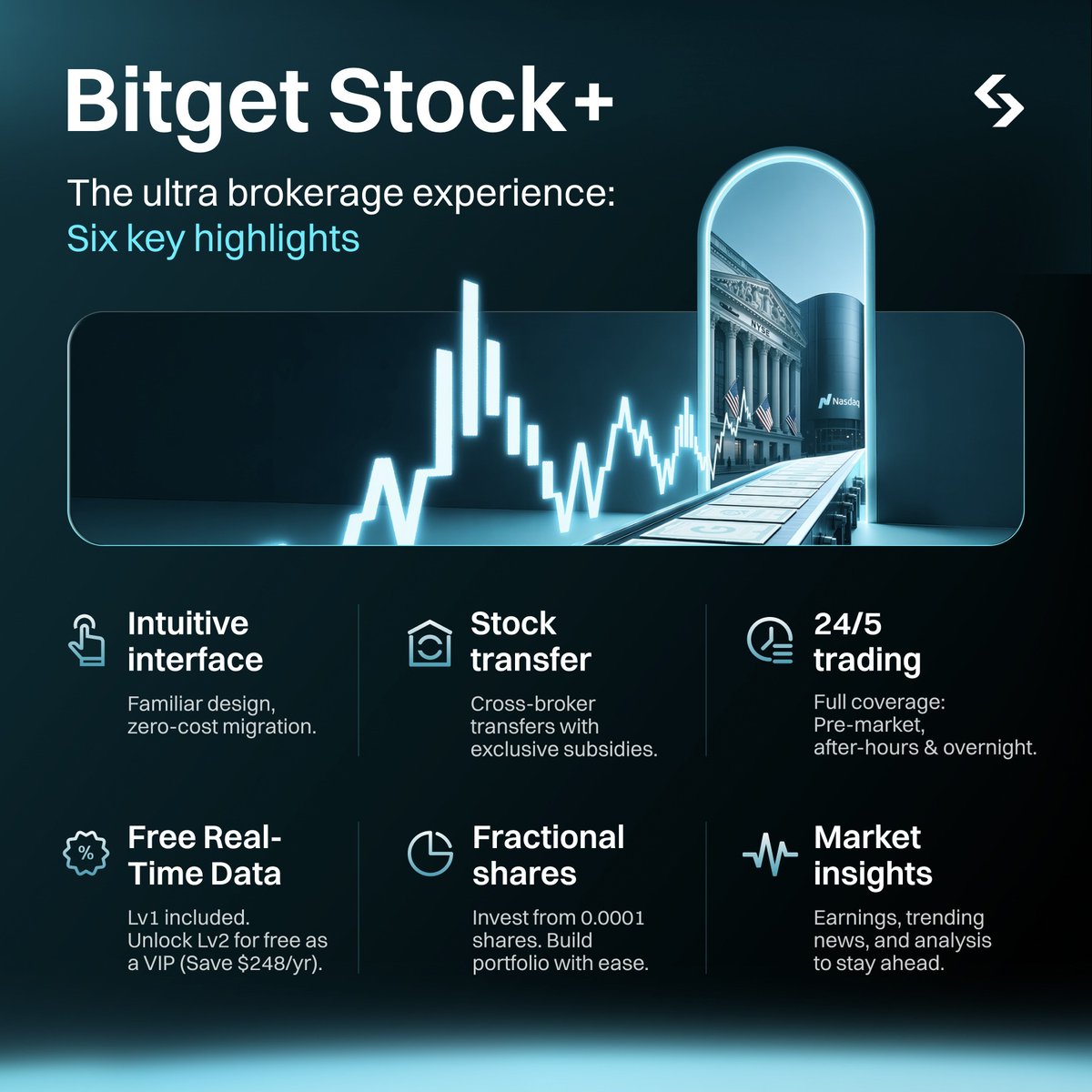
Bitget Stock+ is designed for eligible users who want to trade real U.S. stocks and ETFs directly inside the Bitget app.
Unlike tokenized stocks or stock perpetual futures, Stock+ gives users access to real U.S. stock trading through a dedicated Stock+ account structure. Users can buy, sell, and hold major U.S. stocks and ETFs such as Apple, Tesla, Nvidia, Microsoft, Amazon, Meta, Alphabet, SPY, and QQQ, subject to live availability.
Key features of Bitget Stock+ include:
-
Direct U.S. stock and ETF trading
-
Access to 10,000+ U.S.-listed stocks and ETFs
-
Fractional shares from 0.0001 shares
-
USDC funding and USD settlement
-
24/5 trading access, including supported extended sessions
-
Free Level 1 real-time quotes after account opening
-
Level 2 Nasdaq TotalView and millisecond-level market data for eligible VIP users
-
Stock transfer support from other brokers
-
Potential cash dividends, stock dividends, and voting rights, subject to actual shareholding and product rules
Stock+ is most suitable for users who want real U.S. stock trading rather than only stock price exposure. However, because Stock+ is connected to real U.S. equity market infrastructure, it is not a full 24/7 product. It operates on a 24/5 basis.
2. Tokenized Stocks on Bitget
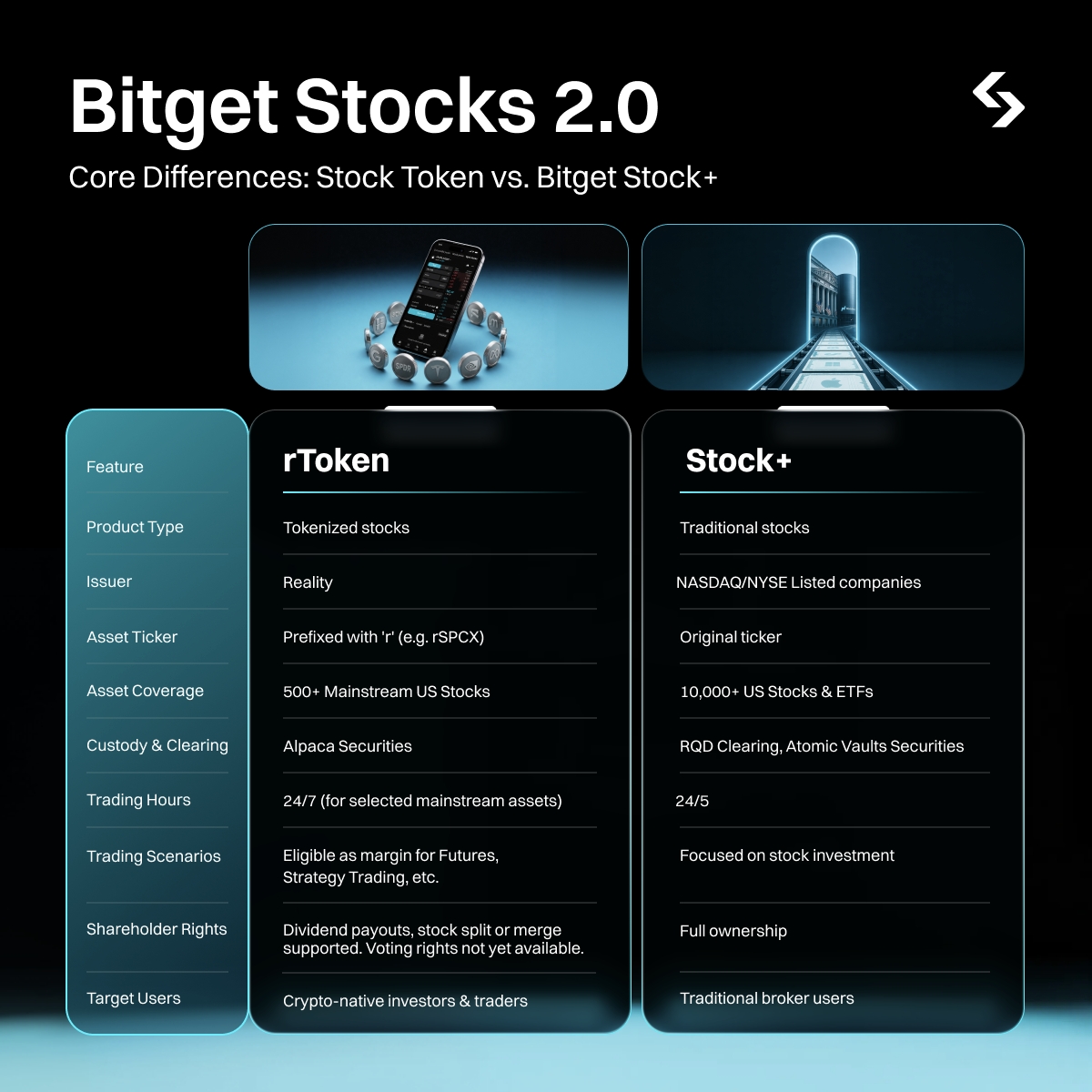
Tokenized stocks are crypto-native or blockchain-based assets designed to track the price performance of publicly listed U.S. stocks and ETFs. They allow users to gain stock market exposure through a crypto trading platform without opening a traditional brokerage account.
Bitget supports 500 tokenized U.S. stocks and ETFs through Bitget Stocks 2.0 rTokens. These products are designed for users who want crypto-native access to stock-linked assets such as rAAPL, rTSLA, rNVDA, rMSFT, rSPY, and rQQQ, where available.
Compared with traditional stock investing, tokenized stocks offer several advantages for crypto-native traders, including:
-
More flexible trading access
-
Stablecoin-based trading
-
Faster movement between crypto and stock-linked assets
-
Unified account management alongside crypto products
-
Easier access to stock-related markets through digital assets
-
Fractional-style stock exposure
Tokenized stocks are generally more suitable for users looking for spot-style stock price exposure without using leverage-heavy derivatives. However, they are different from real stock trading through Bitget Stock+. Tokenized stock products usually provide economic exposure rather than direct registered share ownership.
3. Stock Perpetual Futures on Bitget
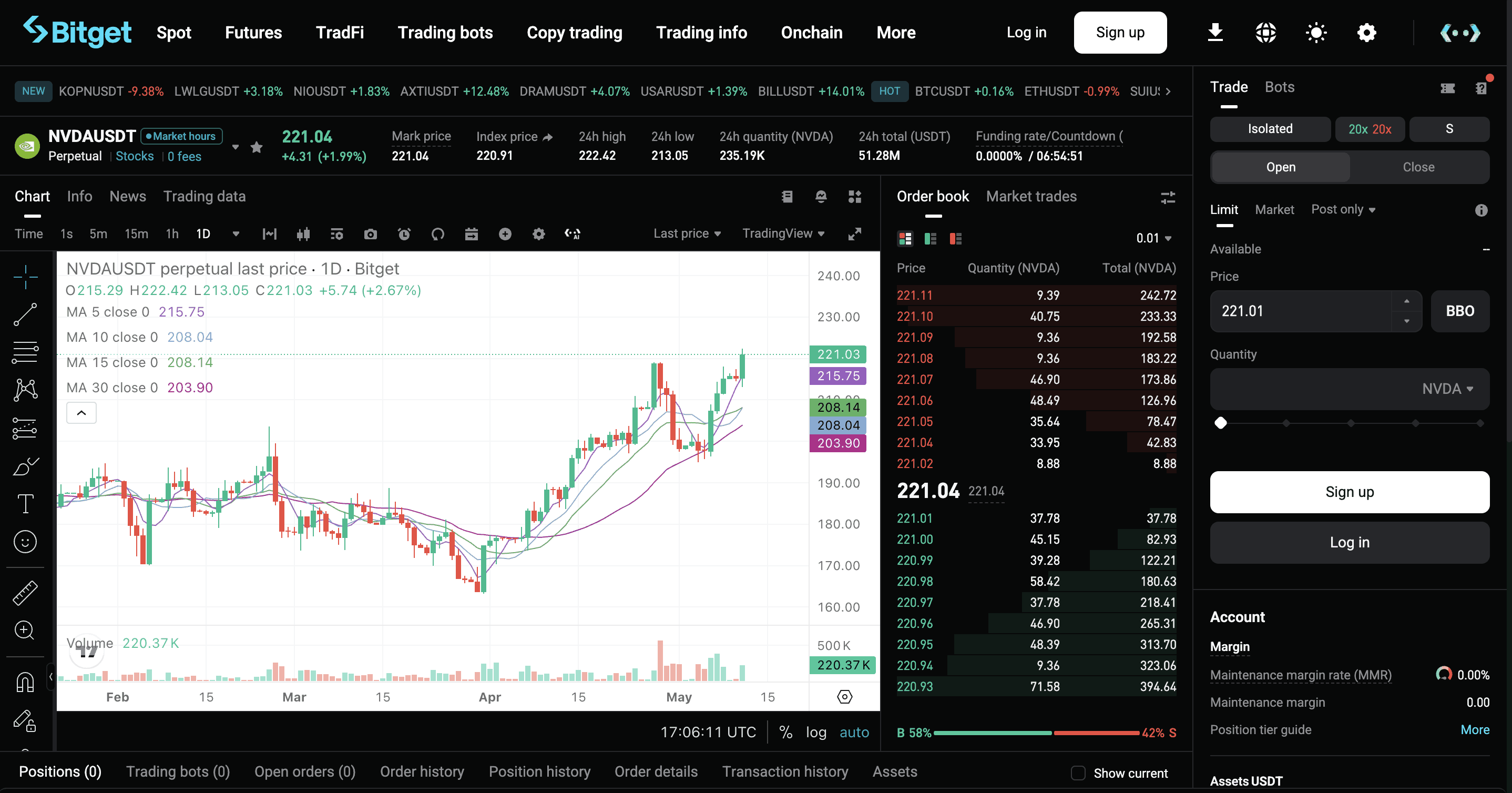
In addition to tokenized stocks, Bitget also offers stock perpetual futures, commonly known as stock perps. These are derivative contracts that track the price of underlying stocks while supporting leveraged trading and long/short strategies.
Bitget currently supports more than 40 stock perpetual futures products, allowing users to trade stock-related volatility similarly to crypto perpetual futures markets.
Key features of Bitget stock perps include:
-
24/7 trading availability
-
USDT-margined settlement
-
Long and short trading opportunities
-
Leverage support
-
Crypto-native trading infrastructure
Stock perpetual futures are designed for more active traders who want to speculate on short-term price movements, hedge market exposure, or trade around earnings reports and macroeconomic events.
Read more: Introduction to Bitget Stock Futures
Together, tokenized stocks and stock perpetual futures help position Bitget as a crypto exchange that combines digital asset trading with stock market exposure in a single trading ecosystem.
How to Trade Real U.S. Stocks on Bitget Stock+
Trading real U.S. stocks on Bitget Stock+ follows a different process from trading crypto spot pairs or stock perpetual futures. Users need to open a Stock+ account, fund it with USDC, and trade stocks with USD settlement.
Step 1: Open Bitget Stock+
Log in to the Bitget app and enter the Stock+ section. First-time users may need to open a Stock+ securities account before trading.
Step 2: Complete Account Setup
Complete the required identity verification and eligibility checks. Product access may depend on region, account status, and local rules.
Step 3: Fund With USDC
Bitget Stock+ uses USDC as the funding bridge. If users already hold USDC in their main Bitget account, they can transfer it into the Stock+ account.
If users hold USDT or another supported crypto asset, they may need to convert it into USDC first.
The basic flow is:
-
Hold crypto, USDT, or USDC in the main Bitget account.
-
Convert supported assets into USDC if needed.
-
Transfer USDC into the Stock+ account.
-
Buy U.S. stocks or ETFs with USD settlement.
Step 4: Search for a Stock or ETF
Search for the ticker you want to trade, such as AAPL, TSLA, NVDA, MSFT, SPY, or QQQ. Open the stock page and review the price, trading session, order type, estimated fee, and available buying power.
Step 5: Place the Order
Select Buy or Sell, enter the quantity or order value, review the order details, and confirm. Because Stock+ supports fractional shares from 0.0001 shares, users can start with smaller position sizes.
Step 6: Manage Your Position
After the order is filled, users can track their holdings inside the Stock+ account. They should monitor price movements, average cost, order history, dividends, corporate actions, and market updates.
Although Stock+ gives users direct U.S. stock access, users should remember that Stock+ operates on a 24/5 structure. It offers broader access than standard market hours, but it is not the same as 24/7 tokenized stock or stock perp trading.
How to Trade Tokenized Stocks on Bitget
Trading tokenized stocks on Bitget is similar to trading crypto spot assets. This makes the process relatively accessible for users already familiar with digital asset trading.
Step 1: Create and Verify a Bitget Account
Create a Bitget account and complete identity verification. Verification may be required before accessing tokenized stock products, depending on region and product rules.
Step 2: Deposit Funds
Deposit supported cryptocurrencies or stablecoins into your Bitget account. Users typically use stablecoins to access stock-linked trading products.
Step 3: Access Bitget Stocks 2.0
Go to Bitget Stocks 2.0. Search for the tokenized stock or ETF you want to trade, such as rAAPL, rTSLA, rNVDA, rMSFT, rSPY, or rQQQ.
Step 4: Review Market Data and Product Rules
Before trading, review important product information such as:
-
Current price
-
Trading pair
-
Liquidity
-
Trading availability
-
Fees
-
Dividend or corporate-action handling, if applicable
-
Product risks
-
Regional restrictions
Understanding liquidity and volatility is important because tokenized stocks and ETFs trade within crypto-native environments and may behave differently from traditional stock exchange markets.
Step 5: Place a Buy or Sell Order
Users can place a market order for faster execution or a limit order to enter at a preferred price. Review the order details, including estimated fees and execution price, before confirming.
Step 6: Monitor and Manage Your Position
After opening a trade, users can monitor their tokenized stock or ETF exposure directly within the Bitget account. Tokenized stocks may offer more flexible trading access than traditional stock markets, but they are still subject to product rules, market conditions, and liquidity risks.
How to Trade Stock Perpetual Futures on Bitget
Bitget stock perpetual futures, also known as stock perps, allow users to trade stock price movements with leverage and 24/7 market access. Unlike tokenized stocks, stock perps are derivative contracts designed for active trading strategies, including both long and short positions.
Step 1: Open the Futures Trading Interface
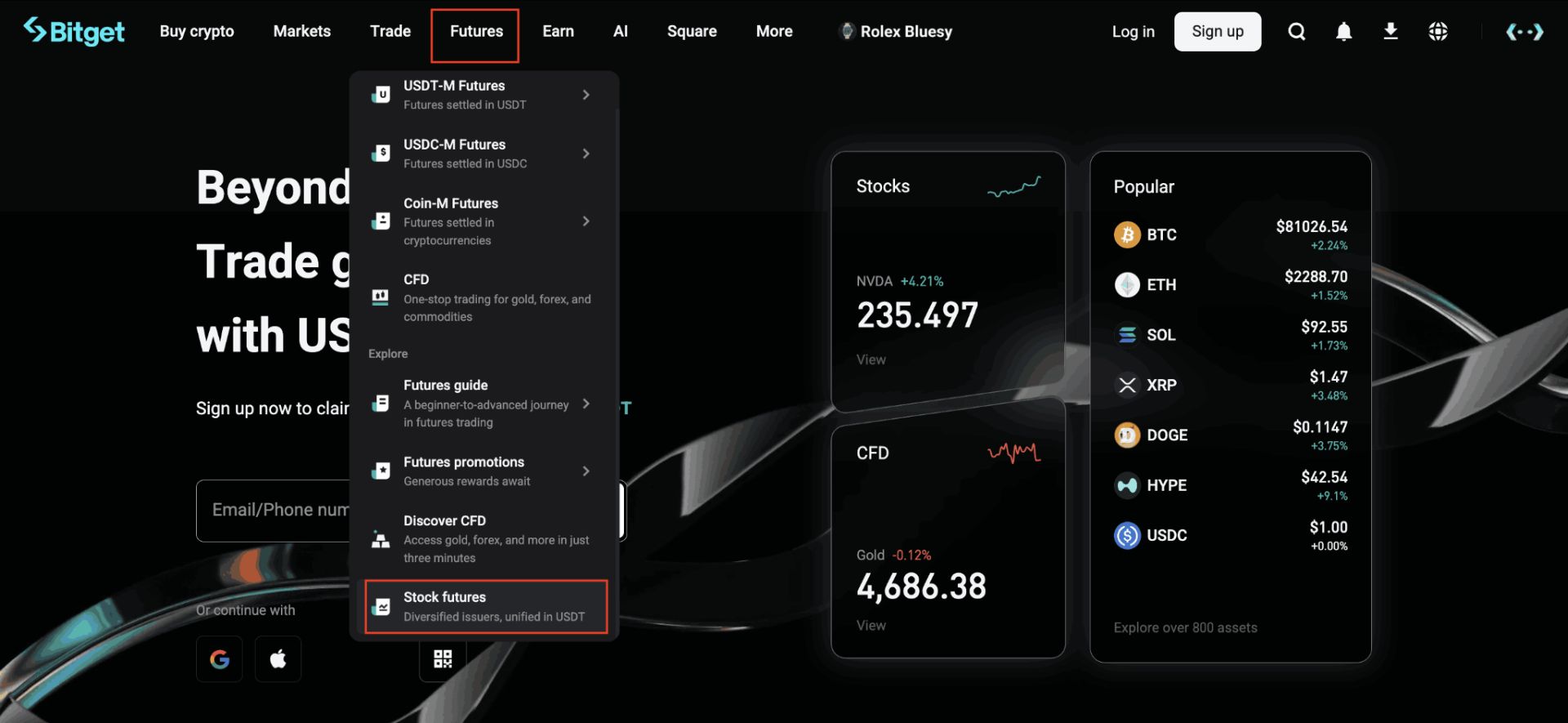
Log in to your Bitget account and navigate to the futures trading section. Then select Stock Futures to access USDT-margined stock perpetual contracts. Make sure your futures account is activated and funded with USDT.
Step 2: Select a Stock Perpetual Futures Pair
Search for the stock perp trading pair you want to trade. Bitget currently supports more than 40 stock perpetual futures products linked to major publicly listed companies and high-interest market sectors such as AI, technology, semiconductors, and electric vehicles.
Before entering a trade, review:
-
Current market price
-
24-hour trading volume
-
Funding rate
-
Open interest
-
Recent price volatility
These metrics help traders evaluate liquidity and market sentiment.
Step 3: Choose Margin Mode and Leverage
Bitget stock perps support leverage trading, allowing users to increase market exposure with smaller capital requirements.
Traders can choose between:
-
Cross margin mode
-
Isolated margin mode
Users can then set their preferred leverage level depending on their trading strategy and risk tolerance. While leverage can amplify profits, it also increases liquidation risk during volatile market conditions.
Step 4: Set Risk Management Tools
Before opening a position, traders should configure risk management tools such as:
-
Stop-loss orders
-
Take-profit orders
-
Position size controls
Using proper risk management is especially important in leveraged futures trading environments.
Step 5: Open and Monitor Your Position
After confirming the trade setup, users can open either:
-
A long position if expecting prices to rise
-
A short position if expecting prices to fall
Because Bitget stock perpetual futures trade 24/7, positions can react continuously to global news events, earnings announcements, macroeconomic developments, and crypto market sentiment.
Active traders often use stock perps for short-term speculation, hedging strategies, and volatility trading opportunities within a crypto-native trading environment.
Bitget Stock Trading Fees Explained
Bitget uses different fee structures across Stock+, tokenized stocks, and stock perpetual futures. Users should always check the live product page before trading because fees, promotions, and availability may change.
1. Bitget Stock+ Fees
For direct U.S. stock trading through Bitget Stock+, transaction fees start from 0.1%, subject to the live product page, user eligibility, and product rules.
During promotional periods, Stock+ fees may be discounted by up to 50%, depending on campaign terms and timing.
Users should also consider:
-
USDT-to-USDC conversion spread if starting from USDT
-
Bid-ask spreads
-
Extended-hours liquidity risk
-
Dividend withholding tax, where applicable
-
Local tax obligations
-
Service provider fees, where applicable
Internal USDC transfers between the main Bitget account and the Stock+ account are free, based on the product guide.
2. Tokenized Stock Trading Fees on Bitget
Tokenized stocks on Bitget generally follow the platform’s standard spot trading fee structure:
-
Maker fee: 0.1%
-
Taker fee: 0.1%
Users may also qualify for lower trading costs through:
-
VIP tier programs
-
BGB fee payment discounts
-
Promotional trading campaigns
Because tokenized stocks operate within Bitget’s crypto ecosystem, users can avoid some traditional finance costs such as currency conversion spreads, international wire transfer fees, and brokerage-related settlement costs.
3. Stock Perpetual Futures Fees on Bitget
Bitget stock perpetual futures follow the platform’s futures trading fee model:
-
Maker fee: 0.02%
-
Taker fee: 0.06%
Additional trading costs may include:
-
Funding fees between long and short traders
-
Variable leverage limits depending on risk tiers
-
Liquidation-related costs during extreme volatility
Bitget also regularly introduces fee promotions for stock perpetual futures traders. Starting from May 1, 00:30 (UTC+8), eligible VIP0–VIP7 users can receive:
-
0% maker fees
-
30% discounts on taker fees for stock perpetual futures trading
Read more: Trading Fee Discounts for Stock Perps
Bitget vs. Traditional Stock Brokers: Key Differences
Bitget and traditional stock brokers may both provide access to stock-related markets, but the trading experience they offer can be very different.
Traditional brokers are built around direct equity ownership, fiat funding, and conventional stock market infrastructure. Bitget combines direct U.S. stock trading through Stock+, tokenized stock exposure, and stock perpetual futures inside one crypto-native ecosystem.
| Feature |
Bitget Stock+ |
Bitget Tokenized Stocks |
Bitget Stock Perps |
Traditional Stock Brokers |
| Product type |
Real U.S. stock trading |
Tokenized U.S. stocks and ETFs |
Stock derivative contracts |
Traditional equities and ETFs |
| Trading hours |
24/5 |
24/7 |
24/7 |
Usually fixed market hours |
| Settlement |
USD inside Stock+ account |
Stablecoin-based |
USDT-margined |
Fiat-based |
| Ownership structure |
Real stock access through Stock+ |
Tokenized economic exposure |
No stock ownership |
Direct share ownership |
| Crypto integration |
Built into Bitget ecosystem |
Built into Bitget ecosystem |
Built into Bitget ecosystem |
Usually separate |
For active traders, Bitget’s biggest advantage is flexibility. Users can move between crypto, real U.S. stocks, tokenized U.S. stocks and ETFs, and stock perpetual futures without managing several disconnected platforms.
For long-term investors, traditional brokers may still offer advantages such as familiar brokerage statements, conventional tax reporting, direct shareholder services, and broader traditional investment products.
Advantages of 24/7 Stock Trading on Bitget
Traditional stock markets were built around fixed trading sessions, but modern market narratives move far beyond standard exchange hours. Earnings announcements, AI-related developments, geopolitical events, and macroeconomic data releases can all trigger major price swings before traditional stock exchanges reopen.
Bitget’s stock ecosystem gives users several ways to access those opportunities.
Some of the biggest advantages include:
-
Direct U.S. stock trading through Bitget Stock+
-
Fractional shares from 0.0001 shares through Stock+
-
24/5 access to real U.S. stock trading through Stock+
-
Access to 500 tokenized U.S. stocks and ETFs through Bitget Stocks 2.0 rTokens
-
40+ stock perpetual futures products for leveraged long or short trading
-
24/7 stock-related trading through selected tokenized stocks and stock perpetual futures
-
Faster reaction to market news through crypto-native infrastructure
-
Stablecoin-based access for tokenized products and futures
-
USDC funding and USD settlement for Stock+
-
Unified crypto and stock trading ecosystem
-
Access to market narratives such as AI, EVs, semiconductors, technology, crypto-related equities, and major U.S. index ETFs
For experienced market participants, the appeal is not only convenience. It is the ability to choose the right market route based on strategy. Users who want real U.S. stock trading can use Stock+. Users who want tokenized stock and ETF exposure can use stock rTokens. Users who want leveraged long or short exposure can use stock perps.
What Beginners Should Know Before Trading Stocks 24/7
While Bitget’s stock ecosystem creates more flexibility and market access, beginners should understand the product differences before entering the market.
The biggest mistake is treating Stock+, tokenized stocks, and stock perpetual futures as the same thing. They all provide access to stock-related markets, but they work differently.
Before trading stock-related products on Bitget, beginners should pay attention to several important factors:
-
Understand Stock+ first: Bitget Stock+ is for direct U.S. stock trading and operates on a 24/5 schedule.
-
Understand tokenized stocks: Tokenized stocks provide crypto-native stock-linked exposure to U.S. stocks and ETFs, but they are different from real stock ownership through Stock+.
-
Understand stock perps: Stock perpetual futures are derivatives designed for leveraged and short-term trading strategies.
-
Learn how leverage works: Leverage can amplify profits, but it also increases liquidation risk.
-
Monitor funding fees: Stock perpetual futures may involve recurring funding payments depending on long and short positioning.
-
Start with smaller position sizes: New traders should avoid excessive leverage and gradually build experience before increasing exposure.
-
Use risk management tools: Stop-loss orders, take-profit levels, and position sizing are essential for managing downside risk.
-
Stay informed about market-moving events: Earnings reports, AI developments, interest rate decisions, and macroeconomic data can significantly impact stock-related volatility.
-
Check product availability: Stock+, tokenized stocks, and stock perps may not be available in every region.
-
Review fees and taxes: Trading costs, spreads, dividend withholding, and local tax obligations may apply.
For beginners, focusing on product education and risk control is often more important than chasing short-term volatility.
Final Thoughts
Financial markets no longer move in isolated trading sessions. AI headlines break overnight, earnings reports trigger instant volatility, and macroeconomic events can reshape market sentiment within minutes. This is why more traders are looking beyond traditional brokerage systems toward platforms that provide more flexible access to stock-related opportunities.
Bitget now offers several ways to access stock markets from a crypto-native platform. Through Bitget Stock+, eligible users can trade real U.S. stocks and ETFs on a 24/5 schedule, with fractional shares, USDC funding, and USD settlement. Through Bitget Stocks 2.0 rTokens, users can access 500 tokenized U.S. stocks and ETFs in a crypto-native format. Through stock perpetual futures, users can trade 40+ stock-linked futures products with leveraged long or short strategies.
The key is choosing the right product. Stock+ is the main route for direct U.S. stock trading. Tokenized stocks are built for crypto-native stock and ETF exposure. Stock perpetual futures are designed for active traders who want leverage, long and short positioning, and around-the-clock market access. Together, these products support Bitget’s broader Universal Exchange (UEX) vision, where crypto, stocks, derivatives, and global market narratives can be traded from one integrated platform.
Ready to trade stocks 24/7? Create your Bitget account and explore tokenized stocks and stock perpetual futures today.
-
Disclaimer: The opinions expressed in this article are for informational purposes only. This article does not constitute an endorsement of any of the products and services discussed or investment, financial, or trading advice. Qualified professionals should be consulted prior to making financial decisions.
Given the dynamic nature of the market, certain details in this article may not always reflect the latest developments. For any inquiries or feedback, please reach out to us at geo@bitget.com.


- Key Takeaways
- Which Crypto Exchange Offers 24/7 Stock Trading in 2026?
- What Types of Stock Products Does Bitget Offer?
- How to Trade Real U.S. Stocks on Bitget Stock+
- How to Trade Tokenized Stocks on Bitget
- How to Trade Stock Perpetual Futures on Bitget
- Bitget Stock Trading Fees Explained
- Bitget vs. Traditional Stock Brokers: Key Differences
- Advantages of 24/7 Stock Trading on Bitget
- What Beginners Should Know Before Trading Stocks 24/7
- Final Thoughts