
Tanker freight rates halved, war premium recedes: Is the oil market entering an agreement verification period?

After the Democratic Party’s sweeping victory in the U.S. midterm elections in early November, market expectations for the resumption of U.S.-Iran negotiations and the easing of regional tensions rose significantly. Trump subsequently sent a signal of restraint, stating that it was "highly unlikely" to launch a large-scale military strike against Iran immediately, but also emphasized that the final decision would depend on whether Iran accepted a sufficiently tough agreement. Influenced by these political signals, the market began to re-evaluate the war risk premium previously priced into oil.
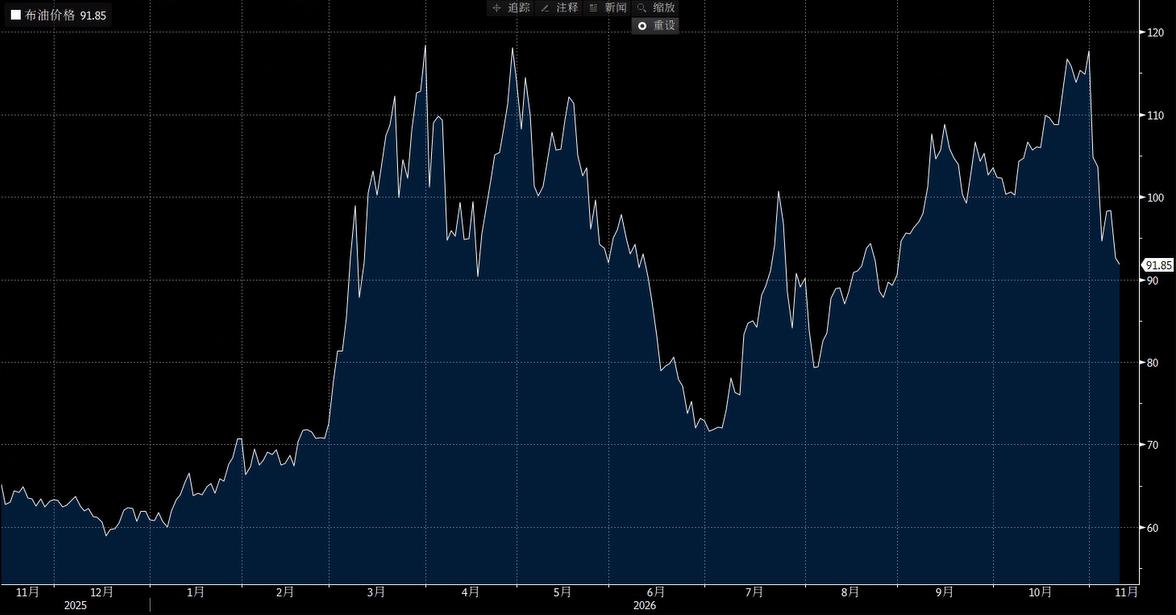
Brent crude oil futures quickly retreated from the high of $117 per barrel on October 30, plunging over 20% at one point to around $93 per barrel (currently at $91.9 per barrel), recording one of the largest weekly drops since April 2020. Tanker freight rates also plummeted. The cost of chartering a Very Large Crude Carrier (VLCC) from the U.S. Gulf to Asia fell from $79.6 million a month ago to $45 million, a decline of about 43.5%. The freight cost per barrel of crude oil dropped sharply from nearly $39.8 to $22.5.
At the same time, freight rates for Aframax crude oil tankers from the U.S. Gulf to Europe have fallen for ten consecutive trading days, hitting a new two-month low. Previously, freight rates on this route had soared nearly eightfold compared to pre-war levels, accounting for more than 25% of the crude oil landed cost at one point. As both freight rates and oil prices plunged, the extreme shipping premiums driven by geopolitical panic are rapidly being squeezed out.
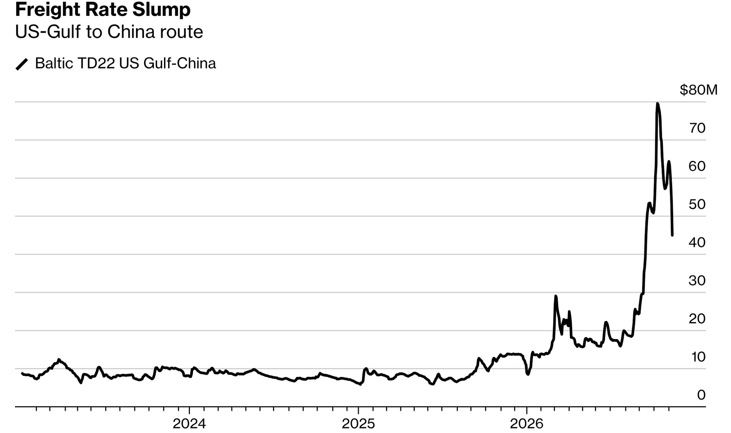
The decline in freight rates is likely to reopen long-distance crude oil trade windows and further restore the physical market
By late September, Middle East crude oil exports had already recovered to about 90% of pre-war levels, but oil prices remained high. The reason lay in elevated freight rates, insurance, and shipping risk premiums; at the same time, about 92% of ships transiting the Strait of Hormuz sailed with their AIS turned off as “dark vessels,” indicating a limited degree of shipping normalization at that time and sustaining the risk premium.
Disclaimer: The content of this article solely reflects the author's opinion and does not represent the platform in any capacity. This article is not intended to serve as a reference for making investment decisions.
You may also like
Japanese stocks closed up 1.31%
“Big Short” Burry dumps Caterpillar (CAT.US) put options after their value quadrupled, cutting his short position by 75%
After Michael Burry's put options on Caterpillar nearly quadrupled, he reduced his short position in Caterpillar.


BUZZ-IIFL Finance rallies to a two-month high, boosted by Blackstone deal
Crypto prices
More


