
Iranian media reports no progress in US-Iran communication; Trump claims "victory" and says he will not consider striking Iran after winning the election

According to Iranian media reports, the exchange of information between the US and Iran through intermediaries is a routine practice, and there has been no new progress between the two sides. Iran will also not take new actions until the US implements the seven conditions put forward by Iran.
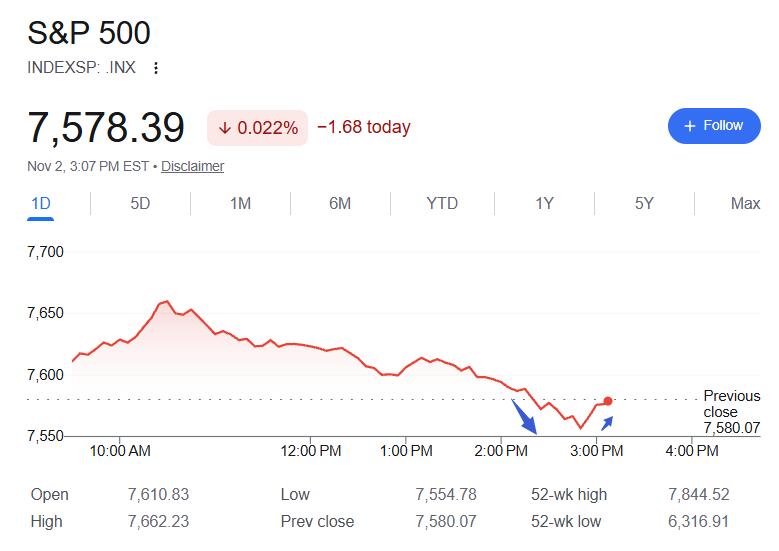
During Monday afternoon trading in the US stock market, performance diverged. The Dow continued to rise, while after the above report from Iranian media, the S&P 500 index turned down about 0.1%, the Nasdaq's decline widened, and the Nasdaq 100 index fell nearly 0.9% intraday. International crude oil prices continued their earlier decline, with both WTI and Brent crude falling nearly 8% intraday.
Subsequently, US President Trump stated that the US is "winning on the Iran issue," and added, "Oil prices fell $10 today, the largest single-day drop in history." Trump also told Axios that he is "in no hurry" to decide whether to resume military action against Iran.
After Trump released signals indicating he was not in a hurry to resume military action, the Nasdaq 100’s decline quickly narrowed to within 0.8%. Asked whether he would consider striking Iran again after the US midterm elections, Trump responded: No. Subsequently, the S&P briefly turned positive.
The sharp decline in crude oil prices on Monday mainly reflected the market's optimistic expectations for US-Iran diplomatic progress: Over the weekend, Trump signaled willingness to give negotiations more time, and on Monday, Iranian official media reported that Iran's Supreme Leader had granted the government “certain powers” to pursue peace talks.
Iran Says There Has Been No New Progress in US-Iran Communications; Strait of Hormuz Remains Under Iranian Control
According to Fars News Agency, informed sources stated that the exchange of information between Iran and the US through intermediaries is routine, and there has been no new progress through this channel. Iran emphasized that until the US implements the seven conditions put forward by Iran, there will be no new progress or actions.
The source also claimed that the Strait of Hormuz is fully under Iranian military control, and no US warship dares to approach the strait within several hundred kilometers. This statement indicates that despite both sides maintaining communication via third parties, significant differences remain on core demands and the issue of strait control.
It is noteworthy that Iran sent out mixed signals regarding negotiation progress that day. Earlier on Monday, according to Xinhua News Agency citing the official Islamic Republic News Agency, Iranian President Pezeshkian stated that the Supreme Leader had authorized the government with “certain powers” for peace negotiations, and that Iran was working to solve the issue through dialogue.
Previously, Iran also noted that both sides were still exchanging information through intermediaries, and diplomatic contacts continued, but the issues were complex and there had been no breakthrough in negotiations. The seven conditions put forward by Iran involve the reopening of the Strait of Hormuz, lifting the US maritime blockade on Iranian ports, and more. Iran insists that the US must first meet these requirements before taking further action.
Although the Fars report on lack of new progress in communications adds uncertainty to the diplomatic outlook, after the news broke, international oil prices still maintained close to 8% intraday declines, without reversing the prior downward trend.
WTI Crude Falls Below $100 Intraday, Brent Drops Near $103
International oil prices tumbled sharply on Monday, mostly driven by market expectations of a US-Iran diplomatic détente. Over the weekend, Trump, during a call with Israeli Prime Minister Netanyahu, signaled his willingness to let negotiations unfold; on Monday, the Iranian president said the Supreme Leader had authorized the government to advance peace talks, leading the market to price out the short-term risk premium for renewed US-Iran conflict.
When US stocks hit fresh intraday lows at midday, WTI crude futures fell to $95.15 per barrel, down $8.97 from last Friday's close, a daily decline of more than 8.6%; Brent crude fell to $103.28 per barrel, down $10.15 from last Friday's close, with a daily decline of over 8.9%. Previously, WTI had already fallen below the $100 per barrel mark during European trading hours.
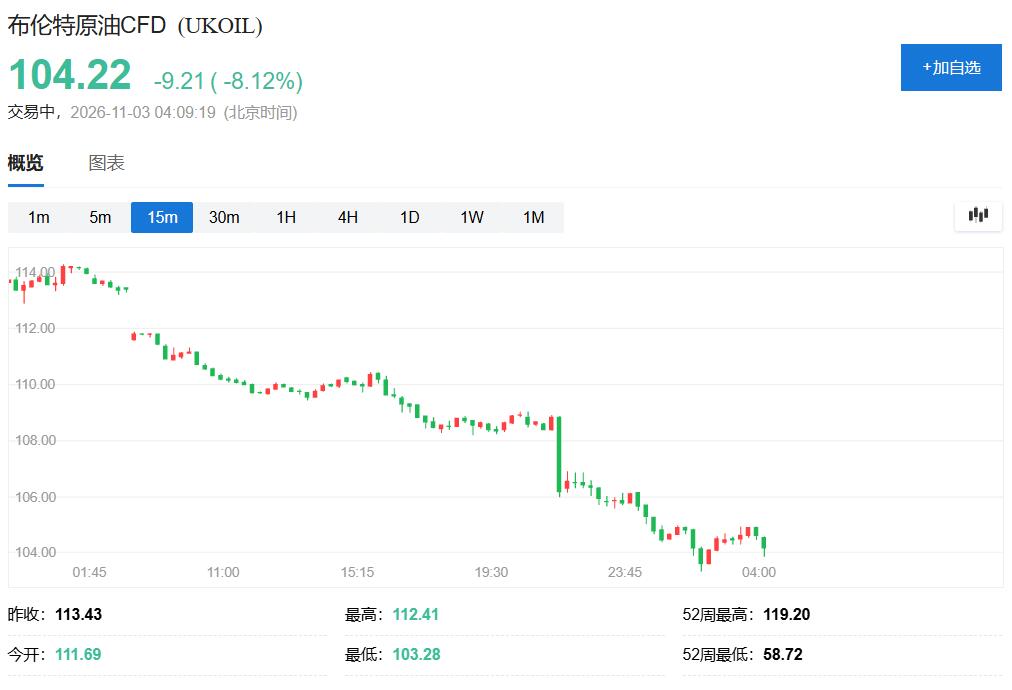
However, diplomatic contacts have yet to result in a substantive agreement. The risks of navigation in the Strait of Hormuz and possible escalation of military conflict still exist. Whether geopolitical risk premium can continue to fall remains to be seen.
Israel Urges US to Resume Action Against Iran Immediately After Elections, Talks Remain Uncertain
However, Israel clearly hopes the US will take a tougher stance.
According to China Central Television News, citing Israeli media over the weekend, Trump and Israeli Prime Minister Netanyahu had a "direct and sharp" call last Saturday, October 31, regarding the US-Iran negotiations.
Sources say Netanyahu urged Trump to immediately resume military action against Iran after the November 3 US midterm elections and expressed concern about the ongoing US-Iran talks mediated by Qatar. At this stage, Trump prefers to let negotiations play out fully and does not want Israel interfering in the process.
It is reported that if negotiations fail, Trump’s stance could “change significantly.”
This makes the US midterm elections a key time point for the market to observe the direction of the US-Iran situation. On the one hand, Trump wants to use diplomacy to avoid further escalation and ease economic pressure from high oil prices; on the other, Israel continues to apply pressure, and Iran insists that the US must first meet its core conditions before taking further steps.
For the oil market, the core of current trading is no longer just about whether the US and Iran maintain communication, but whether diplomatic engagement can be translated into tangible agreements. Until there is a substantial breakthrough in negotiations, the risks related to navigation in the Strait of Hormuz and renewed military escalation will continue to cause significant two-way volatility in oil prices.
Disclaimer: The content of this article solely reflects the author's opinion and does not represent the platform in any capacity. This article is not intended to serve as a reference for making investment decisions.
You may also like
Update: Dow Rises in Choppy Session Amid US Election Anxiety
Wall Street on High Alert for the Biggest U.S. Treasury Issuance Adjustment in Years: Long-Term Bond Issuance May Be Cut Early, Short-Term Financing Ratio Faces Test
The U.S. Treasury will announce a new round of quarterly refinancing plans this Wednesday. Several primary dealers predict that the Treasury will adjust its policy language to allow for a reduction in long-term Treasury issuance next year, while compensating for the financing gap by increasing short-term debt issuance. Citi expects the Treasury may begin reducing the issuance of 20-year and 30-year Treasuries starting this month, which would diverge from the previous quarterly refinancing statement's guidance of maintaining stable issuance levels.

Optimism to highlight OP Stack at Ethereum Institutional Forum in London

Bitcoin risks drop below $76K as 7% oil slide fails to spark BTC price rally

Crypto prices
More


