
Crude Oil: Many grasshoppers are tied to the same rope

Morning FX
Looking ahead to the end of the year in the financial markets, it becomes clear that many assets are tied together by a single string, and at the end of that string is oil prices.
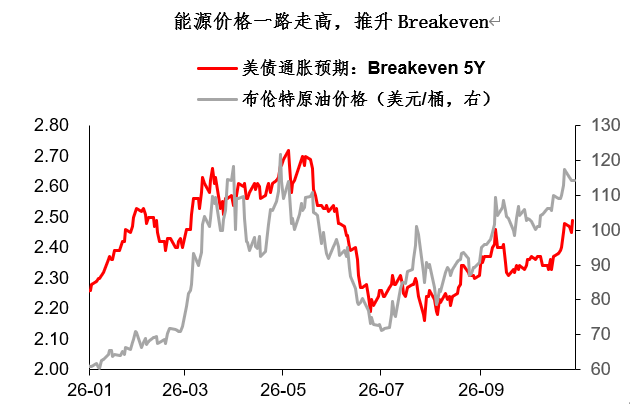
Take US Treasuries, for example. Recently, US Treasury yields have fallen from high levels; structurally, this is mainly due to a decrease in real yields, while inflation expectations (breakeven) continue to rise. The key reason is persistently high energy prices, which act as a major tether, thereby constraining upside potential.
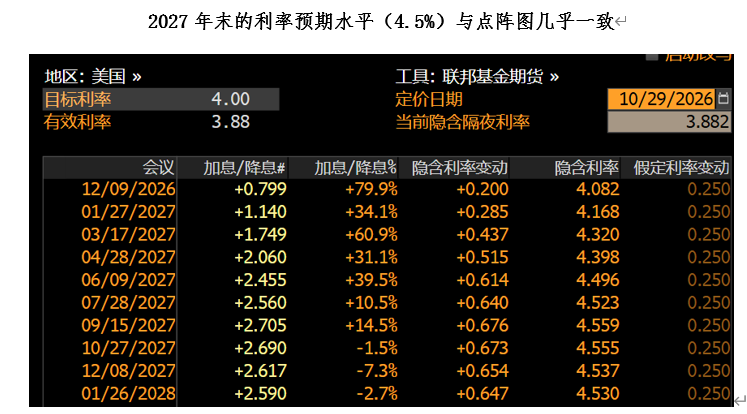
The market's expectation for Federal Reserve monetary policy (4.55% by end-2027) now aligns closely with the dot plot. This means that the wave of expectation adjustments in the US Treasury market has come to an end. Where does it go from here? The direction of oil prices will be crucial.
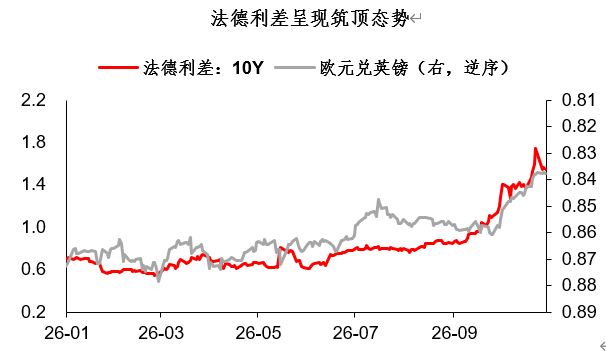
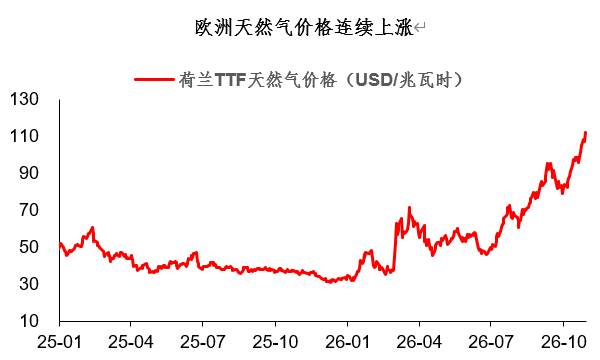
Next, let’s look at the euro—another grasshopper on the same rope. Recently, France’s fiscal issues have marginally eased, French government bond yields and the France-Germany spread are topping out. But the euro remains sluggish, with bets on EUR/GBP convergence causing mass liquidations. The root cause? Energy prices again. As of now, European natural gas prices have more than doubled from the start of the year, reaching their highest levels since the 2022 all-time highs. How will Europe get through this winter?
In the commodities market, sticky oil prices will undoubtedly crowd out and suppress demand. According to research by Goldman Sachs, every 10% rise in oil price reduces the GDP of oil-importing countries by around 0.2%-0.3% on average over one to two years; if the oil price shock is supply-driven (like the current US-Iran conflict), GDP contraction can expand to 0.5%-0.6%.
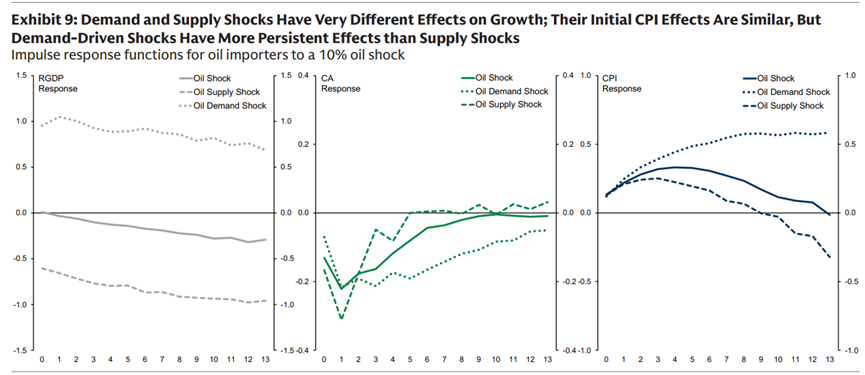
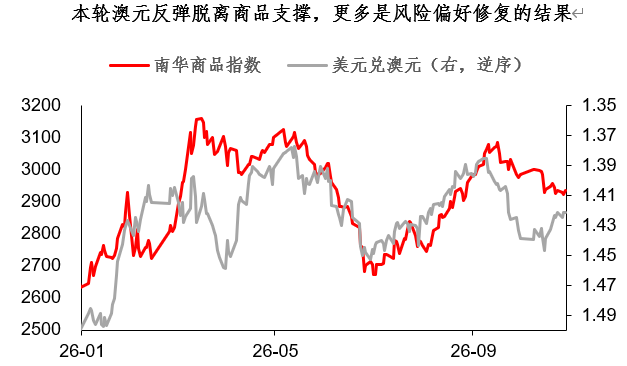
This is why copper, silver, and other major commodities have recently performed weakly, and even gold has been affected. This leads us to a topic for the year ahead—how long can the global economy withstand high oil prices + high interest rates? In the short term, the recent rally in the Australian dollar has diverged from commodity strength; although we have no doubt about the long-term commodity bull market, caution is advised regarding its rhythm.
In summary, you’ll notice that many fine segments in the rate, FX, and commodity markets at year-end are all tied to the same string—oil prices. As other uncertainties (such as Fed rate decisions and midterm elections) are resolved, oil prices become the main gravitational pull. After the midterms, expectations of renewed US-Iran conflict are widespread, though it’s not impossible for them to be averted through negotiation...

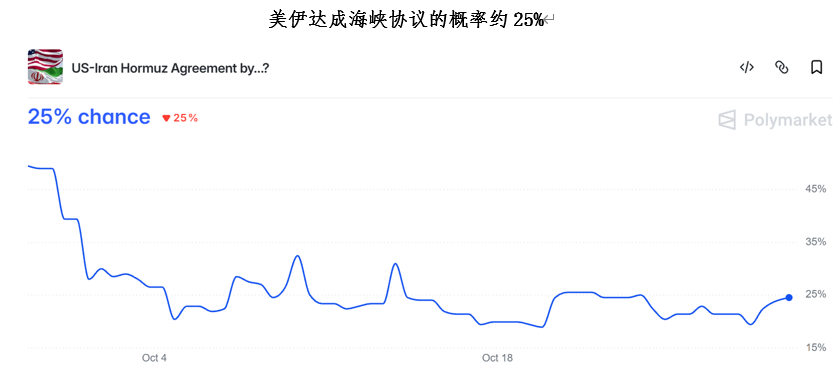
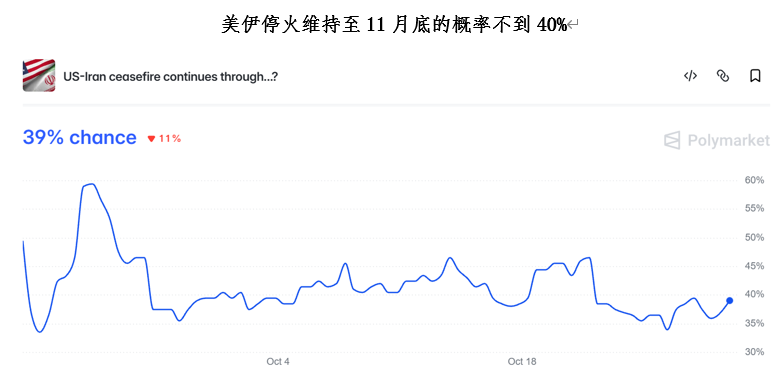
Polymarket shows there is only a 25% chance the US and Iran will reach a strait agreement by the end of November, while there is about a 60% chance that military conflict will erupt again. Thus, the market is taking renewed conflict as a high-probability post-midterm event. Under these "conflict expectations," energy-vulnerable currencies (such as the euro, the Thai baht, the yen, etc.) are unlikely to stage a strong rebound, while Asian currencies (like CNY) are among the few safe havens.
Summary of today’s points:
1. Looking toward year-end in the financial markets, you can see that many assets are tied together, with oil prices at the other end of the string.
2. In the US Treasury market, expectation-driven rate hikes have played out; oil prices will matter for what’s next. In FX, France’s fiscal troubles have eased at the margin, but energy remains a major overhang for the euro. In commodities, sticky oil prices will certainly squeeze and suppress demand for industrial products. A question for next year: how long can the global economy handle high oil prices + high interest rates?
3. In the short term, the market views some degree of US-Iran conflict as a high-probability post-midterm outcome. Under these “conflict expectations,” energy-vulnerable currencies could struggle to rebound, while Asian currencies are among the few safe havens.
Disclaimer: The content of this article solely reflects the author's opinion and does not represent the platform in any capacity. This article is not intended to serve as a reference for making investment decisions.
You may also like
AI is ushering in an all-round productivity explosion.


Data: 800 BTC transferred from an unknown wallet to a certain exchange, worth approximately $62.13 million.
Crypto prices
More


