
Gold faces forced liquidation again, expanding losses in equity markets

Huitong Network Report, October 30 — The recent weakness in gold appears to be largely driven by forced liquidation related to the equities selloff, rather than a deterioration in fundamentals. Declining real yields should actually support gold prices, and there is also an unusual divergence between ETF holdings and spot prices. Once the pressure from liquidation subsides, gold may see a rapid rebound. The challenge lies in timing.
Yesterday, another equities selloff put pressure on precious metals, and gold once again faced strong headwinds. Recently, gold has shown a high correlation with movements in the stock market, and the latest decline seems to stem from investors selling assets to compensate for losses in other parts of their portfolios.
Chart: You can see the correlation between the Nasdaq Index (blue line) and gold (candlestick chart).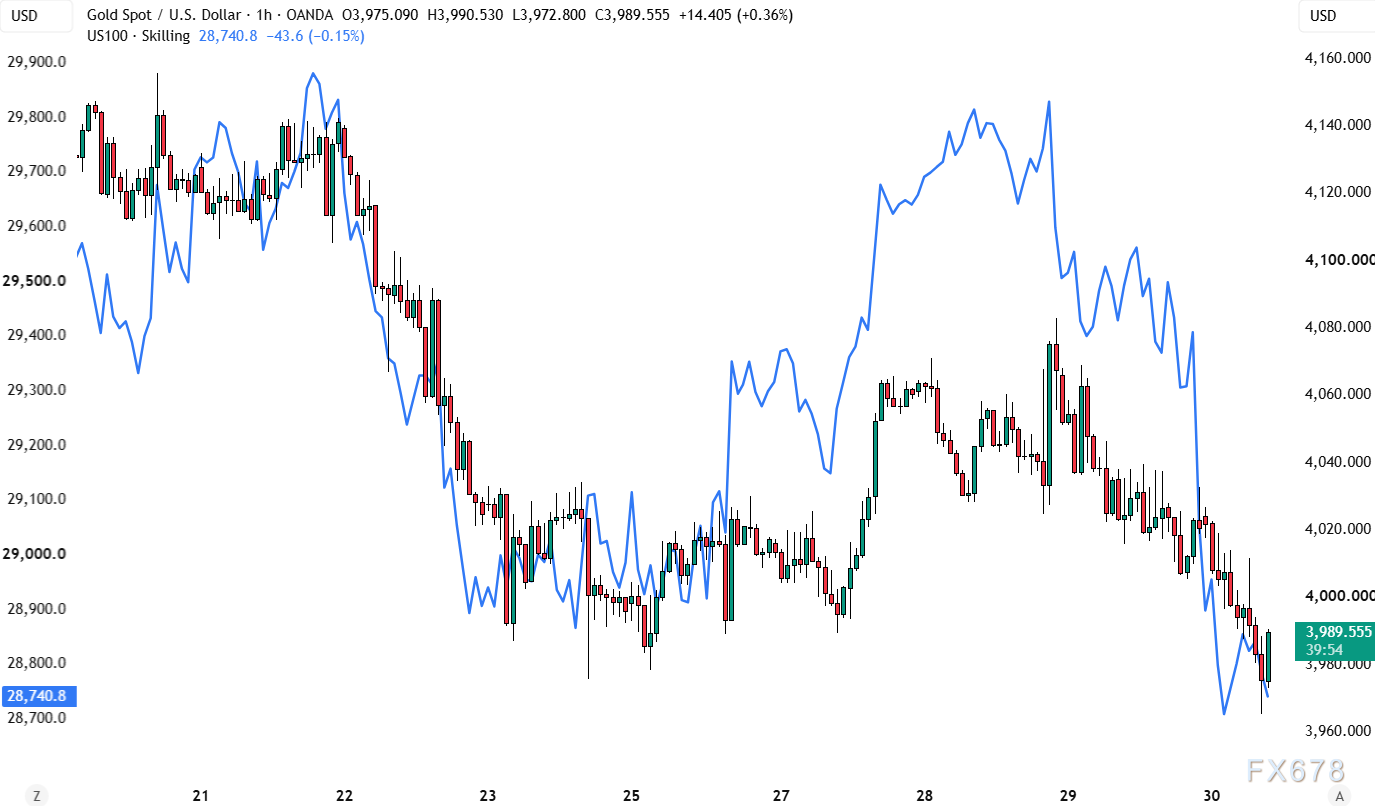
To understand this mechanism, imagine an investment fund that simultaneously holds stocks, gold, and government bonds. On a day when the market suddenly crashes, the fund suffers losses on its leveraged positions. The fund may need to raise cash to meet margin calls, reduce leverage, or satisfy investor redemptions. In such situations, it might not only sell the assets causing the losses, but anything that can be quickly liquidated. Gold is especially useful in these circumstances because of its high liquidity and the ability to sell it rapidly.
Major drivers such as real yields have actually pointed toward higher gold prices. In fact, as rising oil prices keep inflation expectations roughly stable, while nominal U.S. Treasury yields have fallen due to safe-haven buying prompted by equity losses, real yields have declined significantly.
In the chart below, we can also see an unusual divergence between spot gold and ETF holdings. Normally, the spot price leads ETF inflows and outflows, but in the current scenario, I believe technical factors rather than fundamentals are suppressing gold's upside.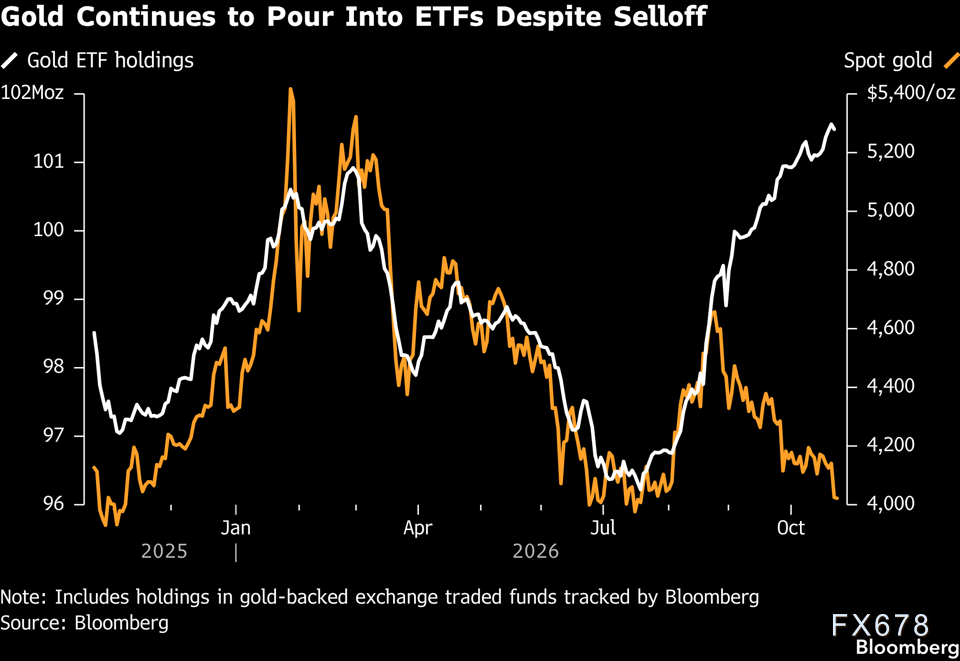
Once this artificial selling pressure on gold diminishes, we may witness a strong and rapid rebound. We're also gradually moving into the seasonally favorable period—between December and January of the following year. The difficulty lies in timing. Traders can rely on key technical levels or wait for a fundamental catalyst. Potential catalysts include a breakthrough in U.S.-Iran negotiations, dovish remarks from the Federal Reserve, or weaker U.S. economic data.
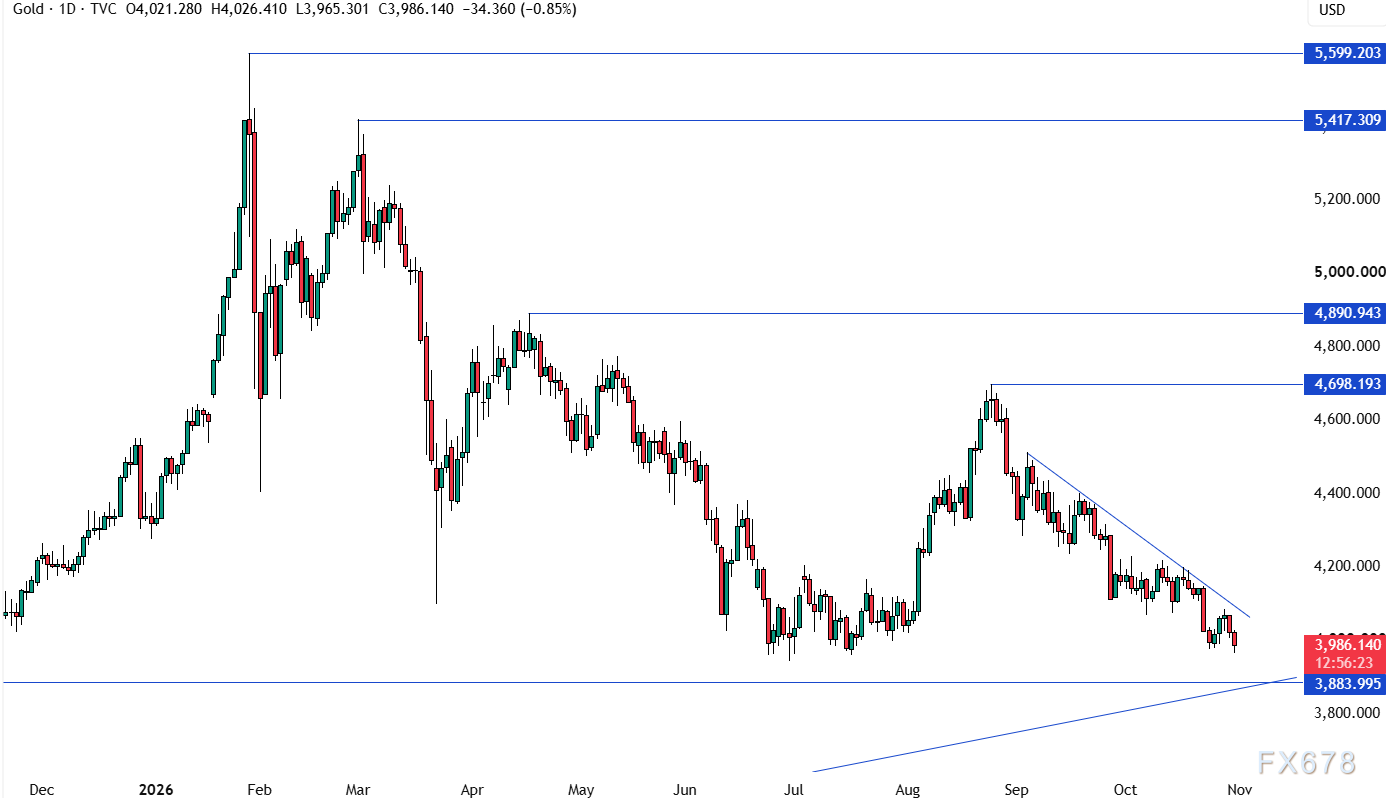
On the daily chart, we can see that gold has continued its decline and is approaching the major support area around 3,885. If the price reaches this zone, buyers are expected to step in, clearly setting risk just below the primary uptrend line in preparation for a push towards new all-time highs. On the other hand, sellers will look for a break below this trendline to add to their bearish bets, targeting the 3,500 level.
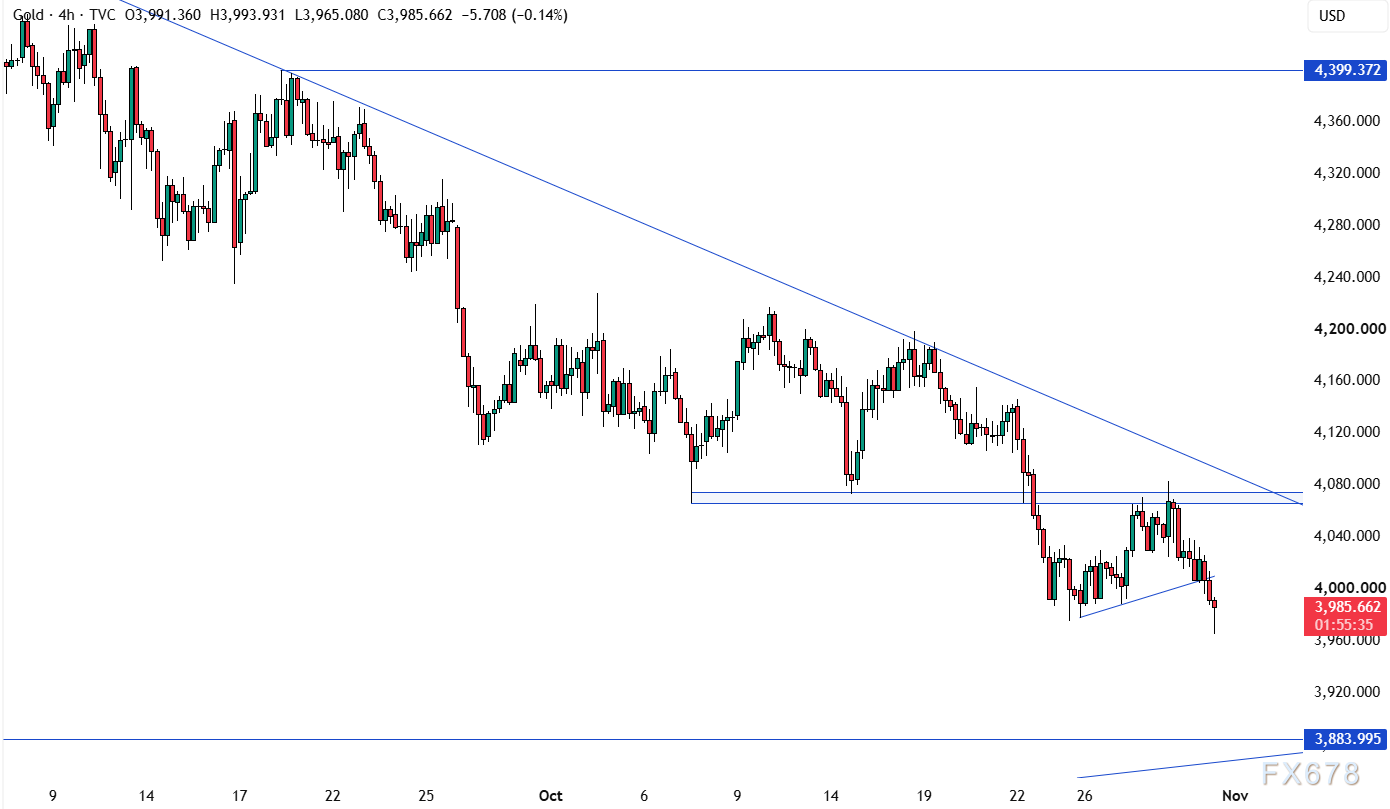
On the 4-hour chart, we can see that the price broke through a secondary uptrend line yesterday and continued falling as sellers increased bearish pressure, targeting the 3,885 area. If a rebound occurs before reaching 3,885, sellers are expected to leverage the descending trendline, setting risk above it to maintain pressure on new lows. Conversely, buyers will look for upward breakouts to open the door for new highs and position for a push toward the 4,400 level.
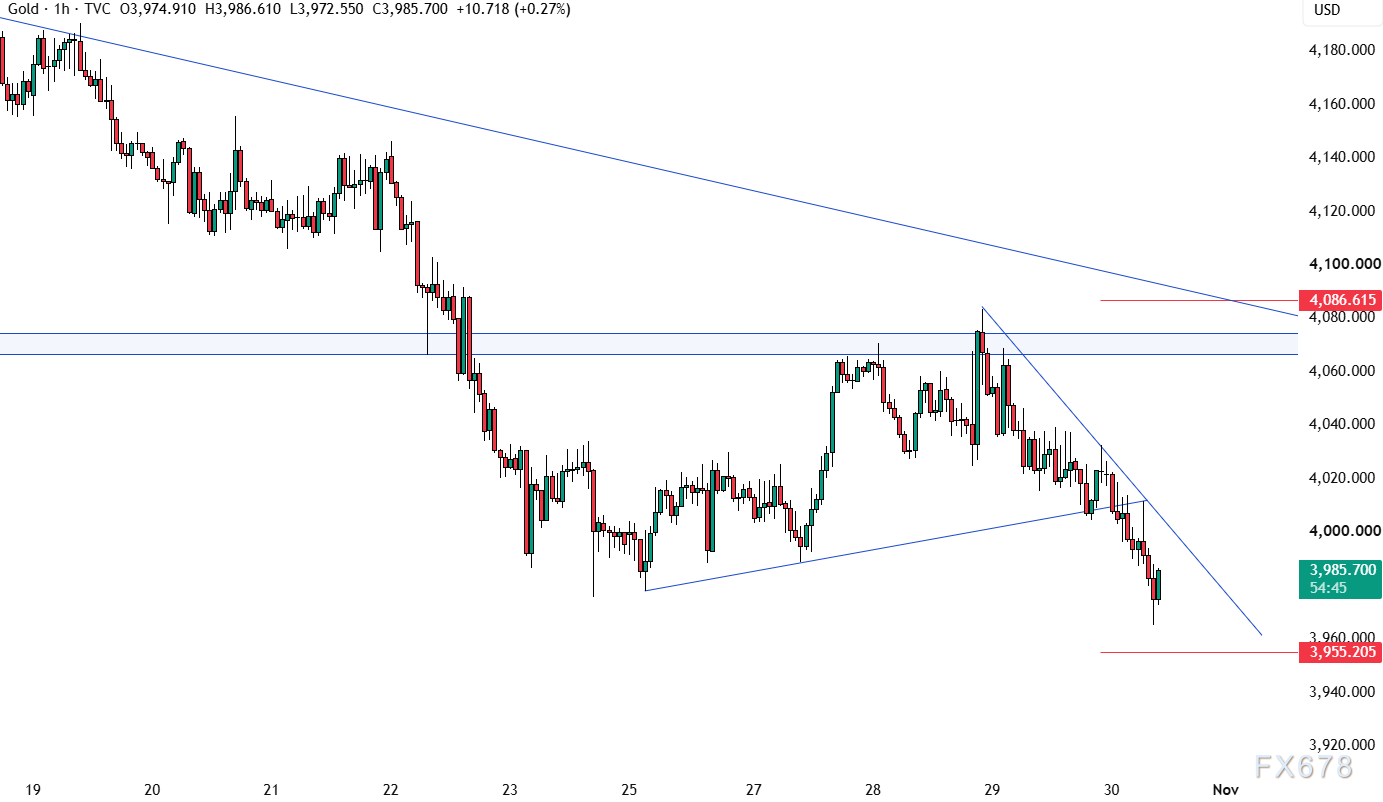
On the 1-hour chart, a secondary descending trendline defines the bearish momentum for this timeframe. Sellers are expected to keep relying on this trendline, setting risk above it while aiming for new lows. Conversely, buyers will look for upward breakouts to position for a rebound toward the main descending trendline. The red line segment marks the day's average true range.
This week ends with the U.S. Employment Cost Index.
Disclaimer: The content of this article solely reflects the author's opinion and does not represent the platform in any capacity. This article is not intended to serve as a reference for making investment decisions.
You may also like
Indonesian Rupiah: External headwinds and MSCI risks – OCBC
Taiwan Dollar: Strong fundamentals but near-term pressure – Commerzbank

Hassett Downplays AI Debt Risk: The Industry Has Sufficient Funds, No Risk of Broad Sell-Off
Kevin Hassett, Director of the White House National Economic Council, stated that the recent substantial decline in technology stocks does not indicate a comprehensive sell-off risk for the AI industry. He acknowledged that some enterprises are indeed burdened with significant debt, which warrants attention. However, he also pointed out that there are many financially strong companies within the industry that hold both equity and debt in related firms; these companies may be poised to acquire or provide funding support when opportunities arise.

Crypto prices
More


