

A heated discussion has emerged within the XRP community over whether the cryptocurrency’s price must reach $1,000 per token for it to serve as a global bridge asset in large-scale transactions, including potential projects with the Federal Reserve and Ripple. The question highlights an ongoing debate about the relationship between XRP’s price, its liquidity, and its capacity to handle institutional-grade cross-border payments.
XRP community debates if $1,000 token price is needed for global payments
By:Cointurk
Bitget offers one-stop trading for cryptocurrencies, stocks, and gold. Trade now!
A welcome pack worth 6200 USDT for new users! Sign up now!
The case for a $1,000 price target
Eira, a crypto enthusiast active in the XRP ecosystem, shared that some supporters argue XRP must attain a price of $1,000 or higher to support the scale of transfers Ripple envisions. This view is based on the belief that only at such price levels can enough value be concentrated into a manageable number of tokens, enabling massive, instantaneous settlement for projects conducting global cross-border payments.
The core of this argument is liquidity. Advocates stress that at a price of $1 per token, the market cannot accommodate the volume of large international transactions without risking significant price slippage or a shortage of available tokens. If the token price climbs to $1,000, they argue, fewer tokens would be required to facilitate the same value, improving efficiency and ensuring smoother settlements.
Some community members often repeat the claim that in order for $XRP to see broad use in cross-border payments—especially those involving institutional partners like the Federal Reserve and Ripple—the price must reach around $1,000 per token or higher to handle the envisioned transaction volumes.
Counterpoint: Liquidity and market depth
Others in the crypto space contest this narrative. The Crypto Compass, a well-known analyst in the blockchain sector, emphasized that the solution lies not in the unit price, but in the depth of XRP’s liquidity.
He pointed out that even billion-dollar transactions rely on the presence of sufficient buyers and sellers within the market. According to his view, deeper liquidity on both sides of the order book, rather than a high token price, ensures that large transfers can be executed smoothly without destabilizing the market.
The Crypto Compass stated that bridge assets like XRP do not require a high token value to function; instead, they need robust liquidity. Transaction success is determined by the ability of the market to match large orders, regardless of the current price per coin.
Mini dictionary: Liquidity, a measure of how quickly and easily an asset can be traded on the open market without affecting its price, is crucial for enabling large-scale and efficient settlements in any financial ecosystem.
How much does price matter?
Kemp, another member of the discussion, added nuance by highlighting how liquidity and price interact. He suggests that when the price per token is low, large payments require a more substantial portion of all XRP in circulation, potentially stretching available liquidity. Kemp explained that a $1 million transaction at a $1 token price would mean moving one million XRP—posing more challenges than if price per token were higher.
Token Price Tokens Needed for $1M Payment
| $1 | 1,000,000 |
| $1,000 | 1,000 |
The practical concern is that, at lower price levels, a single institutional transfer could absorb a much larger share of market liquidity, potentially impacting price stability or transaction feasibility.
Beyond token price: The role of velocity and market structure
THIB, a well-followed crypto commentator, brought further perspective by noting that settlement capacity depends on multiple factors. Token velocity—the rate at which a digital asset changes hands—and broader market depth also play important roles in handling large funds transfers. He pointed out that XRP does not necessarily have to hit $1,000 to support institutional-scale payments.
The ongoing debate reflects contrasting views on how XRP’s technical architecture, market economics, and practical adoption intersect as Ripple aims to increase the scale of its payment solutions worldwide. While some champion a high target price as a requirement for mass adoption, others prioritize liquidity and turnover within the ecosystem.
0
0
Disclaimer: The content of this article solely reflects the author's opinion and does not represent the platform in any capacity. This article is not intended to serve as a reference for making investment decisions.
Understand the market, then trade.
Bitget offers one-stop trading for cryptocurrencies, stocks, and gold.
Trade now!
You may also like
Billions in Revenue, Rising XRP Utility: 5 Altcoins to Watch as U.S. Crypto Plans Take Shape
Cryptonewsland•2026/10/18 11:12
Justin Sun reveals 80%–90% Ethereum sale at $3,600–$4,000, pivots to Nvidia and Nasdaq-100
Cointurk•2026/10/18 10:15

Charles Schwab Opens Bitcoin and Ether Trading to All Eligible Clients
BlockchainReporter•2026/10/18 09:06
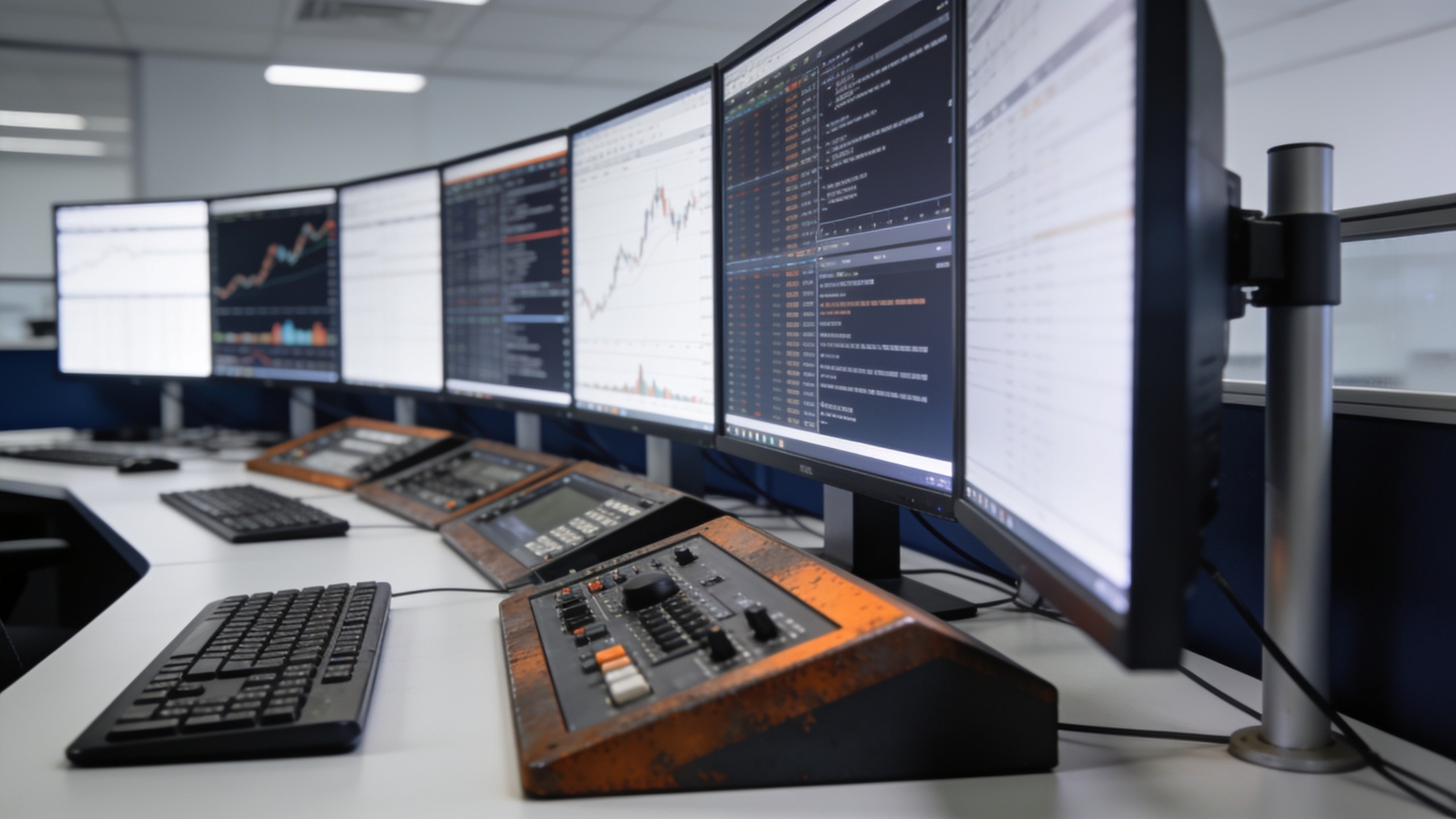
Hedge fund returns have "evaporated by half" this year, with losses especially severe in recent weeks. Goldman Sachs partner: Wait for "junk-rated" assets to stop falling.
The underlying junk-rated assets in the AI capital structure are still under pressure. Until the decline in junk-rated AI assets represented by CoreWeave ceases, any rebound in AI stocks is merely a position adjustment rather than a fundamental revaluation.
华尔街见闻•2026/10/18 08:16
Crypto prices
More
Bitcoin
BTC
$81,809.92
+0.50%

Ethereum
ETH
$2,412.12
-0.48%

Tether USDt
USDT
$0.9987
+0.02%

BNB
BNB
$722.27
+0.44%

XRP
XRP
$1.29
-0.31%

USDC
USDC
$0.9999
+0.01%

Solana
SOL
$103.93
-0.19%

TRON
TRX
$0.3328
-1.10%

Hyperliquid
HYPE
$78.86
+0.13%

Zcash
ZEC
$1,125.3
-3.16%
How to buy BTC
Bitget lists BTC – Buy or sell BTC quickly on Bitget!
Trade now
Become a trader now?A welcome pack worth 6200 USDT for new users!
Sign up now