
Nvidia launches 64GB DGX Spark with halved memory, starting at $4,999; 128GB version price increases to $6,950

As AI models become increasingly "lightweight," video memory is getting more expensive. NVIDIA is now addressing this contradiction with a product that features "reduced memory."
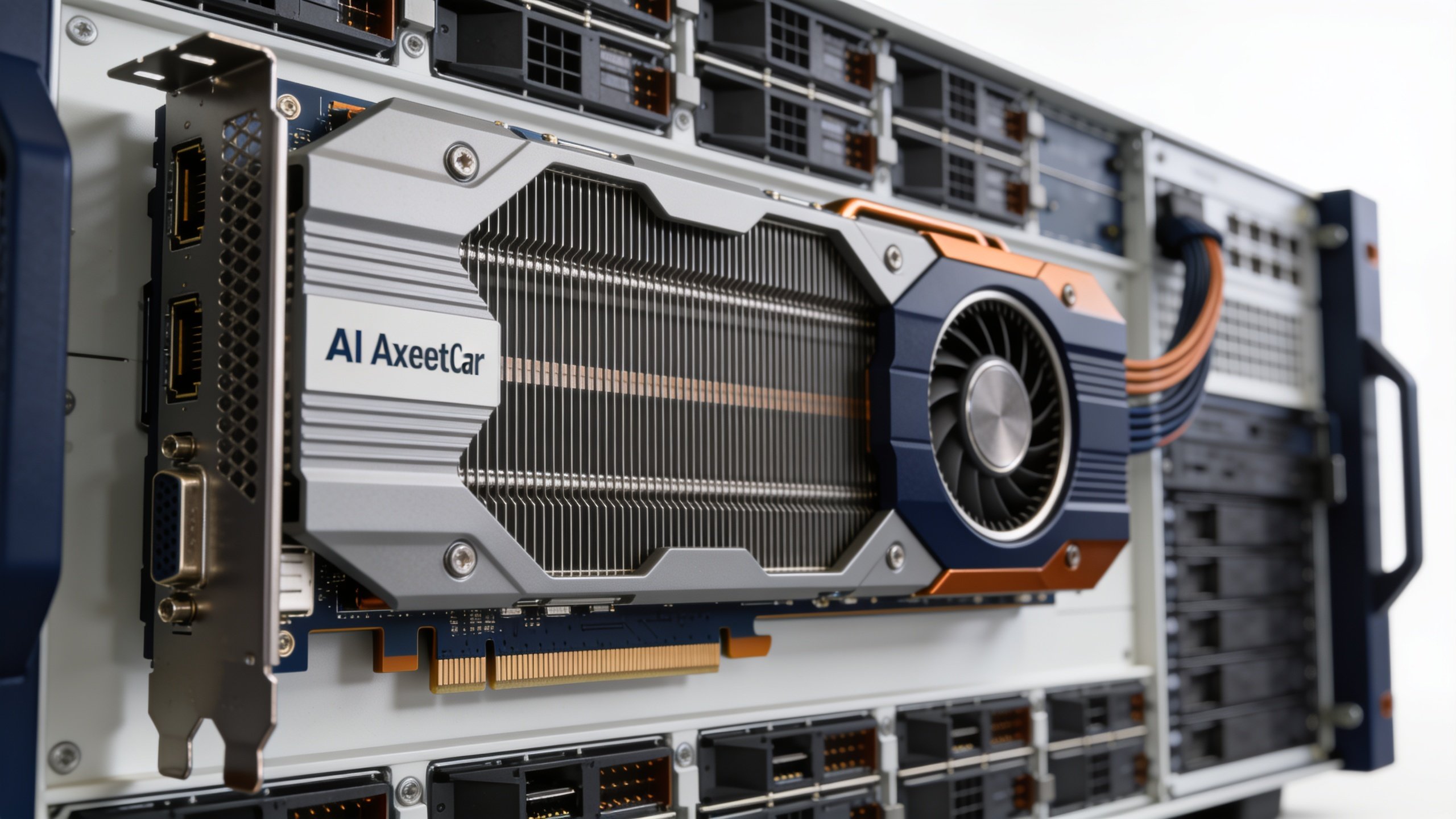
On Friday, October 2 (ET), NVIDIA announced the launch of the desktop AI computer DGX Spark with 64GB unified memory, starting at $4,999. It will hit the market on October 23 through OEM partners such as Acer, ASUS, Dell, Gigabyte, HP, and MSI. The new model retains the GB10 Grace Blackwell Superchip, DGX OS, the full NVIDIA AI software stack, and ConnectX-7 networking capabilities, but the unified memory has been reduced from the existing 128GB to 64GB.
Interestingly, the starting price of this "stripped-down" DGX Spark is actually higher than the launch price of last year's 128GB version, which was $3,999. At the same time, NVIDIA has increased the price of the 128GB Founders Edition to $6,950. According to the media, NVIDIA attributes the price increase to limited memory supply and rising costs.
This means that, amid a persistent squeeze on memory supply due to AI server demand, "providing less memory" has become a way to lower the entry price for local AI devices—but it does not mean the device itself is genuinely cheaper.
Is 64GB enough? NVIDIA Targets Local AI Agents
The core logic behind NVIDIA’s adjustment this time is that a growing number of open-source models are already able to run in a smaller memory footprint.
NVIDIA states that as open-source models become more powerful and model sizes continue to shrink, 64GB unified memory is sufficient to support a range of local AI applications. The new DGX Spark can run models with up to 100 billion parameters locally, and supports AI agents, inference, fine-tuning, data science, and edge development workloads.
Tom's Hardware also noted that some of the latest high-performance dense models can already run on around 32GB of memory, though they may still face constraints in scenarios such as large context windows. Therefore, the original 128GB memory designed for "large model local running" is not necessarily required by all developers.
This is the reality behind NVIDIA’s decision to launch a 64GB version: for users primarily focused on local inference and AI agent development—not large-scale model training or fine-tuning—64GB can cover a significant portion of workloads.
NVIDIA even summarizes this trend in its announcement: "As the technology continues to evolve, the practicality of local AI is increasing." As AI agents move from experimental to daily development, the demand for locally running models is rising.
Meanwhile, local deployment is also attractive in terms of privacy and cost. Developers can process their own data and run AI agents directly on a DGX Spark, without needing to call cloud models for every task.
Same GB10, No Performance Downgrade for the 64GB Version
In terms of hardware architecture, the 64GB version is not an entirely new chip product.
NVIDIA says the new device still uses the GB10 Grace Blackwell Superchip and retains the complete DGX OS and AI software stack. Media reports point out that the 64GB version also keeps the original 20-core Arm CPU and 273GB/s shared memory bandwidth, so for models that fit within 64GB of memory, the basic computational power of both products remains unchanged despite the memory being halved.
In other words, the key change here is not a "cut in compute power" but rather a reduction in memory capacity that some users might not need.
The 64GB model still supports popular inference frameworks such as llama.cpp, Ollama, vLLM, and LM Studio, and comes preloaded with NVIDIA Agent Toolkit, CUDA-X AI libraries, and open models like Nemotron.
NVIDIA’s proposition is clear: if developers currently only need 64GB, they can buy a lower-capacity machine first; if model sizes continue to grow, they can scale up memory and compute through clustering later on.
Two 64GB Units Can Combine into 128GB, Up to About 70% Performance Boost
Another focus in this DGX Spark update is NVIDIA’s move to further strengthen multi-machine collaboration.
The 64GB version also includes a ConnectX-7 network interface, allowing two devices to connect directly via QSFP cables. With help from the NVIDIA Sync Cluster Assistant, network configuration is automatically completed, combining two devices into a local AI cluster. NVIDIA claims that two 64GB DGX Sparks can form a 128GB memory pool and support models with up to 200 billion parameters.
In the Qwen 3.8 27B test provided by NVIDIA, two 64GB machines in a cluster reach up to about 1.7 times the performance of a single device.
NVIDIA will also launch the NVIDIA Sync Model Launcher at the end of October, further simplifying model deployment on a single machine or cluster. For example, developers can use this tool to run Qwen 3.8 27B and connect it to programming tools like OpenCode.
This means the product logic for DGX Spark is shifting from being a "desktop AI supercomputer" to a "locally scalable AI node."
Of course, two machines aren’t the same as a physical 128GB DGX Spark; whether a particular model can run across nodes still depends on the software and workload. Therefore, for tasks that require large-memory single-machine operation, the 64GB version still has clear limitations.
Amid Video Memory Shortage, $4,999 for 64GB Is Not Truly "Cheap"
What really deserves attention is the price.
NVIDIA officially set the starting price of the 64GB DGX Spark at $4,999, and this version will not have a Founders Edition from NVIDIA but will be sold entirely through OEM partners. Partners include Acer, ASUS, Dell, Gigabyte, HP, and MSI, and specific configurations and prices may vary.
For comparison, when DGX Spark was first launched in 2025, the 128GB version’s official price was $3,999. Media reported that NVIDIA subsequently increased the price of the 128GB Founders Edition to $4,699 in February 2026, and has now further raised it to $6,950.
So, comparing only historical launch prices, today’s 64GB version is not cheaper than the 128GB version but is actually $1,000 higher—a 25% increase.
Compared with the current official 128GB price from NVIDIA, the $4,999 price tag for the 64GB version is still $1,951 cheaper than the $6,950 128GB version, but at the cost of having half the memory capacity.
PC Watch, citing relevant information, says the 128GB price hike this time is due to memory supply constraints and higher costs. Tom's Hardware notes that the actual market price of 128GB GB10 systems is already around $7,000 to $9,000.
As a result, the other implication of this product change is: AI compute power is moving to local devices, but memory has become a significant cost bottleneck in this trend.
From "Stacking Memory" to "On-Demand Expansion"
From a product strategy perspective, NVIDIA is not simply making DGX Spark into a "low-spec version."
Previously, one of DGX Spark’s core selling points was its 128GB unified memory, allowing developers to run large-parameter models on the desktop. Now, as model compression and quantization technology improve, some models no longer require such large memory capacity.
Thus, NVIDIA’s new solution is: a 64GB single machine meets mainstream local AI inference, and if more memory is needed, it can be expanded through multi-machine clustering.
The 64GB version will officially go on sale on October 23, starting at $4,999. Meanwhile, the 128GB version’s price increase to $6,950 makes the new version particularly notable—it is both an attempt by NVIDIA to lower the barrier for local AI hardware and a reflection of the current AI industry's contradiction between "strong demand for computing power and tightening memory supply."
Disclaimer: The content of this article solely reflects the author's opinion and does not represent the platform in any capacity. This article is not intended to serve as a reference for making investment decisions.
You may also like
SHIB eyes $0.00001217 breakout as RSI signals new upside, could surpass TAO and LTC
New Zealand Dollar rebounds after sharp US employment disappointment
Positive Outlook on Growing AI Inference Demand: Freedom Upgrades Cerebras (CBRS.US) Rating to "Buy", Wafer-Level Chip Advantages Gain Attention
Freedom Capital Markets has upgraded its rating on AI chip manufacturer Cerebras Systems from "Hold" to "Buy," setting a target price of $209.
Muse user growth remains strong but long-term monetization prospects are still in doubt; BNP Paribas maintains Meta (META.US) with an "Outperform" rating.
Meta's AI agent Muse has accumulated over 5.6 million downloads within a month of its launch, surpassing the initial performance of ChatGPT and Sora. However, BNP Paribas points out that user habits are not yet established, and the long-term commercial prospects remain uncertain.
Crypto prices
More


