
Altman Misses the List! OpenAI President Enters Top 50 Wealthiest in the US with 25.5 Billion

AI Era News Report
AI Era News Report

The wealthiest person at OpenAI isn’t Altman.
This week, Forbes released the 2026 Forbes 400 list of America’s richest. Greg Brockman, OpenAI co-founder and president, made his debut on the list with a net worth of about $25.5 billion, ranking 45th in the U.S.
He is this year’s richest newcomer.
Just ahead of him is Nike’s co-founder, Phil Knight; right behind him is media tycoon Rupert Murdoch.

His boss, OpenAI CEO Sam Altman, however, is absent from this rich list.
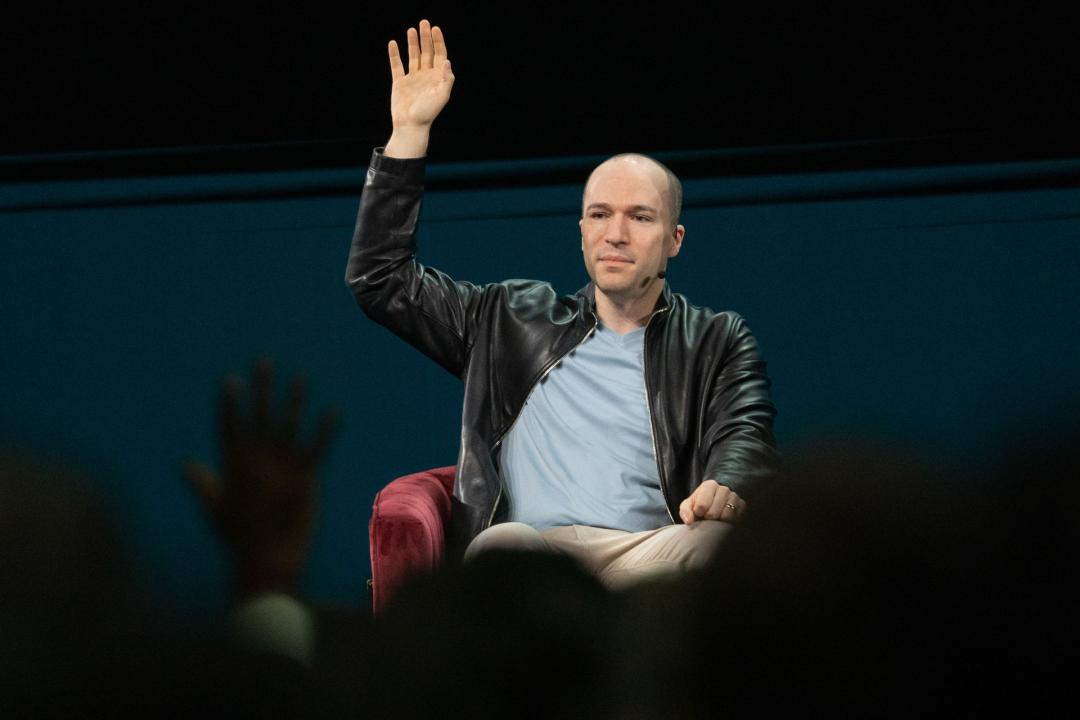
OpenAI President Greg Brockman. He made his debut on the 2026 Forbes 400 with a net worth of around $25.5 billion, ranking 45th in the U.S.
According to Forbes, Altman does not hold direct OpenAI equity and currently has a net worth of about $3.3 billion.
This year’s cut-off for the list was $4.4 billion—he missed it by $1.1 billion.
$25.5 billion versus $3.3 billion, the former is nearly eight times the latter.
In the same week, reports from the Financial Times and The Information revealed that OpenAI has started early talks with investors for a new round of fundraising, which could value the company at $1.2 trillion or more.
A few days ago, Altman himself confirmed that OpenAI will not go public this year.
Even as the IPO is on hold, OpenAI has already sent its second-in-command into the ranks of America’s fifty richest people.

In August 2017, Brockman wrote in his diary: “Financially, what could get me to $1 billion?”
At that time, OpenAI was still a non-profit organization.
The co-founders were embroiled in heated debates over whether to found a for-profit division and whether Elon Musk should take control of the company.
Nine years later, this private diary entry became the most damning piece of evidence in Musk’s lawsuit against OpenAI.
Musk used it to accuse Altman and Brockman of betraying him: they first convinced him to fund the non-profit, and then turned it into a for-profit company.
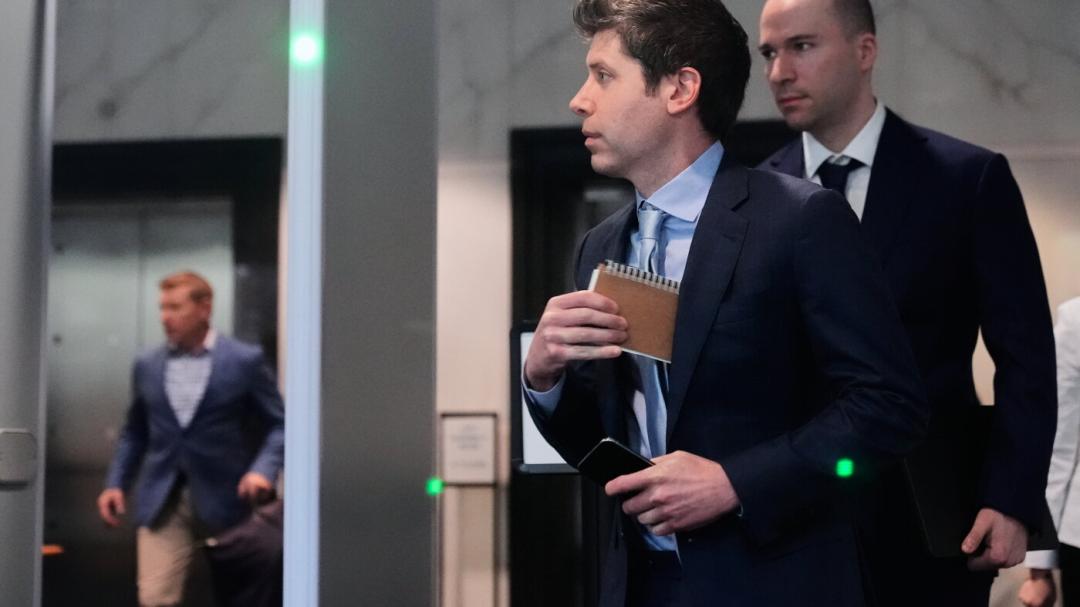
On April 30 this year, Altman (center) and Brockman (right) arrived at the U.S. Federal Court in Oakland, California.
Testifying in a California courtroom, Brockman explained that the diary note meant he hoped his efforts for OpenAI would return some value.
In the end, the jury dismissed Musk’s lawsuit on the grounds that it was filed too late.
Four months later, the capital market put a price tag on Brockman’s dedication.
He landed the Forbes 400 with a net worth of $25.5 billion—over twenty-five times the initial $1 billion “little goal.”
This figure is also more than three times the value of equity held by fellow co-founder Ilya Sutskever.

Forbes says Brockman’s wealth largely comes from his OpenAI shares.
Forbes estimates his stake in OpenAI is just under 3%.
In May, he testified in court that this portion of equity is worth more than $20 billion, close to $30 billion.
Multiplying OpenAI’s post-money valuation of $852 billion in March by 3% gives $25.56 billion. Factoring in “just under 3%” and his other assets, this matches the $25.5 billion figure Forbes reports.
Besides his OpenAI shares, Brockman holds another valuable card: Stripe.
Brockman was born in a small town in North Dakota; his parents are both physicians.
He dropped out of Harvard, transferred to MIT, then dropped out again after a few months to become Stripe’s fourth employee and CTO. He still holds about $471 million in Stripe shares, and the company was valued at $159 billion as of February.
He also has small investments in Cerebras, CoreWeave, and Helion—each totaling less than $5 million. All three companies have done business with OpenAI.
In 2015, Brockman left Stripe to co-found OpenAI as CTO. For nearly a decade, he remained in the background as the spotlight focused on Altman.
It was the 2023 boardroom crisis that compelled him to risk his entire net worth.
After Altman was suddenly dismissed, Brockman announced his resignation within hours, fully realizing that leaving might cost him his OpenAI equity.
This willingness to stake everything was no accident for Brockman.
A court hearing revealed another detail: In 2017, Altman gave Brockman a $10 million share from his family office—evidence of their close partnership.
As OpenAI’s valuation soared, Brockman’s net worth climbed in tandem—thanks to his direct equity stake.
The disparity between their fortunes stands in stark contrast to their relative positions at OpenAI.
Behind the contrast is the difference between holding equity and not holding equity.

On March 31, OpenAI officially announced its $122 billion funding, putting its post-money valuation at $852 billion.
This remains the official valuation.
In June, OpenAI quietly filed for an IPO, sparking market speculation that it would go public by year’s end.
Soon after, Altman pressed pause on the IPO.
In a Fortune exclusive interview on September 12, Altman said that, given ongoing safety concerns, it was unwise to go public now. There would be no IPO before 2026.
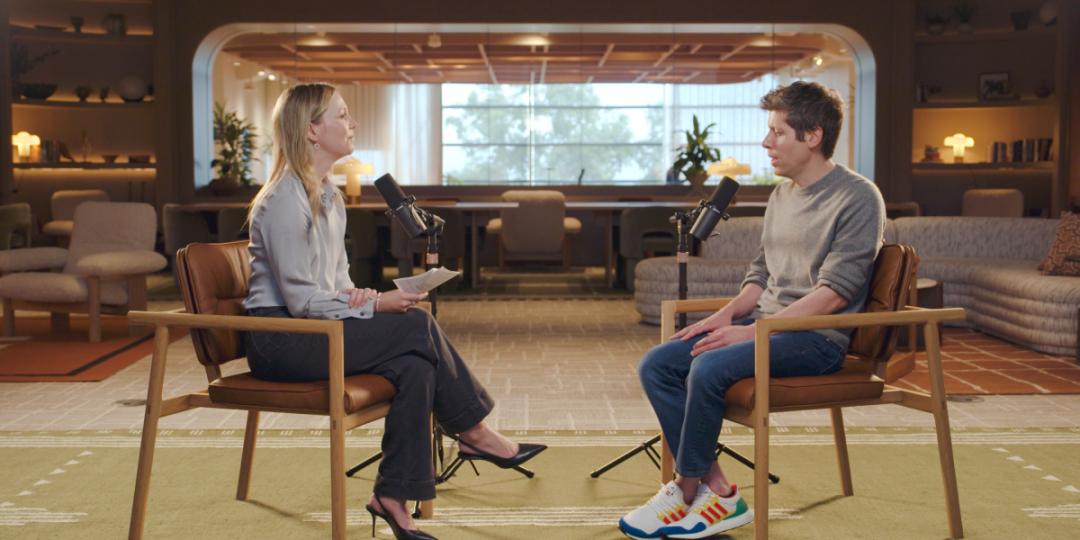
Altman speaking to Fortune Editor-in-Chief Alyson Shontell at OpenAI’s San Francisco headquarters, confirming OpenAI will not go public this year.
Even with the IPO delayed, capital market enthusiasm hasn’t waned.
Within days, the media reported that OpenAI had begun initial talks with investors for a new funding round—potentially boosting its valuation to $1.2 trillion or more.
The Financial Times especially noted that this round was initiated by investors, and the negotiations and resulting valuation would hinge on OpenAI’s IPO timeline.
If the rumored $1.2 trillion round goes through, OpenAI’s valuation will rise by about $348 billion compared to March—a 41% jump.
That’s a 40% increase in half a year.

The vast majority of Brockman’s $25.5 billion is still just on paper.
That hasn’t stopped him from using it for political investments.
In the past year, Brockman and his wife Anna have donated $75 million—all to Super PACs, those unlimited-fundraising, candidate-advertising political organizations in U.S. elections.
Of this, $50 million went to two Super PACs supporting “AI-friendly” candidates—betting on both Democrats and Republicans. Another $25 million went to the pro-Trump PAC “MAGA Inc.”
This funding has attracted opposition from some OpenAI employees and sparked a wave of ChatGPT subscription cancellations among users.
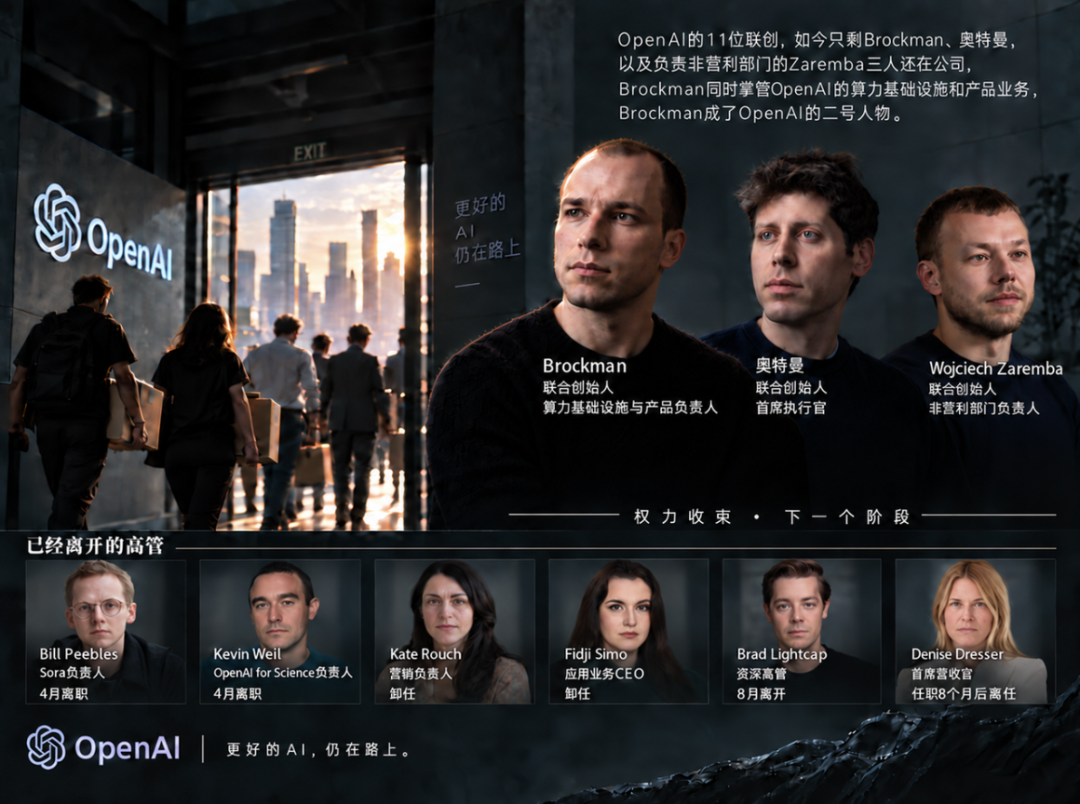
Of OpenAI’s 11 original co-founders, only Brockman, Altman, and Wojciech Zaremba—who oversees the nonprofit—remain.
Executives have also been leaving in droves.
In April, Sora head Bill Peebles and OpenAI for Science head Kevin Weil both quit.
Soon after, marketing chief Kate Rouch and enterprise CEO Fidji Simo also departed.
In August, veteran Brad Lightcap left. Chief Revenue Officer Denise Dresser only held her job for 8 months.
As power consolidates, OpenAI enters the “Brockman era.”
He now manages both OpenAI’s compute infrastructure and product operations, making him the company’s No. 2 executive.

Zooming out to the entire list, this is a year of AI-created wealth.
The total assets of the 2026 Forbes 400 hit a record $8 trillion.
Among the 34 newcomers, 14—besides Brockman—were made rich by the current AI wave.
Second to Brockman among new entrants is Figure AI founder Brett Adcock, with a net worth around $23.4 billion.
This humanoid robotics company is just four years old, has little revenue, yet boasts a valuation in the tens of billions.
The most eye-catching group is the Anthropic cohort:
Dario Amodei, Daniela Amodei, Tom Brown, Jack Clark, Jared Kaplan, and Sam McCandlish—six co-founders—entered the list together, each with a net worth of about $15.5 billion, jointly ranking 75th.
Combined, the six hold $93 billion in assets.
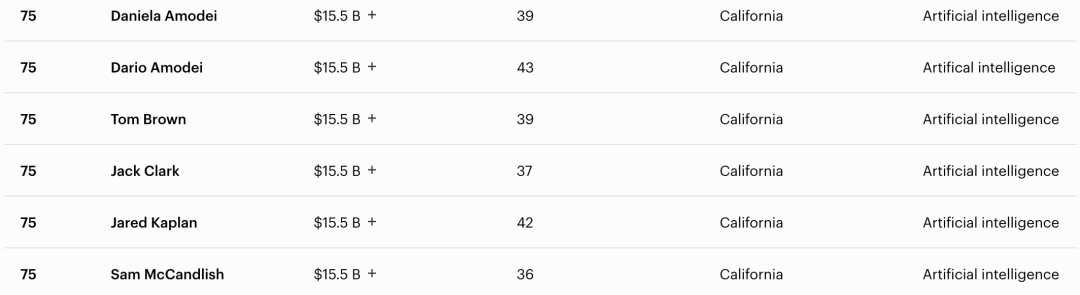
Anthropic has seven co-founders in total—the seventh, being Canadian, is not included in this American wealth ranking.
In 2021, they left OpenAI, worried that the company was pushing AI too fast and neglecting safety.
Five years later, their company is valued at $965 billion.
Earlier this year, all seven co-founders pledged to donate 80% of their wealth in the future.
The youngest person on the list also comes from AI.
Thirty-year-old Steven Hao is co-founder and CTO of Cognition, the company behind the AI programmer Devin.
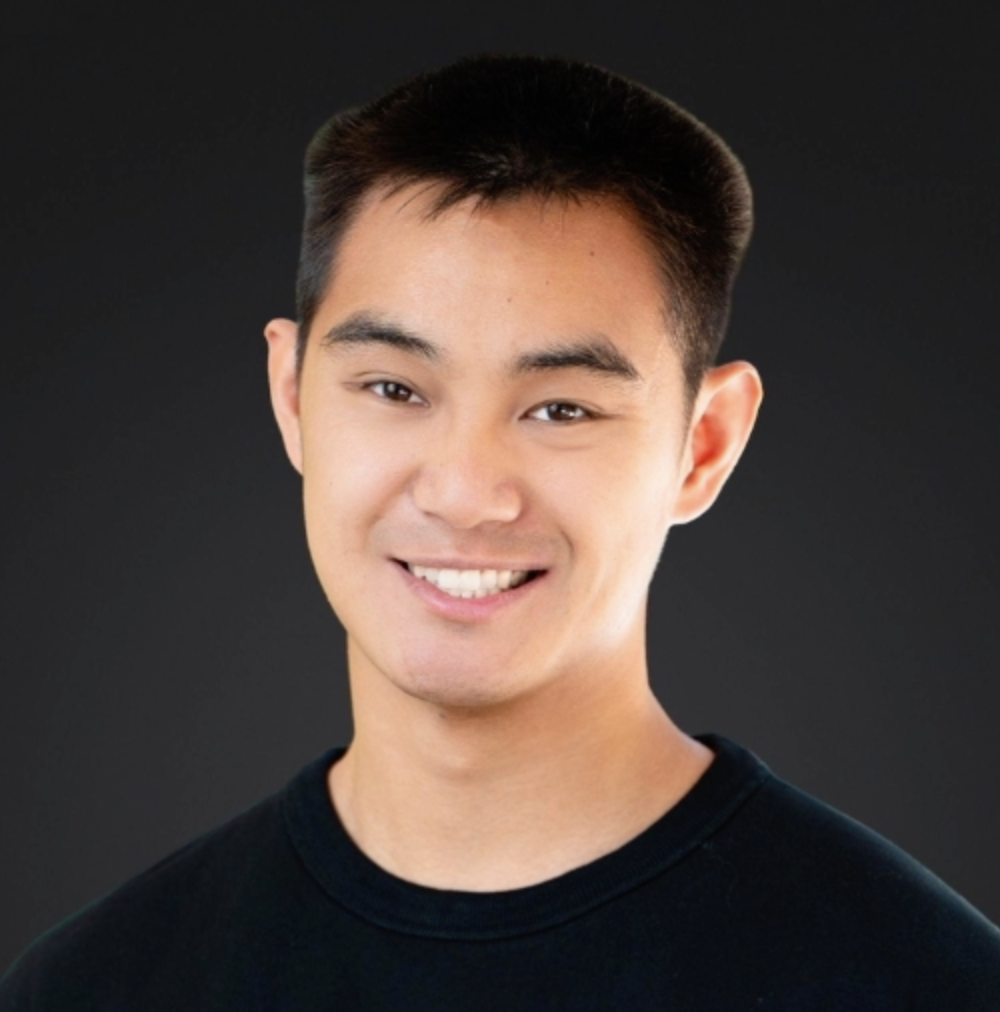 Steven Hao
In September, Cognition announced a $2 billion funding round at a $48 billion valuation—just three years after its founding.

Like the internet era, the AI wealth wave has arrived.
Both OpenAI and Anthropic are mass-producing super-rich individuals before even IPO, with Anthropic in the lead.
According to the Financial Times, Anthropic is on track for a second consecutive profitable quarter (on an adjusted basis), could IPO as soon as October, and may reach a valuation of $2 trillion.
Model capabilities drive revenue, revenue attracts capital, capital leads to equity revaluation, and equity creates billionaires—this chain is already functional, mostly before any IPO.
Private markets set the price first; public markets will validate it.
Though OpenAI’s IPO is delayed, the private market valuation will sooner or later be tested by everyone in the public markets.
Nine years ago, Brockman asked himself in his diary how to earn $1 billion.
Today, the market’s answer is more than twenty-five times that number.
As AI capital surges, the first beneficiaries of revalued wealth are the founders who tightly hold their equity stakes.
Editor: Yuan Yu



Disclaimer: The content of this article solely reflects the author's opinion and does not represent the platform in any capacity. This article is not intended to serve as a reference for making investment decisions.
You may also like
SUI SuperTrend Flips to Buy — Macro Shift From Bearish to Bullish Begins

Novo Nordisk (NVO.US) unveils $23 billion pipeline blueprint, but the market isn't buying it! Investors ask, "How to turn the tide against adversity?"
After being surpassed by Eli Lilly in the obesity market, Novo Nordisk failed to present a concrete turnaround plan to CEO Mike Doustdal, disappointing investors. The company has pledged to launch more than five blockbuster drugs in the coming years and achieve over $23 billion in new sales, but the press conference lacked details on how to drive growth.

STONK hits new highs after erasing 27% crash

25 Days, Four Launches in Sight! Rocket Lab (RKLB.US) Accelerates Rocket Launches to Advance Its Ambitious "Space AI Infrastructure" Goals
After another successful mission, Rocket Lab's 97th Electron rocket is now positioned at the launch pad. This flight will be Rocket Lab's fourth launch in 25 days and its 18th launch in 2026.
Crypto prices
More


