
Non-farm payrolls greatly exceeded expectations. Why did the US dollar fall instead of rising?

Morning FX
The nonfarm payrolls data released last Friday exceeded everyone’s expectations, but what puzzled the market even more was that this strong jobs report failed to spark a rise in the U.S. dollar. After only a small rebound, the dollar fell. In particular, USDJPY only experienced a mild bounce after the data release, then suddenly crashed to 155.40. At Monday’s Asia open, it returned above 156, but with light liquidity due to the U.S. holiday, it broke lower again in the afternoon, falling below the key 155 support level.
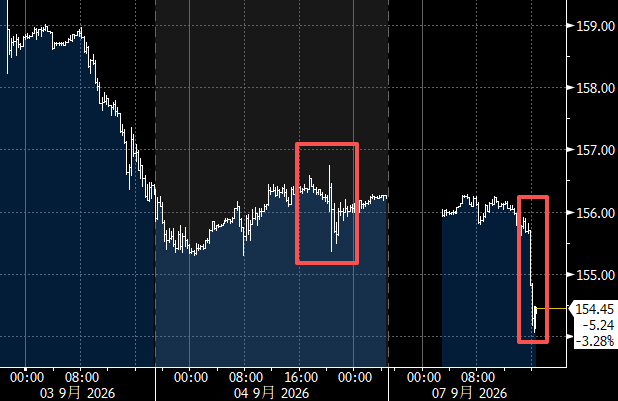
Why did the U.S. dollar remain unmoved in the face of good data?
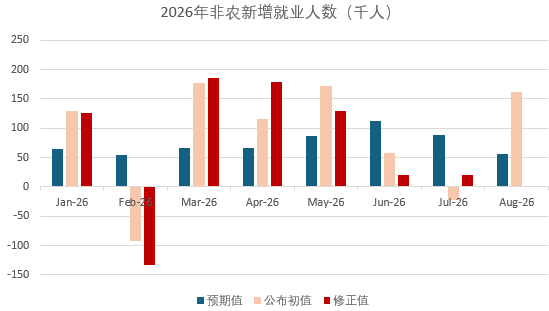
1. Nonfarm payrolls data is too volatile. The last time nonfarm payrolls were this strong was in May, when the initial figure showed 172,000 new jobs, but it was later drastically revised downward. Given the repeated instances of large downward revisions to initial job data recently, the job gains are becoming less convincing, so the dollar’s initial reaction was also limited.
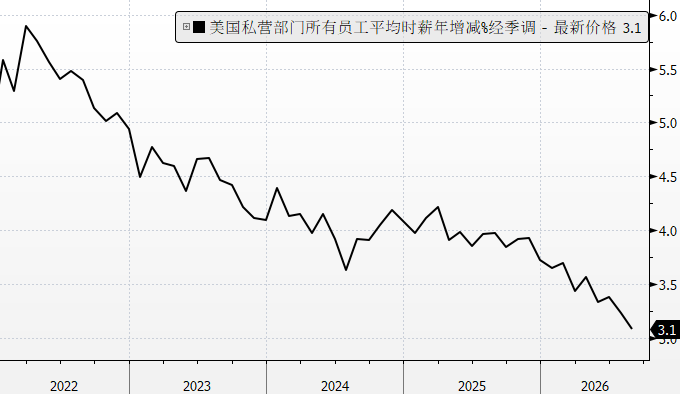
2. Compared to employment, inflation is the real key to whether interest rates will be hiked in September. The only slight shortcoming in the nonfarm data was the wage numbers. Average hourly earnings rose 0.3% month-on-month, while annual growth slowed from 3.2% to 3.1%. There is no sign of wage pressure rising, and Waller has made it clear that rate hikes would only occur if there is renewed evidence of rising inflation. Therefore, this week’s inflation data will be even more important.
3. De-dollarization is brewing again. Recently, the Japanese yen has strengthened considerably. In addition to the Bank of Japan’s more hawkish rate guidance, some flow dynamics are also playing an important role.
1) The Japanese Government Pension Investment Fund (GPIF) held an extraordinary management committee in August to reassess asset allocations, and the market interprets this as a possible increase in Japanese government bond allocations. The GPIF currently manages about 320 trillion yen; if the allocation ratio to yen assets is raised by 5%, that would, in theory, correspond to roughly 16 trillion yen (about $100 billion) in yen buying.
2) One of the world’s largest sovereign wealth funds, the Norwegian Sovereign Wealth Fund (NBIM), announced a major investment strategy adjustment last week: reducing U.S. Treasury holdings, turning to private fixed income securities, and significantly increasing its allocation to Japanese government bonds, raising the yen weighting by 3% (about $20 billion).
3) In addition, the second largest pension manager in AustraliaAustralian Retirement Trust (ART) also announced last month that it had established its largest yen overweight position in many years.
Key events this week
1. Thursday PPI, Friday CPI. Inflation data will determine the direction of the U.S. dollar. Recent comments from New York Fed President Williams, Governor Waller, and other Fed officials suggest that if core PCE again records 0.2% monthly growth, it would be enough to support the Fed maintaining a wait-and-see stance.
If core CPI exceeds 0.2% this month, another rate hike in September is basically certain, and the Dollar Index is expected to surge above 100.
If core CPI meets the 0.2% expectation, the probability of a rate hike will remain around 50%. Attention will also turn to how the core PCE subindices perform. If core PCE month-on-month is close to 0.2%, the Fed could buy more time to maintain the status quo.
If core CPI is below 0.2% this month, the September rate hike expectation will fade, with the dollar falling, especially USDJPY, which could see even greater downside.
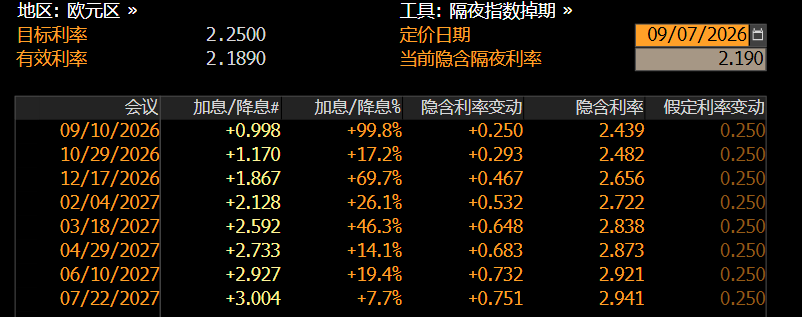
2. This week, on September 10, the ECB meeting; a 25bp rate hike is already a done deal. In Q2 2026, Euro Area GDP growth accelerated from 0.0% in Q1 to 0.4%. Since mid-May 2026, the Eurozone economic surprise index has been climbing almost continuously. Faced with economic resilience and rising energy prices, the market is currently pricing in three more ECB rate hikes in the next year, but it is expected that Lagarde will find it hard to provide a forward guidance more hawkish than current market expectations. Therefore, this ECB rate hike is unlikely to further boost the euro.
Disclaimer: The content of this article solely reflects the author's opinion and does not represent the platform in any capacity. This article is not intended to serve as a reference for making investment decisions.
You may also like
Bombardier says US aerospace sector wins on trade, highlights $2.5 billion annual supplier spend
Walsh, AI is calling for you to raise interest rates
Circle issues 250 million USDC on the Solana chain
Crypto prices
More


