
London Copper Hits All-Time High! Tariff Arbitrage Triggers Short Squeeze, Major Miners' Production Cuts Increase Supply-Side Pressure

Driven by expectations of tariffs and challenges in mine supply, copper prices have set a new all-time high on the London Metal Exchange, reflecting the deep structural contradictions faced by this key industrial metal.
This Monday, the benchmark three-month copper futures contract on the London Metal Exchange rose as much as 0.8% intraday, reaching $14,533 per ton, surpassing the previous record set in January this year before narrowing its gains; as of press time, LME copper was up 0.73%.
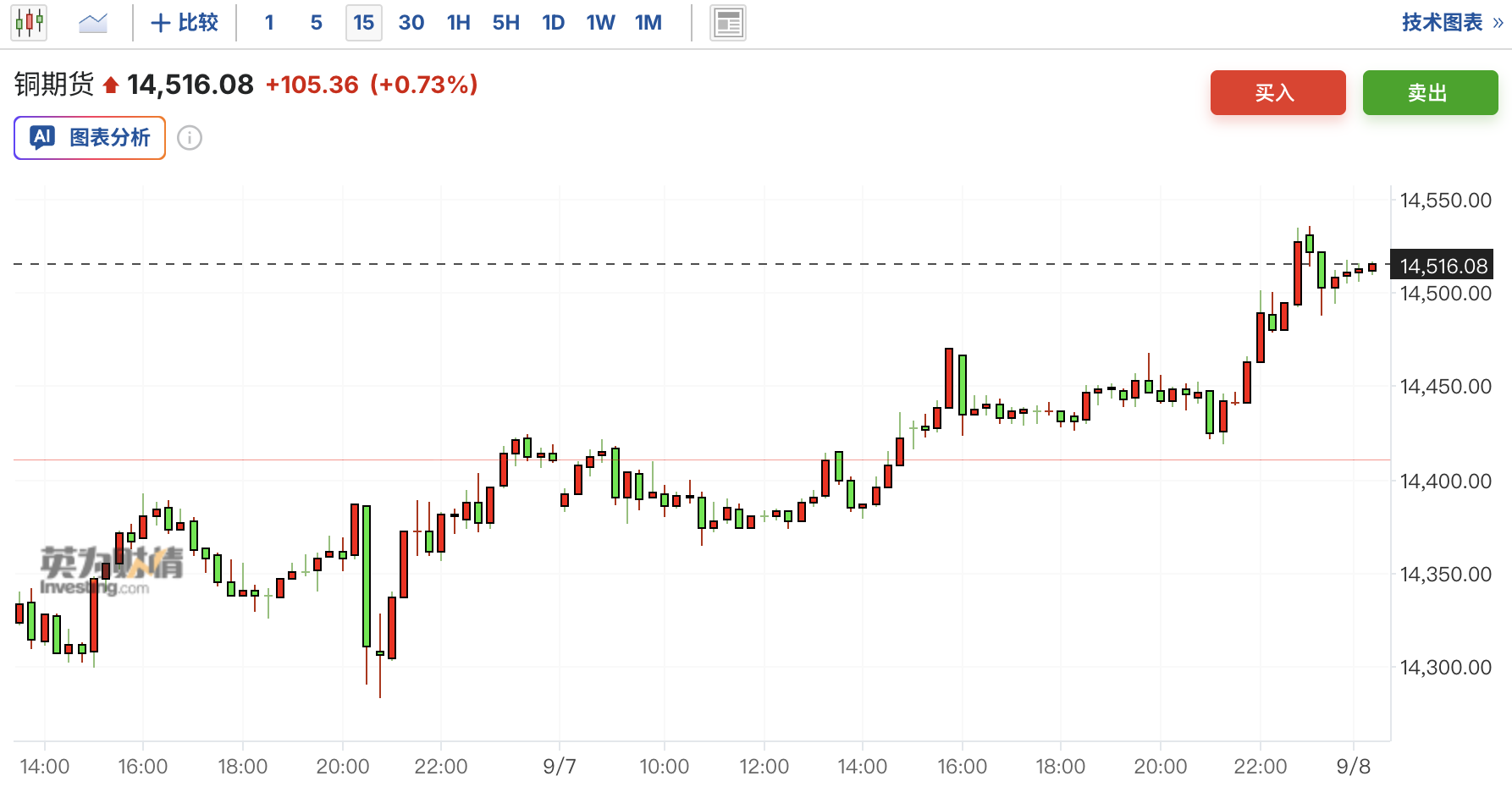
Since the beginning of this year, copper prices have risen 17% cumulatively, with a 47% gain over the past 12 months. This record-breaking rally occurred against the backdrop of the US market being closed for Labor Day and overall risk appetite being suppressed, highlighting the strength of the driving forces behind copper's price surge.
Cristián Cifuentes, a senior analyst at Chilean copper industry think tank Cesco, pointed out that this price movement "is more driven by metal transfers triggered by tariffs, rather than strong end-user demand," and is essentially a "local shortage rather than a global demand surplus."
Meanwhile, global mine supply remains under pressure, and unless the industry achieves a significant recovery in the second half of the year, global mine copper supply is expected to see its first annual decline since 2017.
Tariff Expectations Drive Large-Scale Copper Flows to the US
The core short-term catalyst for this copper price rally lies in the market's sustained expectation that the Trump administration will expand tariffs on copper. Since Trump first officially proposed imposing tariffs on copper in February last year, the NYMEX (Comex) copper futures price has consistently maintained a sizable premium over London, opening a huge arbitrage window for traders.
Since the beginning of this year, hundreds of thousands of tons of copper have been shipped to the US on a large scale to profit from the price difference. Nearly two months have passed since the US Department of Commerce's original deadline to submit a report to the White House on the necessity of tariffs, yet the report has not been released, and the market continues to price in the possibility of tariffs on primary copper imports.
This "tariff trade" has had a significant draining effect on global inventories. In August, physical inventories underpinning copper contracts on the London Metal Exchange fell to critically low levels, sparking major short squeezes.
Although subsequent arrivals temporarily alleviated some pressure, London spot copper prices remain significantly higher than the three-month futures, with the market continuously in backwardation, indicating ongoing tightness in immediate supply.
Global Inventory Structure Imbalanced, Short-Term Available Supply Plummets
While overall global copper inventories are relatively ample, their geographic distribution has now become heavily concentrated in the US, with available stocks in the London Metal Exchange's substantial global warehouse network sharply reduced.
This structural imbalance has squeezed short-term market liquidity, putting pressure on participants holding short positions, and has driven copper prices higher even though end-user demand remains muted.
Michael Cuoco, head of metals at StoneX Financial Inc., wrote in a research note that the combination of robust demand growth and supply challenges "should continue to tighten the future supply-demand balance and support copper prices at elevated levels."
From a longer-term perspective, the aging of major global mining fleets and insufficient capacity to keep up with growing demand from data centers, renewable energy, and power infrastructure are structural factors for copper bulls that have been repeatedly emphasized; this supply-demand mismatch is continuing at present.
Mine Supply Dilemma Intensifies, Chilean Exports Hit Over a Year Low
Although surging copper prices have generally benefited major global miners, supply-side pressure has become increasingly evident.
Data released on Monday showed that in August, copper export earnings from Chile, the world's largest copper producer, fell to their lowest level in more than a year. If the industry fails to effectively recover in the second half, global mine copper supply will see its first annual drop since 2017.
Rio Tinto Group, BHP Group, Glencore Plc, and Zijin Mining Group all reported significant profit increases in their latest earnings results, with copper businesses holding major credit.
However, several large miners have faced various operational challenges this year, and structural supply pressures have not eased despite high copper prices.
It is also worth noting that high copper prices themselves may become a potential threat to the demand side—high prices could prompt downstream buyers to seek substitute materials. For now, however, such demand-side pressure has not posed a significant resistance to copper's upward trajectory.
Additionally, rising global macro and geopolitical risks, along with increased US borrowing costs weighing on capital-intensive manufacturing sectors, also constitute potential headwinds for the outlook of copper prices.
Disclaimer: The content of this article solely reflects the author's opinion and does not represent the platform in any capacity. This article is not intended to serve as a reference for making investment decisions.
You may also like
ICP Price Rallies 13%— Here’s Where the Rally Could Go

Ethereum Price at a Turning Point — Bulls Target $2,800 After Range Breakout
Ethereum Foundation grades all 62 Hegotá EIPs in first unified tier list
The Canadian Dollar gains as Oil rally offsets jobs gloom
Crypto prices
More


