Japan’s bond-market reset is creating a global liquidity story, but India sits on the receiving end of that shift rather than at its source. Japan’s 10-year government bond yield has crossed 3% for the first time since 1996, while the U.S. 10-year recently approached 4.8%.
Against that backdrop, Indian billionaire banker and Kotak Mahindra Bank founder Uday Kotak warned that rising sovereign debt and widening deficits could eventually drive balance-sheet expansion.
Such a shift could increase inflation and interest-rate volatility. For Indian investors, however, the more relevant question is how those pressures could move through capital flows, currencies, oil prices, and global risk appetite.
Japan has historically provided unusually cheap funding, which has made the yen central to global carry trades. The Bank of Japan currently targets its overnight rate near 1%, compared with the Reserve Bank of India’s 5.25% repo rate.
That wide interest-rate gap helps explain why yen-funded borrowing became so significant in global markets. BIS research estimated such carry positions at roughly ¥40 trillion, or about $250 billion, before the August 2024 unwind.
As leveraged positions were reversed, the resulting deleveraging amplified volatility across global markets. However, the same structure does not apply to India. Japan remained the largest foreign holder of U.S. Treasuries in June, with $1.116 trillion, even after reducing its holdings.
India, by contrast, is more exposed to the risk of foreign capital leaving domestic markets when global liquidity tightens. Recent equity flows highlight that distinction. Foreign investors bought $3.1 billion of Indian equities in August, marking their strongest monthly inflow in 23 months. Even so, total withdrawals during 2026 still reached a record $24.6 billion.
Consequently, India’s vulnerability is tied more closely to shifts in external risk appetite than to any domestic yen-style funding cycle. A reduction in global carry trades could therefore affect Indian markets through capital outflows and tighter financial conditions rather than through cheap rupee-funded overseas speculation.
That distinction matters as India’s domestic economy remains relatively strong. The economy expanded 7.8% in April-June, while private consumption rose 7.1% and fixed investment increased 11.9%.
However, stronger spending does not mean Indian-listed companies capture every rupee of that demand. Foreign companies also benefit from rising consumption, particularly in premium segments. Apple, for example, held 28% of India’s smartphone market by value in 2025.
At the same time, currency pressure adds another layer of risk. The rupee closed near 94.49 per dollar on September 7, while Brent crude traded around $96.6. Together, a weaker currency and elevated oil prices can raise the cost of imports and increase inflationary pressure.
The RBI has therefore remained active in the foreign-exchange market. Bankers estimated that the central bank sold at least $8 billion during the previous week to support the rupee. As a result, India’s imported inflation risk depends more directly on oil prices and currency movements than on Japanese bond yields alone.
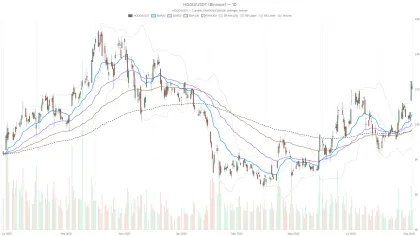
Bitcoin fits into the same transmission framework. A global carry-trade unwind can pressure risk assets, while movements in USD/INR can either soften or amplify changes in BTC/USD for Indian investors.
Japan can still influence global liquidity, but India is not another Japan. For Indian investors, the more relevant framework is capital flows, rupee weakness, imported inflation, and shifts in global risk appetite.