
ADP adds only 38,000 jobs! Weakest employment data since January! Institutions were prepared in advance, are retail investors still waiting for gold to surge?

FX168 Finance, September 2—— On Wednesday (September 2) at 20:15 Beijing time, ADP released the US private sector employment data for August. The result showed an increase of 38,000 jobs, lower than the market expectation of 48,000 and below last month's revised figure of 46,000, marking the smallest increase since January. Where do the main differences in perspectives between institutions and retail investors lie? What does this data imply for the subsequent market pace?
On Wednesday (September 2) at 20:15 Beijing time, ADP released the US private sector employment data for August. The result was an increase of 38,000 jobs, lower than the market expectation of 48,000 and below last month’s revised 46,000, again marking the smallest increase since January.
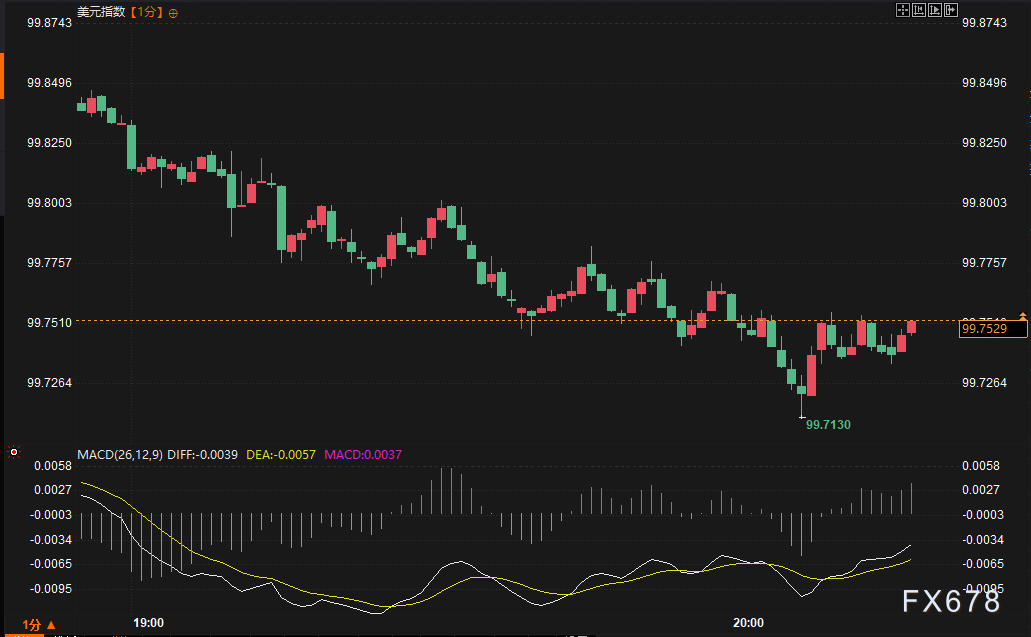
Before the release, the market generally expected employment growth to maintain a moderate pace, and spot gold had already advanced about $20, indicating some funds were prepared for a weaker result. The US Dollar Index narrowed in a tight range near 99.70. After the release, gold traded around 4330, up only about 0.05%, without any obvious surge; the US Dollar Index fluctuated mildly at 99.74. Overall market reaction was restrained, with no one-sided sharp moves.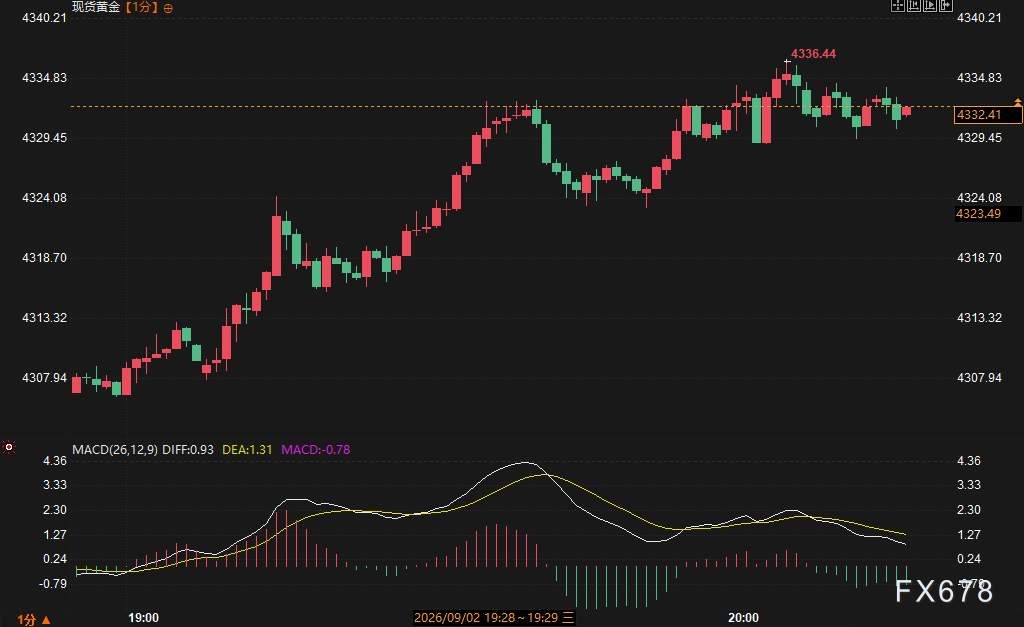
Historically, ADP increases have clearly contracted in recent months. July ended at 46,000, and after a peak in June, retreated. The current 38,000 further confirms the slowdown in private sector hiring. Manufacturing reduced jobs by 17,000, professional and business services by 16,000, and the information sector also shrank; education and healthcare added 45,000, construction added 12,000, and leisure and hospitality increased by 16,000, serving as the main supports. Regionally, the Northeast contributed the most, while the West saw a net decrease. Large enterprises (over 500 employees) added 34,000 jobs, while contributions from small- and medium-sized enterprises were limited.
In terms of wages, basic salary for all employees rose 3.2% year-on-year, while total compensation increased by 4.7%. Salary for retained workers grew by 3.0%, and for job switchers, by 4.7%. ADP’s Chief Economist Nela Richardson pointed out that wage growth is no longer as predictable as in the past; demographic shifts, sticky inflation, and the impact of AI on jobs together shape today’s “volatile” hiring landscape. The Wage Insights report shows that the overall pace of wage growth has slowed significantly over the past four years, with momentum especially lost in lower-income groups’ basic salaries.
In-depth Interconnected Analysis
The fundamentals and the real-time market create a clear contrast. Weaker-than-expected employment figures would normally reinforce the “cooling labor market” narrative, thus benefiting gold and pressuring the dollar. However, in actual trading, funds had partially priced in the risk before the release, while market moves after the data largely represented a “bad news is out” or “waiting for official nonfarm confirmation” mode. Gold failed to extend its pre-release rally, and the US Dollar Index barely moved, indicating that the market’s sensitivity to a single ADP data point has declined. Market participants are more interested in cross-verification with subsequent nonfarm payrolls, unemployment rates, and wage growth.
Short- and medium-term logic remain consistent: In the short term, slower employment growth reduces the risk of an overheated economy; in the medium term, continuously slowing wage growth (especially in basic salary) suggests further labor supply-demand balance and weaker inflationary pressure from the job channel. Compared with historical trends, the current increase has returned to the low range seen in early 2026, but has not yet turned negative; service consumption-related industries still show resilience. The contraction in manufacturing and professional services suggests that some cyclical and knowledge-intensive positions are still being adjusted.
There is a clear contrast between institutional and retail views. Before the data release, institutional accounts mostly emphasized an “expected moderate slowdown,” with some analysts noting that gold had already responded ahead of time and recommended watching for any false breakouts after the release. Retail discussions were more emotional, typically hoping weak data would push gold prices sharply higher, with some voices directly linking ADP to nonfarm expectations and claiming “the weaker, the better.” Post-release, institutions quickly shifted to structural interpretation: highlighting the support from education/healthcare and leisure/hospitality, the drag from manufacturing, continued hiring among large enterprises, and the greater signaling value of wage data over headline employment figures; while retail sentiment became divided—some felt “it’s disappointing gold didn’t rise,” while others turned attention to Friday’s nonfarm payrolls, considering ADP merely a prelude. The main divergence lies in the overestimation of immediate price impact—institutions focus more on trend confirmation, while retail investors expect short-term market volatility from single data points.
Overall, ADP and recent high-frequency indicators (including previous weekly pulse data) point in the same direction, collectively indicating a moderate slowdown in private sector hiring momentum, rather than a sudden deterioration.
Trend Outlook
Extrapolating the current market trend, gold and the US Dollar Index are likely to maintain a range-bound pattern in the short term, waiting for higher-weighted data like nonfarm payrolls to provide direction. The combination of slowing employment and wage growth helps stabilize market expectations for policy paths, but lacks any new extreme signal, making it difficult for ADP alone to trigger unilateral trends. If subsequent official data continues to confirm the slowdown and wages don’t rebound, gold may find higher support above current levels; if nonfarm figures are significantly stronger than ADP suggests, some prior pricing could be reversed. Regional and sectoral divergence will remain key observation points—the resilience of large companies and health/education may continue to offset adjustments in manufacturing and parts of services. The overall logic is consistent: data confirm a cooling, not losing control, and the market adopts a wait-and-see stance, keeping volatility at moderate levels.
Frequently Asked Questions
Q: Why were gold and dollar reactions so calm after weaker-than-expected ADP data?
Gold had already advanced about $20 ahead of the data release, with some weak expectations digested by then. The market now values cross-verification with official data such as nonfarm payrolls more, and the impact of a single private sector indicator has diminished, hence the “bad news is out” type of tight-range trading.
Q: Where does the 38,000 jobs increase stand historically?
This is the smallest month-over-month gain since January, significantly lower than prior months and below market expectations. Coupled with the low level of weekly pulse data, it confirms hiring has entered a slowdown channel but is not yet in broad contraction.
Q: Are wage data more important than jobs growth?
ADP places special emphasis on the distinction between basic and total wage growth. A slowdown in basic wages is more structurally significant, reflecting labor supply-demand balance and potential inflation changes; total wages reflect more of a short-term incentive effect. Both slowing simultaneously reinforces the cooling signal.
Q: Where are the main differences in perspectives between institutions and retail investors?
Institutions focus more on industry structure, firm size, and wage details, using data for trend confirmation; retail investors pay more attention to immediate price moves and are surprised gold did not surge. The gap in expectations before and after the release centers on overestimating the magnitude of volatility.
Q: What does this data imply for subsequent market pace?
It supports the judgment of a moderate cooling in the labor market, helping stabilize policy expectations, but the true tone still depends on nonfarm payroll and other data. In the short term, the market may continue to move in ranges, with structural opportunities dominated by industry and regional divergence.
Disclaimer: The content of this article solely reflects the author's opinion and does not represent the platform in any capacity. This article is not intended to serve as a reference for making investment decisions.
You may also like
Robinhood Chain Fees Hit $3.75M Record, Outearn Arbitrum 250-to-1
Hewlett Packard Enterprise Comp stock holds $50.83 support as earnings loom
Uniswap crypto rally hits overbought wall as UNI nears $5.96 resistance
Secret Crypto Sinks to $0.01 as RSI Falls to 19.83, Deep Oversold
Crypto prices
More


