
US diesel crack spread surpasses $100/barrel for the first time! Are refined oil products facing a superstorm?

There is currently a clear structural divergence in the global oil market: Brent crude prices fluctuate in the $80-90/barrel range, with the market taking a bearish view on future crude oil demand and supply, while refined oil products such as gasoline and diesel continue to strengthen, especially with the diesel crack spread widening rapidly. The US diesel crack spread has surpassed $100/barrel for the first time, exceeding the level seen at the beginning of the Russia-Ukraine conflict in 2022; the Northwest Europe diesel crack spread has also reached a historical high of around $90/barrel.
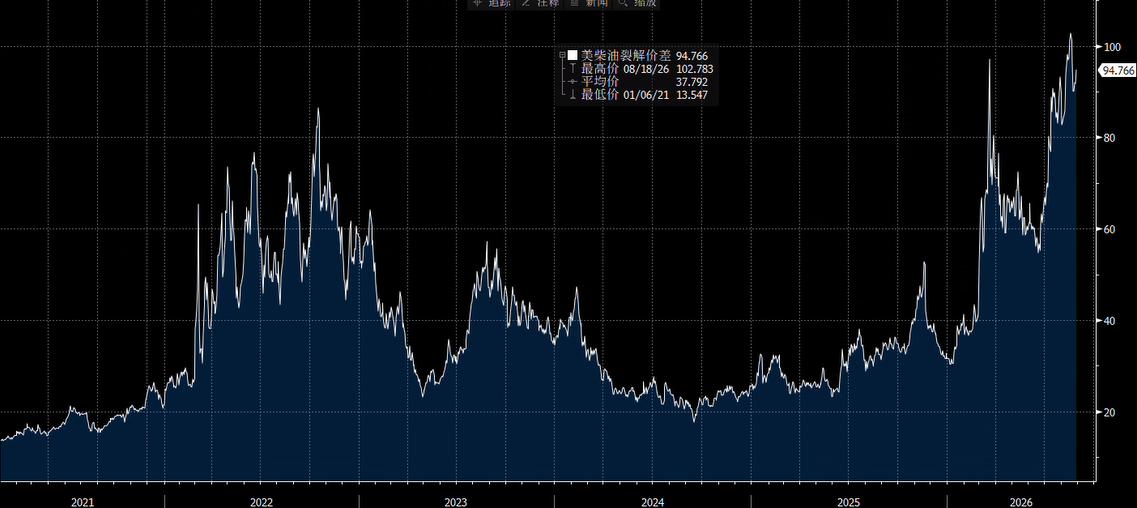
The key to this round of the energy market has shifted from "Is there a crude oil shortage?" to "Are there enough refineries to convert crude oil into refined products." Since June, gasoline and diesel crack spreads have risen by 86%, while jet fuel crack spreads have jumped by more than 140%. Currently, global refined oil exports have decreased by 6 million barrels per day year-on-year, a drop of as much as 25%, with the Persian Gulf and Russia both down by 75%. Global unplanned refinery shutdowns are 60% above normal seasonal levels, and global refinery runs have decreased by 7 million barrels per day year-on-year.
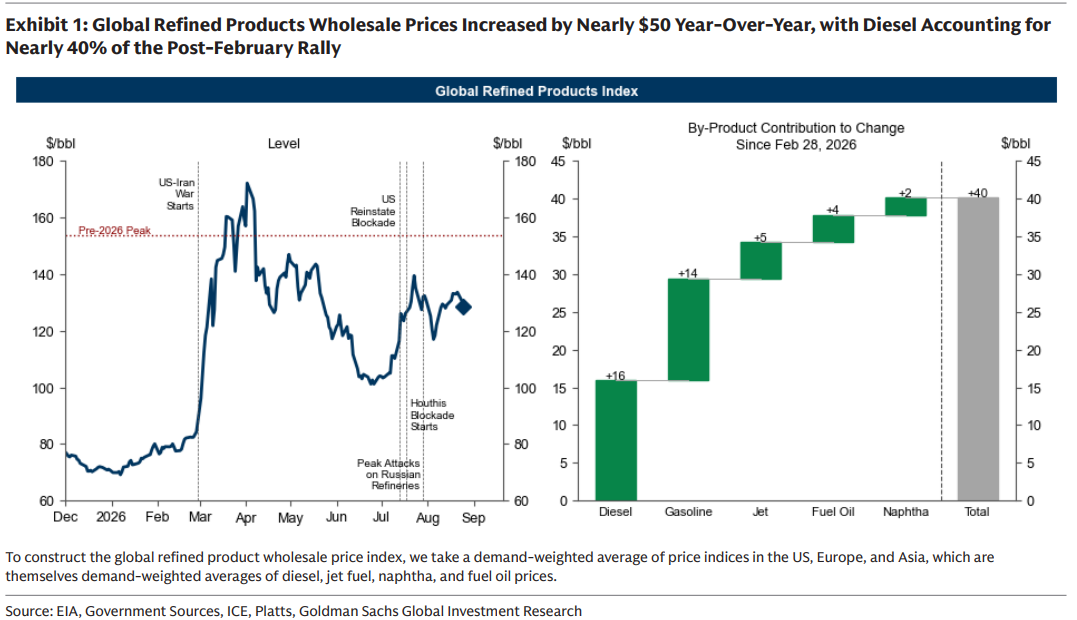
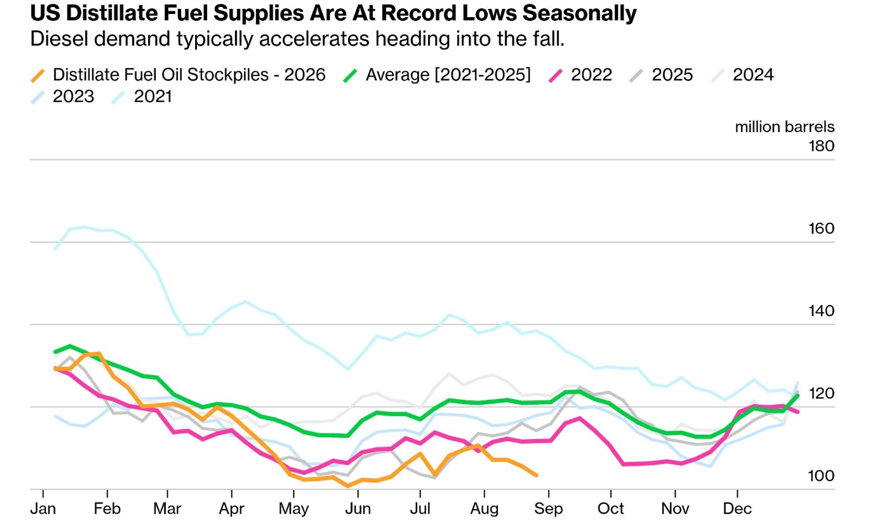
The diesel market is in severe supply-demand imbalance. As of the week ending August 21, US distillate fuel oil (mainly diesel) inventories dropped to 103.4 million barrels, the lowest seasonal level since records began in the early 1980s. Diesel inventories in the US and Europe continue to fall, with US diesel and gasoline inventories dropping by 9% and 7% year-on-year, respectively. This means there is insufficient spare capacity in the global refining system to cope with new supply shocks. Should there be unexpected refinery shutdowns, export disruptions or a surge in demand, the market would be unable to make up for it by increasing production elsewhere, and any minor disturbance could quickly turn into a dramatic price shock. Diesel, as the core driver of the current rise in refined oil prices, has contributed over 40% of the $40/barrel increase in the global wholesale price of refined products since February this year.
Extremely low inventories and sharp declines in exports are together creating an extremely tight fundamental supply-demand situation for the refined oil market.
Refining capacity faces triple pressures from supply shocks, low inventories, and peak demand season
On the supply side, first, although the shipping situation through the Strait of Hormuz has improved significantly and crude oil transportation is gradually resuming, high risk premiums, insurance costs, and freight rates have brought refined oil transport to a near standstill. Large crude oil tankers can bear high transportation costs, but refined oil tankers are smaller, so additional costs significantly undermine the economics of refined oil exports. Refined product flows from the Persian Gulf are down 80% year-on-year, much higher than the 48% drop in crude oil. As a result, about one-quarter of global refined oil trade flows are disrupted.
Disclaimer: The content of this article solely reflects the author's opinion and does not represent the platform in any capacity. This article is not intended to serve as a reference for making investment decisions.
You may also like
Crypto trading app fomo will offer support on Arc on its first day of launch
Russia’s Sber eyes USDT loans, questions digital ruble demand
How High Can Solana Price Go This Rally?

Real Trump Coins denies launching GOLD after token collapse

Crypto prices
More


