

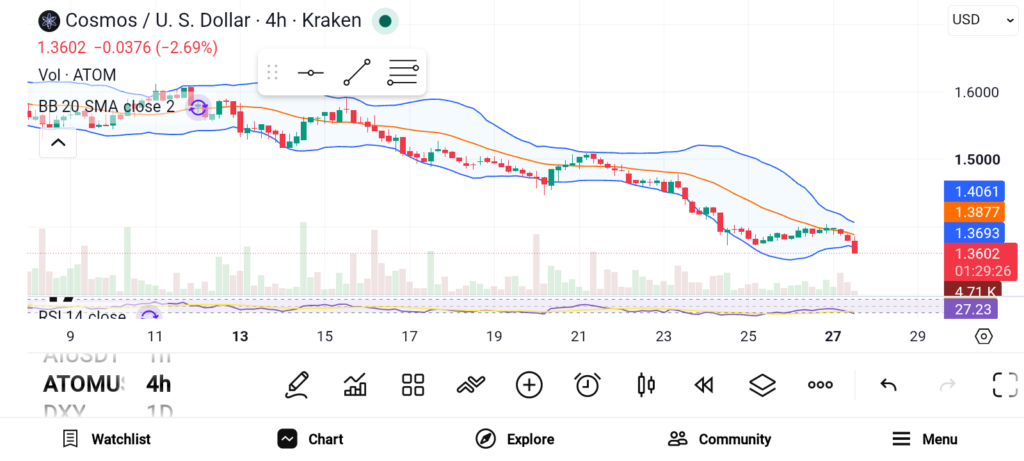
- ATOM: Strong technology succeeded, but weak token value captured limited long-term growth.
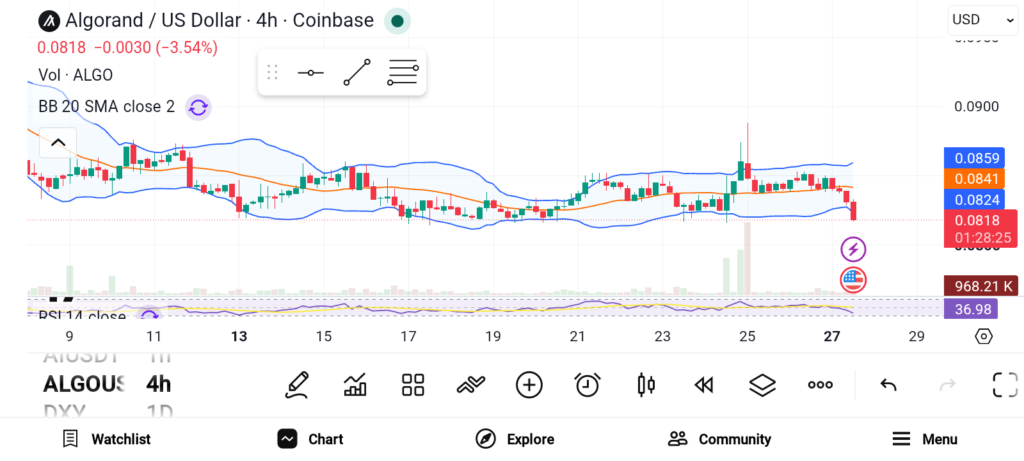
- ALGO: Institutional ambitions faded as developers and liquidity favored competing blockchains.
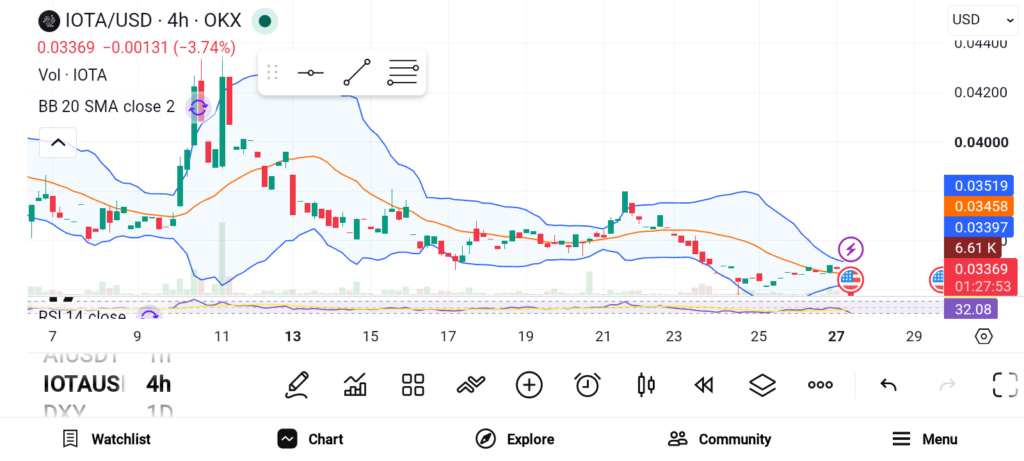
- IOTA: Bold machine economy vision failed to achieve widespread real-world adoption.
Crypto history includes many ambitious projects with bold promises and exciting technology. Some attracted billions of dollars and loyal communities. Others gained support from respected developers and major organizations. Yet strong technology alone never guaranteed lasting success. Market demand, developer activity, and clear token value mattered just as much. Cosmos, Algorand, and IOTA each offered a unique vision for blockchain. Today, all three remain far below former highs despite years of development and innovation.
Cosmos (ATOM)
 Source: Trading View
Cosmos introduced an ambitious goal. The project wanted every blockchain to communicate without barriers. Developers could build independent networks through the Cosmos SDK. Those networks could exchange data through the Inter-Blockchain Communication protocol. During the 2021 bull market, many investors believed Cosmos would become crypto’s central hub. The technology achieved much of that vision. Popular projects such as Celestia, Injective, Sei, Terra, and dYdX adopted Cosmos tools. IBC still processes meaningful transaction volume across connected networks. However, ATOM never captured enough value from that growing ecosystem. Every new blockchain launched with another native token, separate validators, and independent revenue.
Algorand (ALGO)
 Source: Trading View
Algorand entered the market with exceptional academic credibility. Founder Silvio Micali earned global respect for cryptography research. The network delivered fast transactions, instant finality, and extremely low fees. Reliability never became a concern because the chain avoided major outages. Many expected institutions and governments to embrace Algorand. The project secured a FIFA World Cup partnership and several government pilot programs. Those announcements created optimism across the community. Unfortunately, long-term adoption never matched expectations.Developers increasingly preferred Ethereum layer-2 networks and Solana. DeFi liquidity remained limited compared with competing ecosystems. Government pilots produced little recurring blockchain activity. Algorand now focuses on post-quantum security and real-world assets.
IOTA (IOTA)
 Source: Trading View
IOTA promised a future powered by connected machines. The project replaced traditional blocks with the Tangle, a directed acyclic graph. Every transaction confirmed two others. Greater activity would theoretically improve network performance. That concept attracted enormous attention during 2017. Reality followed a different path. Expected machine-to-machine payments never reached mainstream adoption. A widely discussed Microsoft collaboration later proved far less significant than many believed. Security problems surrounding the Trinity wallet further damaged confidence. Public disputes among founding members created additional uncertainty. The team later rebuilt the network around a Move-based Layer 1 design focused on decentralized finance and real-world assets. That technical reset addressed many earlier weaknesses.
Strong technology never guarantees lasting success. Sustainable demand remains equally important. Cosmos, Algorand, and IOTA each solved meaningful technical challenges. Yet weak token value, limited adoption, or changing narratives slowed long-term growth. These projects remind investors that execution and demand matter just as much as innovation.


