
The logic behind this round of US stock market rally: AI + fiscal stimulus!

In the past two years, the logic behind the rise of US stocks has actually been very simple:AI + fiscal stimulus.
But the problem is, the simplest logic often hides the most complex risks.
The current AI market is not about “whether to participate,” but rather—
Who is really making money this round? Who is subsidizing? Who hasn’t been priced in?
1. The Underlying Logic of This Bull Market: Not Technology, But "Printing Money + AI"
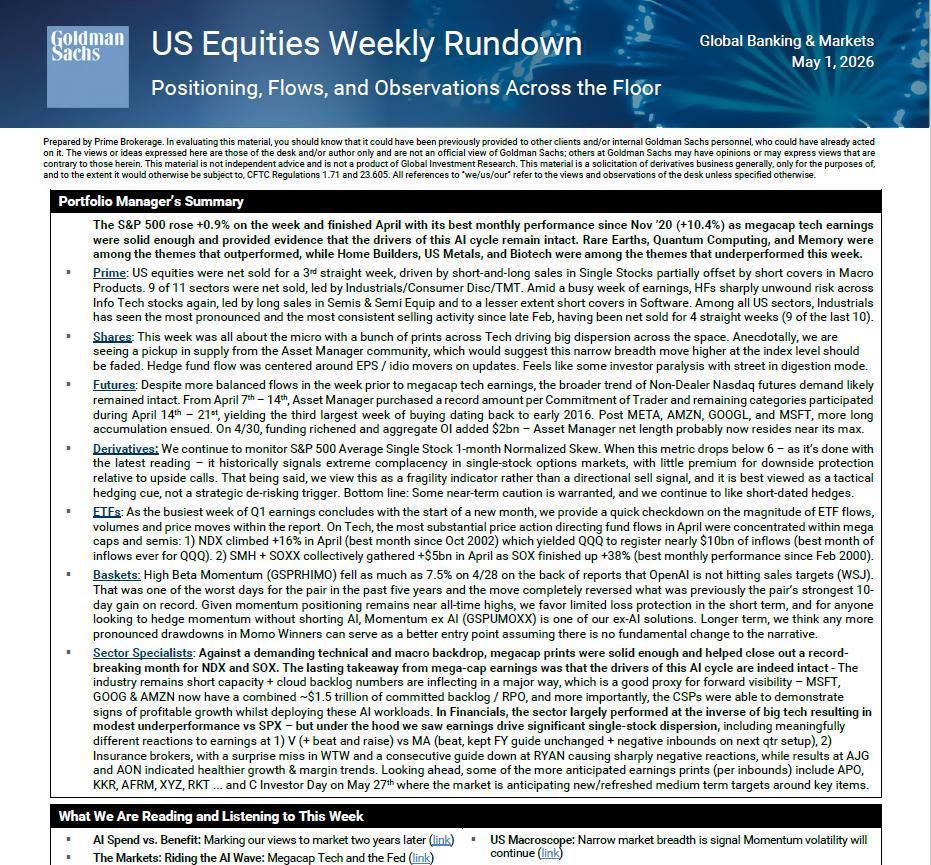
Bank of America strategist Michael Hartnett put it very bluntly:
This isn't a normal bull market—it's a “Boom Loop.”
The core structure has only two points:
1) The government is spending like crazy
2) Corporates are throwing money at AI
The numbers are staggering:
- US government spending: +60% since 2020
- Nominal GDP: Expected to rise from $20 trillion to $35 trillion in 7 years (+75%)
- AI investment: Expected to contribute about 75% of GDP growth in Q1 2026
What does this mean?
The US economy has essentially entered a "policy-driven expansion" phase.
Why are stocks rising?
It’s not because of profit explosions, but because:
- There’s more money in circulation
- AI provides a "convincing" narrative
2. The Real Risk Isn’t in AI, It’s in Interest Rates
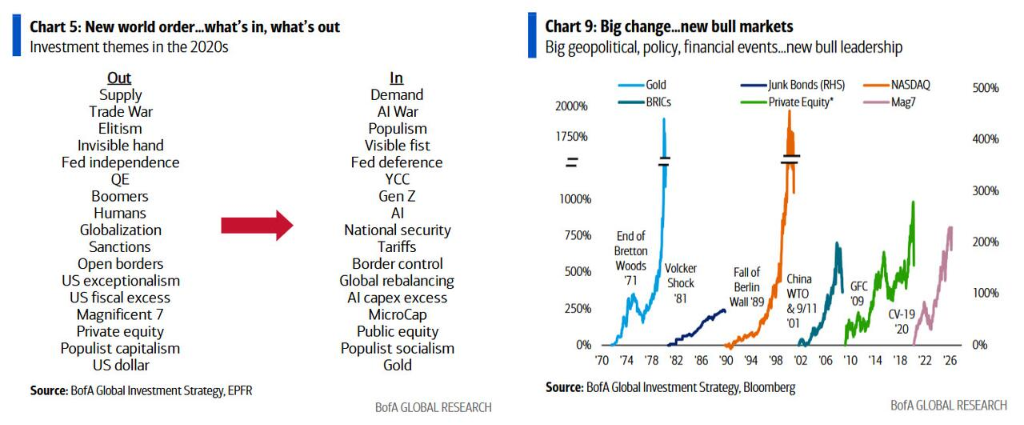
Bank of America provided a critical "market lifeline":
30-year US Treasury yield: 5%
A 5% yield on 30-year Treasuries is defined as the "Maginot Line," and is expected to hold.
They even used a heavy term:
“Once broken, the road to the gates of doom opens.”
Why is it so important?
Because the entire AI investment system now is essentially:
Relying on future cash flows to support current valuations
And when interest rates rise, three things happen:
1) Valuations are compressed
2) Cost of financing rises
3) Capital expenditures become unsustainable
Historically, several bubbles ended (Japan 1989, US 1999) alongside:
Rapid 200-300bps rise in interest rates
3. The Core Issue With AI: Who Is Making Money? Who Is Burning Cash?
This Goldman Sachs report is actually the market's sharpest dose of cold water.
Summed up in one line:
AI is hot, but the money hasn’t come back yet.
1) Cloud Providers: “Burning Cash Like Crazy”
The four major cloud providers:
- Microsoft
- Amazon
- Google
- Meta
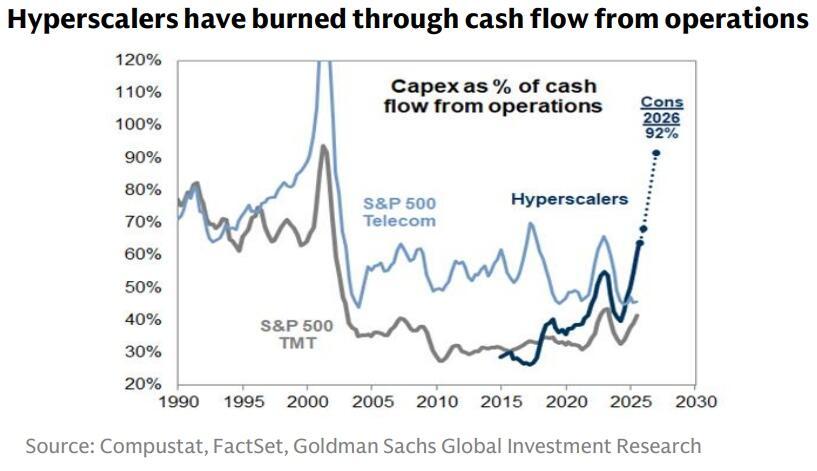
Total CapEx this year:
> $600 billion
The problem is:
This money is basically eating up all the operating cash flow
In other words:
AI is not a “profit engine”, but a “cash devourer”
There are even cases of:
- Issuing debt to fund data centers
- Negative cash flow expansion
2) Semiconductors: Took All the Profits in the First Phase
The current AI industry chain is actually very unbalanced:
| GPU / Semiconductors | Already making money |
| Cloud providers | Burning cash |
| Enterprise customers | Unclear ROI |
This is very abnormal historically.
A normal cycle should be:
Customers make money → Expand → Upstream continues to make money
But now it’s:
Upstream cashes in big → Downstream hasn’t made money yet
3) Market Structure: Extremely Concentrated
Goldman Sachs gave a very dangerous signal:
- S&P 500 earnings growth: 60% comes from two companies (NVDA + MU)
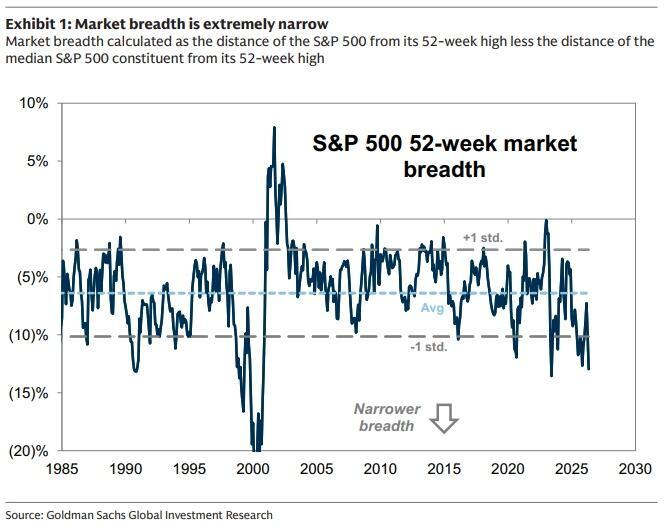
- Momentum trading crowding: Near 5-year highs
The momentum factor has surged 25% this year, with hedge funds’ net exposure and overall leverage towards the factor close to five-year highs.
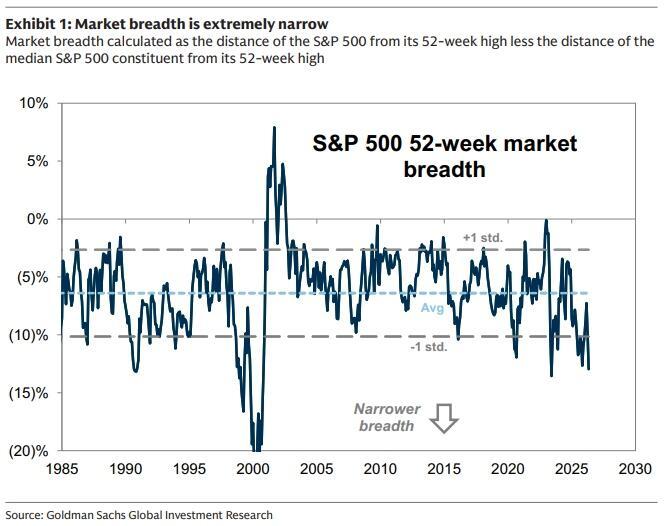
This means:
This is not a broad-based bull market; it's "a few stocks pulling the index".
4. The Real Divide: Has AI Finished Its Run?
This is where we see the most critical split in the market:
Goldman Sachs vs SemiAnalysis
Goldman Sachs View (Conservative)
Core logic:
- AI Phase 1 (infrastructure) is already fully priced in
- Corporates' ROI is still unclear
- Cloud providers' cash flows are under pressure
Conclusion:
Underweight semiconductors, overweight cloud providers (mean reversion trade)
SemiAnalysis View (Extremely Bullish)
What they see is something else:
AI is transitioning from a tool → means of production
An extreme example:
- A company’s AI token spend: $10 million/year
- As 30% of employee costs
This means:
AI is beginning to replace humans, rather than just assist them
The more critical change:
Agentic AI
Previously:
- Q&A tools
Now:
- Writing code
- Building financial models
- Analyzing data
- Automatically executing tasks
This brings three changes:
1) Token value rises
2) Model companies see margins improve
3) Users are willing to keep paying
5. Who Will Win? The Core Is Just One Variable
Simplifying all the debates, there is really only one question left:
Is the AI profit pool big enough?
Scenario 1: The Pie Isn't Big Enough (Goldman Sachs Wins)
- Corporate ROI remains unclear
- Cloud providers cut CapEx
- Semiconductor valuations fall back
Result:
Tech stocks diverge, market enters volatility or correction
Scenario 2: The Pie Keeps Growing (SemiAnalysis Wins)
- AI enters core business processes
- Token demand explodes
- Model companies start making profits
Result:
The entire AI industry chain keeps rallying
6. The Real State of the Current Market (Key Takeaway)
If you ask me which stage we’re at right now?
The answer is:
In between the two
A very typical structure:
- The strongest users: have already started spending aggressively
- Ordinary enterprises: still testing the waters
The capital market’s behavioral path will be:
1) First trade on “marginal changes” (the strongest users)
2) Then wait for “broad validation” (corporate profits)
7. The True Investment Focus (Here’s the Conclusion)
Going forward, the market will no longer ask:
“Is AI good or not?”
But will ask six more specific questions:
1) Can token value keep rising
2) Can model companies make money
3) Can cloud providers’ CapEx turn into revenue
4) Can NVDA keep raising prices
5) Will HBM/advanced process nodes remain scarce
6) Which enterprise software can control the access point
8. US Stock Investment Network: This Bull Market in One Sentence
This isn’t a typical tech bull market.
This is:
A “front-loaded, overdrawn bull market” driven by fiscal expansion + the AI narrative
The question now isn't whether there’s a bubble,
but rather:
When will cash flows catch up with valuations?
Finally, Here’s a More Practical Assessment Framework
If you only remember one metric, watch this:
30-year US Treasury yield + corporate AI ROI
- Rising rates → Market-wide risk
- ROI fulfilled → AI enters phase two
The real big opportunity often appears at:
The moment the market shifts from "telling stories" to "calculating profits".
We’re not there just yet.
But we’re getting very close.
More exciting articles
Disclaimer: The content of this article solely reflects the author's opinion and does not represent the platform in any capacity. This article is not intended to serve as a reference for making investment decisions.
You may also like
Rare "Three Firsts"! State Council's Major Moves to Stabilize the Market, How Do Institutions View It?
The State Council executive meeting has featured three "firsts": for the first time, the release time was advanced to trading hours; for the first time, the phrases "the capital market is crucial to the overall economic development" and "national team" were explicitly mentioned in the official statement. Analysts such as Tao Chuan from Guolian Minsheng and Wang Han from Industrial Securities believe that the market stabilization mechanism is evolving from short-term support to an institutionalized, diversified, and coordinated upgrade, with policy focus shifting to optimizing Huijin’s functions, introducing long-term funds into the market, and promoting dividends and share buybacks. Chen Guo from East Money regards this State Council meeting as an “important policy bottom.” CITIC Securities expects the market may see an oversold rebound in the short term. Going forward, key areas of attention will be Huijin’s actions and the implementation of fundamental policies.
U.S. Senate Democratic leader election to be voted on December 1, impacting AI regulation and tariff agenda
The election for the Democratic leader in the U.S. Senate will be held by secret ballot on December 1, and the winner must reach the threshold of 28 votes.

From Earning 20% Annually to Going Negative in a Single Month, Wall Street’s Favorite Arbitrage Trade “Fails”
After rising for six consecutive months, the Bloomberg FX Carry Index turned negative for the first time in November, falling by 0.9%. Cooling enthusiasm for AI has increased market volatility, and Brazil’s election led to an 8% single-day plunge in the real, nearly wiping out the carry trade's 18% annual return overnight. Industry giants such as Goldman Sachs and Citigroup have issued warnings: “The era of mindless long positions is over.” Although capital has not withdrawn, trading thresholds have surged, requiring defensive hedging and a shift toward selective strategies.

The global tobacco landscape is about to change! Marlboro's parent company Altria (MO.US) plans an all-cash takeover of Imperial Brands UK, targeting cigarette cash flow.
What Altria values is the overseas cigarette cash flow and the established distribution network. Since spinning off Philip Morris International in 2008, its cigarette business has been focused on the United States. Altria estimates that after adjusting for channel inventory changes, the U.S. cigarette industry’s sales volume declined by about 5% year-over-year in the third quarter. Acquiring Imperial Brands’ international business would allow Altria to instantly gain brands, retail channels, and operational scale in markets such as Europe, thereby reducing its dependence on the single U.S. market.

Crypto prices
More


