
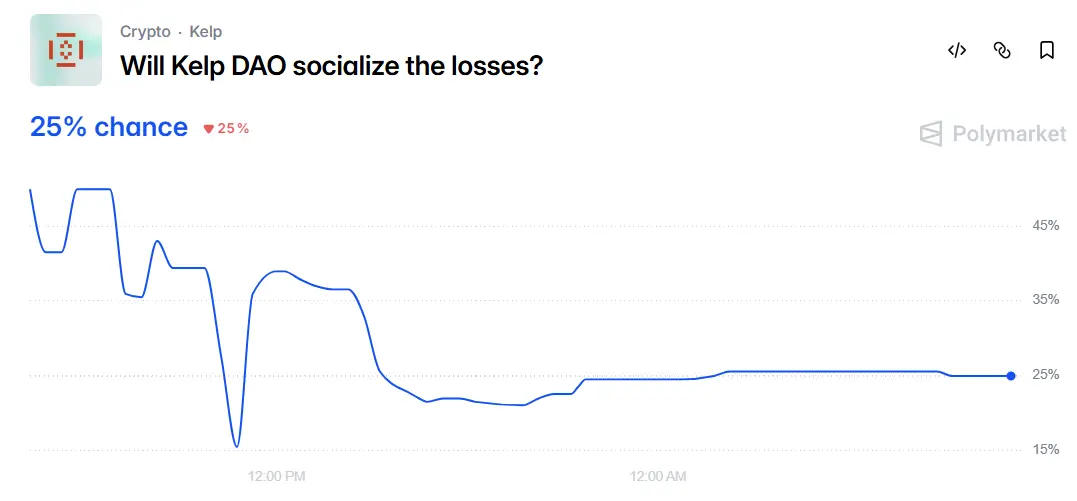
The probability of "Kelp DAO sharing the loss from the rsETH bridge hack" is only 25% on Polymarket.

According to ChainCatcher, the latest data from Polymarket shows that the current probability of the market bet “Will Kelp DAO share this loss?” is 25%.
This market was set up in response to the Kelp DAO bridge attack that occurred on April 19. The attacker exploited a cross-chain message vulnerability in LayerZero, siphoning approximately $292 million worth of rsETH from the bridge, which resulted in losses to the collateral backing for rsETH holders on L2 networks.
According to the rules of the Polymarket market, if Kelp DAO announces or implements a mechanism by April 30 that makes mainnet rsETH holders share part or all of the loss (instead of having L2 holders bear it all), the market will resolve as “Yes”, otherwise as “No”.
Disclaimer: The content of this article solely reflects the author's opinion and does not represent the platform in any capacity. This article is not intended to serve as a reference for making investment decisions.
You may also like
Analyst Gu Jingci: Follow the trend and adapt flexibly

XRP Ledger adds account control feature, enabling enterprises to manage assets offline.

BUZZ - Goldman Sachs says the price cap on cancer drugs has limited impact on Indian hospitals
October 9 – Goldman Sachs pointed out that India's implementation of a 30% profit margin cap on non-scheduled anticancer drugs (link) will have limited impact on hospitals. The report states that, based on preliminary discussions with hospital chain groups, such drugs account for less than 5% of hospital revenue and 2% to 2.5% of operating profit. The report adds that hospitals can offset the losses by slightly adjusting service charges, such as administration fees. According to a government notice, an expert committee will finalize the list of drugs to be brought under regulation. Driven by the anticipated price cap, the share prices of Max Healthcare MAXE.NS, Apollo Hospitals APLH.NS, and Fortis Healthcare FOHE.NS rose by 1.6% to 2.5%. Previously, since September 30, these stocks had collectively declined by 11% to 11.5%. Year-to-date, FOHE and MAXE are down 11.7% and 14.8%, respectively, while APLH has risen by 11%. (To assist non-English speakers, Reuters provides automated translations of its reports into several other languages. Due to potential errors or missing context in automated translations, Reuters does not guarantee the accuracy of automatic translation texts and offers them solely for readers’ convenience. Reuters accepts no responsibility for any damage or loss caused by using these automated translation features.)

Adding insult to injury! Japanese electronics giant Nidec downgraded by UBS, stock price plunges over 9% and approaches an 11-month low
UBS has downgraded Nidec's rating from "Buy" to "Neutral" and lowered its target price from 2,800 yen to 2,400 yen, citing a more challenging market environment.
Crypto prices
More


