
The Canary in the Coal Mine of Private Credit: From Blue Owl to the Illusion of Semi-Liquid Products

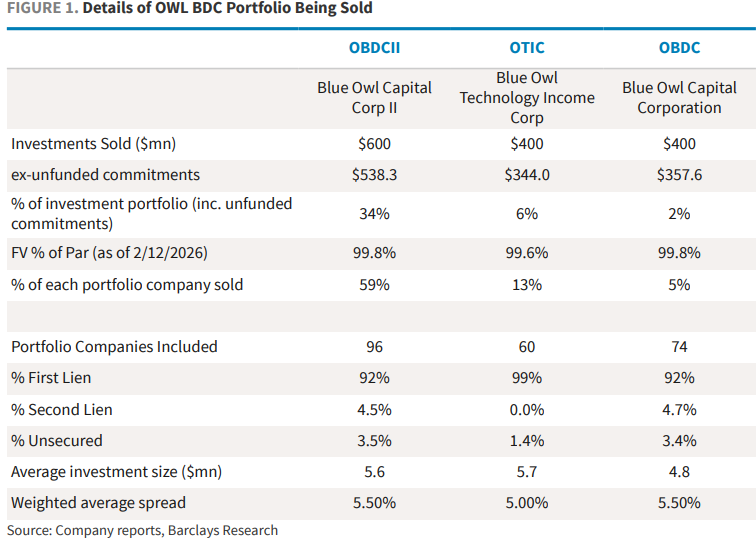
On February 18, Blue Owl, a global leading alternative asset management company, announced that its retail private credit vehicle OBDCII will permanently terminate its quarterly redemption arrangement, and instead return capital to investors in installments via loan repayments, asset sales, and special dividends. At the same time, in order to provide investors with the promised liquidity and to repay debt, Blue Owl announced the combined sale of approximately $1.4 billion in direct loan assets across three BDC vehicles (OBDCII, the listed BDC fund OBDC, and the technology income fund OTIC), with about $600 million of the sales coming from OBDCII—accounting for roughly 34% of its investment portfolio.
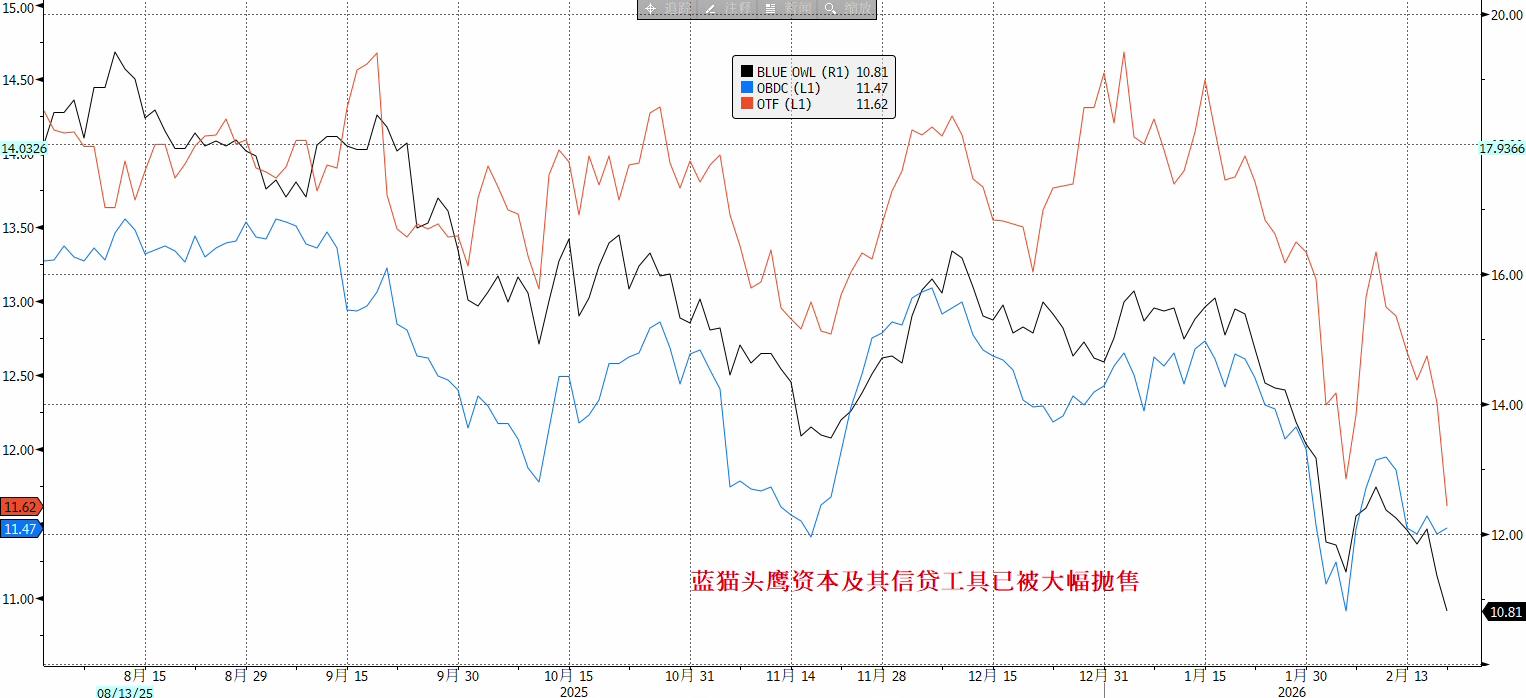
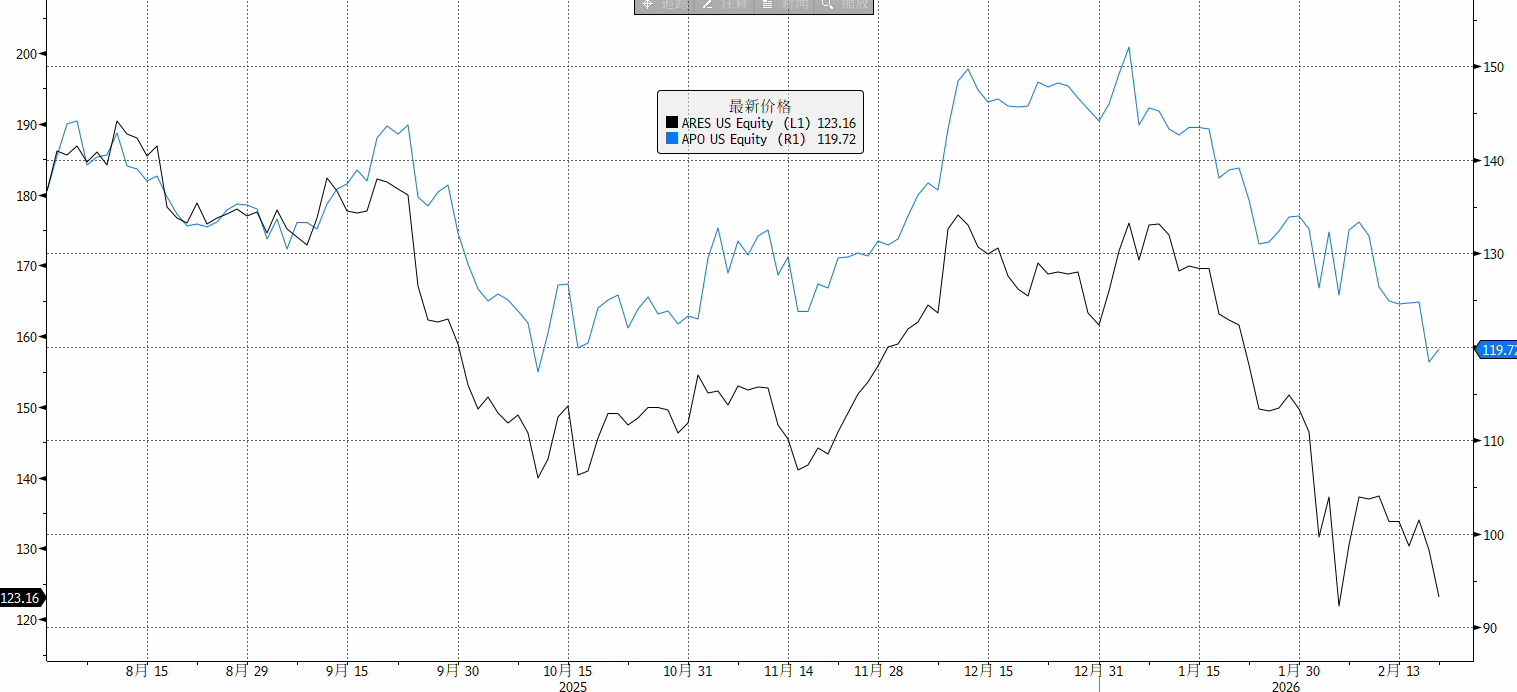
The market reacted strongly to this news. On February 19, Blue Owl's stock price dropped nearly 10% intraday, hitting its lowest point in two and a half years, and ultimately closed down 5.9%. Panic quickly spread across the entire alternative asset management sector, with peers such as Ares, Apollo, Blackstone, and KKR generally falling by 3%-6%; European firms CVC and Partners Group also declined.
Even more shocking, on February 21, hedge fund Saba proposed to acquire Blue Owl-related BDC shares at a 20%-35% discount to the latest NAV, publicly challenging the fairness of the fund's reported valuations. Although the offer is not mandatory, its symbolic significance lies in this: there is now a significant gap between the liquidity price offered by the secondary market and the NAV disclosed by the managers. Meanwhile, structured notes linked to Blue Owl plummeted in price, with one note issued by Citigroup falling below 50% of par value.
Overall, the Blue Owl incident is by no means a mere liquidity management failure of a single company. It has directly burst the illusion of semi-liquid products in the $3 trillion private credit market in recent years. This event may become the "canary in the coal mine" moment for private credit, potentially a replay of the August 2007 BNP Paribas fund freeze incident—a prelude to the onset of the financial crisis.
Trust Crisis in the Semi-Liquid Product Model
The Blue Owl incident touches upon the most vulnerable link in private credit: the sustainability of the semi-liquid product model. These products promise regular redemptions (such as quarterly) to retail investors, while the underlying assets are non-public loans with terms of 5-10 years. The core problem lies in:
Disclaimer: The content of this article solely reflects the author's opinion and does not represent the platform in any capacity. This article is not intended to serve as a reference for making investment decisions.
You may also like
Equity Futures Largely Steady Pre-Bell; Oil Falls Amid Growing Optimism for Middle East Resolution
Valuation drops to a ten-year low! Jensen Huang calls Nvidia the "world's first growth-value stock", but investors don't seem convinced
Nvidia's price-to-earnings ratio has dropped below 17 times, which is only about half of its projected 2025 level. Although revenue and net profit for fiscal year 2027 are expected to grow by 90% and 99% respectively, the company's stock has risen only about 20% this year, significantly lagging behind the Philadelphia Semiconductor Index. Meanwhile, gross margin is expected to decline from 75% in the second quarter to below 72% in the fourth quarter. Rising memory costs and continued pressure from customers developing their own chips, as well as uncertainty over future AI capital expenditures, have become key factors for the market to reassess Nvidia's valuation.
Bitcoin Hashrate Stalls at 934 EH/s — Miners Are Leaving for AI
XRP price prediction splits traders as $27 black swan target ignites debate

Crypto prices
More


