
Trump-Linked USD1 Deflects ‘Coordinated Attack’ as World Liberty Financial Fights to Hold the Peg

World Liberty Financial (WLFI-USD), the crypto protocol famously connected to the Trump family, is currently under fire. On Monday afternoon, the project’s stablecoin, USD1, experienced a rare moment of weakness when its price wobbled away from its $1 anchor. The token dipped to a low of $0.994, a 0.6% drop, triggering immediate alarms across the crypto market. Developers were quick to label the volatility as a “coordinated attack” designed to manufacture panic and profit from the chaos.
World Liberty Financial Blasts the Coordinated Attack
The team behind the protocol gave a direct explanation for why the price slipped. According to a statement released on X, the attack was a multi-front assault involving hacked cofounder accounts, paid influencers spreading “FUD” (fear, uncertainty, and doubt), and traders opening massive short positions against the WLFI token.
The project’s leadership team addressed the situation head-on, stating: “It didn’t work.”
They credited the token’s survival to a rock-solid redemption feature. This mechanism allows any holder to swap their USD1 directly for a physical U.S. dollar, which acted as a safety net that prevented a total collapse. As of Monday evening, the token has mostly recovered, trading much closer to home at $0.998.
BitGo Reserves Provide a $5 Billion Shield
Despite the drama, USD1 remains one of the heavyweight players in the stablecoin world with a $5 billion market cap. The token is issued in partnership with BitGo, a major crypto custodian. To keep the price stable, BitGo maintains a reserve of short-term U.S. Treasuries and cash deposits that back every single token 1:1.
While USD1 is still smaller than giants like Tether (USDT) or Circle (USDC), this stress test proved that its internal systems are working. Developers emphasized that having direct convertibility, the ability to get real money out at any time, is the only thing that keeps a stablecoin resilient when the market turns toxic.
Key Takeaway
Essentially, someone tried to rob the bank, but the vault was too heavy to move. The attackers hoped to start a bank run where everyone sold their tokens at once; they tried to achieve this through hacking accounts and paying people to talk trash about USD1. However, most stayed calm because investors knew they could simply trade their tokens for real dollars at the source. While a 0.6% dip is a wobble in the crypto world, the fact that the coin bounced back shows that even in a digital war, having real cash in the bank is still the best defense.
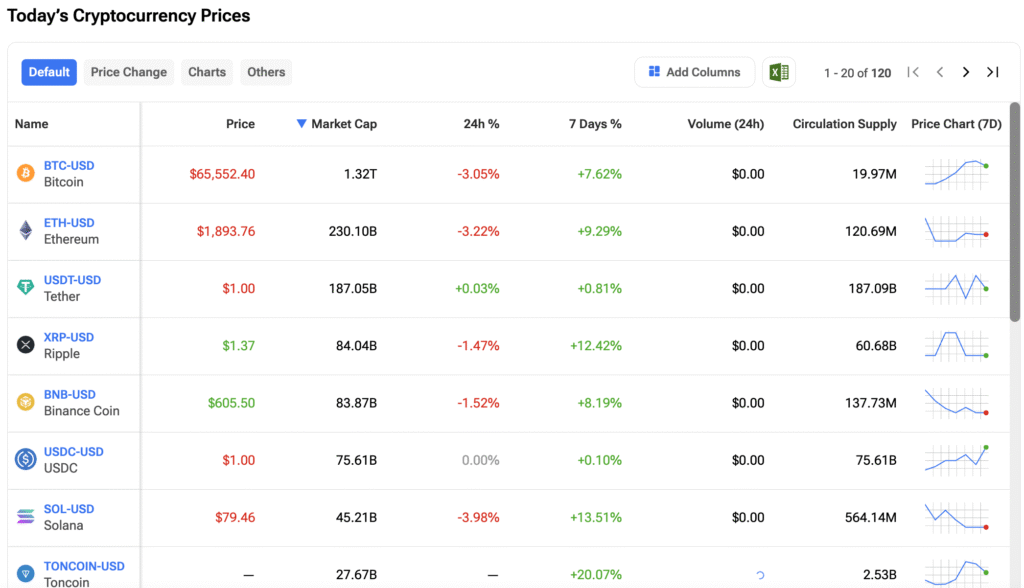
To get a detailed look at the wider digital asset sector including tokens like WLFI, we used the TipRanks Cryptocurrency to evaluate these prominent cryptos side-by-side.
Copyright © 2026, TipRanks. All rights reserved.
Disclaimer: The content of this article solely reflects the author's opinion and does not represent the platform in any capacity. This article is not intended to serve as a reference for making investment decisions.
You may also like
Aster Launches TMX Perpetual Futures With $50K ASTER Trading Rewards

The "cruel summer" prediction takes a sharp turn! Citadel Securities turns bullish on US Treasuries, betting on a decline in long-term yields
Frank Flett now believes the risk balance has shifted in favor of a US Treasury rebound. He pointed out that short positions in the bond market are overly crowded, while inflation data is improving.

Morgan Stanley Initiates Nvidia Credit Rating: Financial Strength Translates into AI Financing Instruments, Debt May Reach $200 Billion
Nvidia is quietly transforming its $500 billion-scale AI infrastructure financing ambitions into hidden risk exposures on its balance sheet. According to the latest report from Morgan Stanley, if all contingent liabilities such as lease guarantees, residual value support, and revenue sharing are fully included, Nvidia's total credit exposure could reach $200 billion by the end of 2028—of which up to $170 billion remains off-balance-sheet. This reveals persistent transparency gaps and tail risks.
Crypto prices
More


