
Zhimin Qian, Chinese Businesswoman, Convicted in UK’s Largest Bitcoin Fraud; Faces Jail and Asset Seizures

Quick Breakdown
- Standard Chartered anchors its digital finance strategy in Hong Kong to leverage fintech-friendly regulations.
- The bank explores blockchain, tokenized deposits, and stablecoins through HKMA sandboxes.
- CEO Bill Winters emphasizes growth via technology-driven efficiency and enhanced customer service.
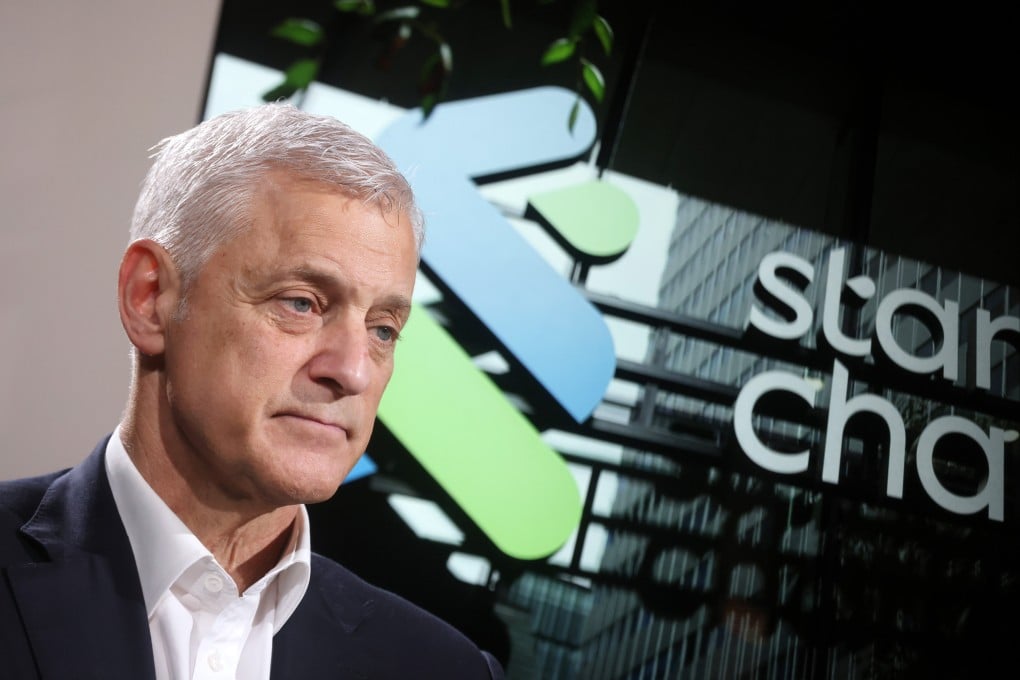
Standard Chartered is placing Hong Kong at the centre of its digital finance ambitions, leveraging the city’s blockchain-friendly regulations to advance crypto and tokenized financial services, CEO Bill Winters said in a recent interview with South China Morning Post.
 Source
:
SCMP
Standard Chartered taps Hong Kong for digital finance expansion
Winters highlighted Hong Kong’s regulatory framework as a key driver for the bank’s digital initiatives, citing pilot programs and sandboxes launched by the Hong Kong Monetary Authority (HKMA). These initiatives, including experiments with tokenized deposits, wholesale central bank digital currency (CBDC), and stablecoins, allow banks and fintechs to adopt blockchain technology in a controlled and secure environment.
“We’re going to remain ahead on digital technology, and what we lose in margin, we’re going to make up in volume by providing a better service to our customers,”
Winters said, emphasizing the bank’s commitment to integrating blockchain solutions into its operations.
Hong Kong as a crypto and tokenization hub
The HKMA recently unveiled a five-year fintech strategy aimed at building a robust financial tokenization ecosystem. As one of the city’s note-issuing banks, Standard Chartered has participated in these sandboxes, testing new blockchain applications to reduce costs and enhance efficiency in the financial services sector.
Winters noted that Hong Kong’s progressive regulatory environment enables experimentation with digital assets without compromising safety, providing a blueprint for large-scale adoption of blockchain solutions across banking operations. The strategy aligns with global trends in tokenized finance, including digital assets, programmable money, and stablecoin infrastructure.
By anchoring its digital finance initiatives in Hong Kong, Standard Chartered aims to strengthen its presence in Asia’s fintech ecosystem, positioning itself at the forefront of blockchain-driven financial services. The bank sees potential in combining high-volume transaction capabilities with blockchain efficiency to offer clients innovative, cost-effective solutions as they navigate the emerging digital-asset landscape.
By centring its digital finance initiatives in Hong Kong, Standard Chartered aims to strengthen its foothold in Asia’s fintech ecosystem, positioning itself at the forefront of blockchain-driven financial services. The bank sees the potential to combine high-volume transaction capabilities with blockchain efficiency, offering clients innovative and cost-effective solutions while navigating the emerging digital asset landscape.
Disclaimer: The content of this article solely reflects the author's opinion and does not represent the platform in any capacity. This article is not intended to serve as a reference for making investment decisions.
You may also like
U.S. Senate Democratic leader election to be voted on December 1, impacting AI regulation and tariff agenda
The election for the Democratic leader in the U.S. Senate will be held by secret ballot on December 1, and the winner must reach the threshold of 28 votes.

From Earning 20% Annually to Going Negative in a Single Month, Wall Street’s Favorite Arbitrage Trade “Fails”
After rising for six consecutive months, the Bloomberg FX Carry Index turned negative for the first time in November, falling by 0.9%. Cooling enthusiasm for AI has increased market volatility, and Brazil’s election led to an 8% single-day plunge in the real, nearly wiping out the carry trade's 18% annual return overnight. Industry giants such as Goldman Sachs and Citigroup have issued warnings: “The era of mindless long positions is over.” Although capital has not withdrawn, trading thresholds have surged, requiring defensive hedging and a shift toward selective strategies.

The global tobacco landscape is about to change! Marlboro's parent company Altria (MO.US) plans an all-cash takeover of Imperial Brands UK, targeting cigarette cash flow.
What Altria values is the overseas cigarette cash flow and the established distribution network. Since spinning off Philip Morris International in 2008, its cigarette business has been focused on the United States. Altria estimates that after adjusting for channel inventory changes, the U.S. cigarette industry’s sales volume declined by about 5% year-over-year in the third quarter. Acquiring Imperial Brands’ international business would allow Altria to instantly gain brands, retail channels, and operational scale in markets such as Europe, thereby reducing its dependence on the single U.S. market.

Crypto prices
More


