
Claiming airdrops requires "buying tokens" first? Camp Network sparks criticism across the entire network

The total number of wallets participating in the testnet interactions reached as high as 6 million, but only 40,000 addresses qualified for the airdrop, meaning almost everyone was excluded.
Original Title: "A New Height of 'Being Milked Back': Why Did the Camp Network Airdrop Draw So Much Criticism Across the Web?"
Original Author: Asher, Odaily
Camp Network is arguably the most criticized project among recent "airdrop farming" projects for "milking back" users.
Last night, Camp Network, an L1 project that raised up to 30 millions USD and focuses on solving AI copyright chaos, officially launched its mainnet, while also opening token trading and airdrop claiming.
Originally, many "airdrop farmers" participated in various ecosystem projects on the testnet with the mindset of "after months of hard work, at least I can get a pork knuckle meal," diligently accumulating "matches." However, the outcome was a plot twist—almost everyone got milked back.
Below, Odaily will walk you through why, from the moment the airdrop eligibility check began, Camp Network became the target of criticism within the "airdrop farming" community.
Most Users Ineligible for Airdrop, Eligible Users Required to Pay $10 for Registration
Complaint 1: Large Number of Early Users Ineligible for Airdrop
On August 22, Camp Network announced the launch of airdrop eligibility checking. According to community feedback, unless users had previously minted NFTs or invited enough friends, the vast majority of early users who worked hard to interact with Camp Network's testnet tasks were not eligible for the airdrop.
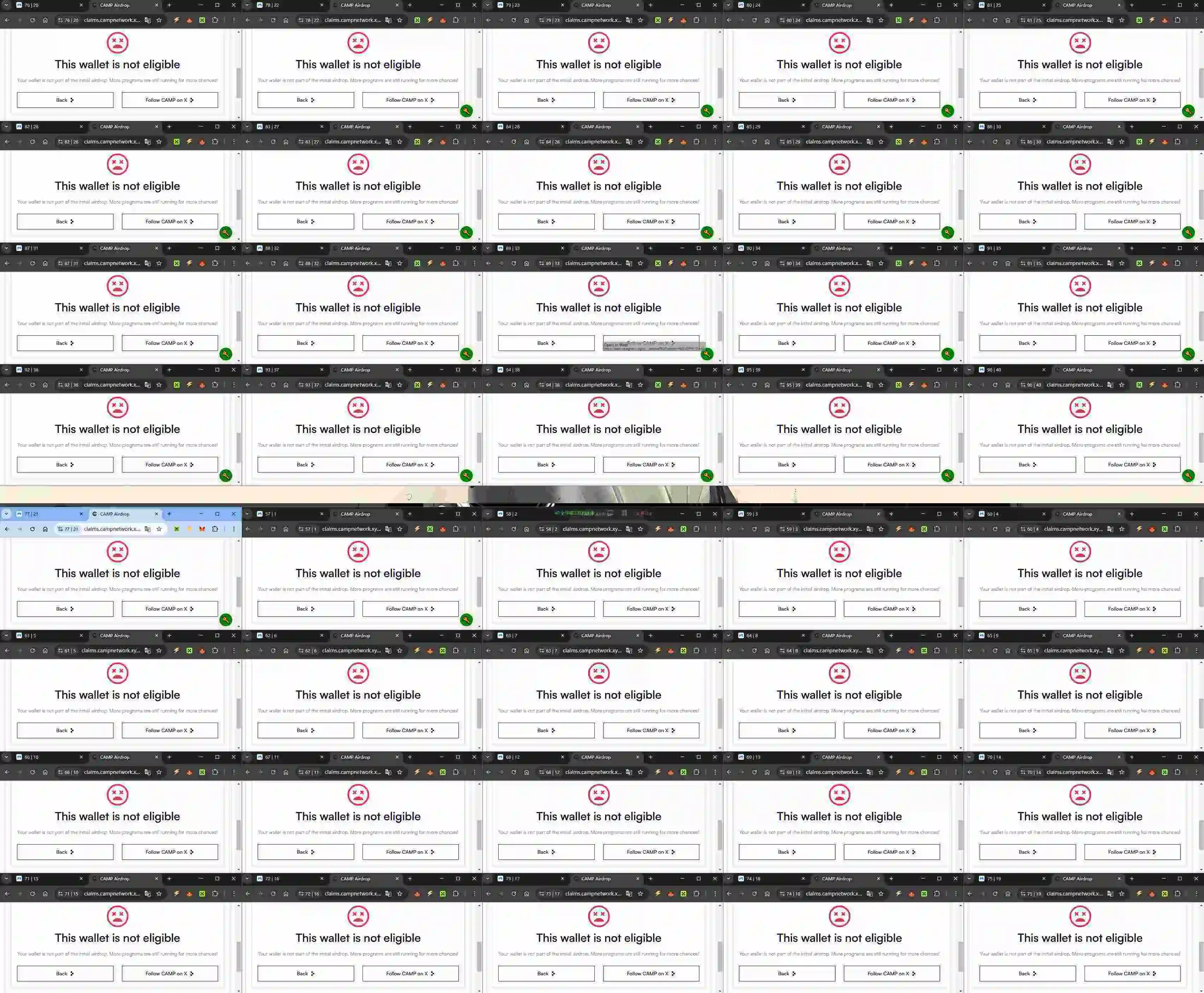
A "farming" user finds none of their Camp Network testnet accounts eligible for the airdrop
According to community statistics, the total number of wallets interacting with the Camp Network testnet reached 6 million, with about 280,000 active wallets in the Summit Series, but only 40,000 addresses qualified for the airdrop.
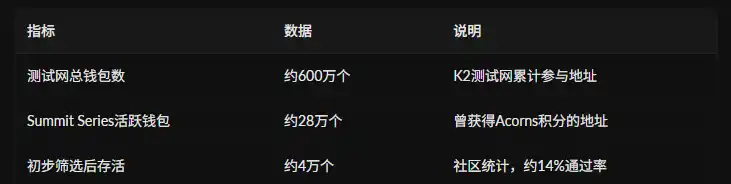
Community statistics on Camp Network testnet addresses
Complaint 2: Eligible Users Must Pay $10 to Register for the Airdrop
A large number of "airdrop farmers" were already disgruntled after being "milked back," causing widespread discontent in the community. Unexpectedly, even the few users who qualified for the airdrop were required by the project team to pay an extra fee—specifically, 0.0025 ETH (about $10) as a registration fee to confirm their claim. This made Camp Network the first mainstream L1 airdrop project to require users to pay to participate.
However, as negative sentiment quickly spread in the community, Camp Network urgently announced later that afternoon that it would cancel the airdrop registration fee and promised a full refund of the 0.0025 ETH to users who had already paid.
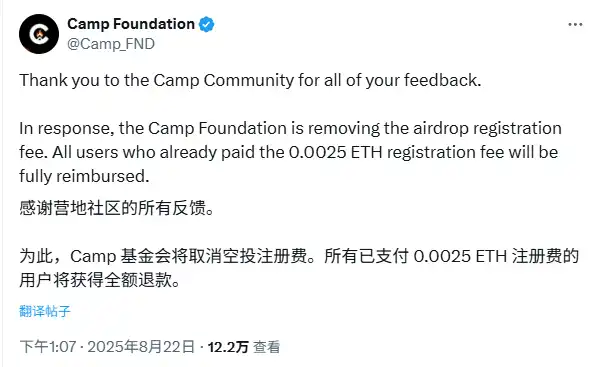
Under community pressure, the official team canceled the airdrop registration fee
Complaint 3: Strict KYC Requirements
Even if you were lucky enough to qualify for the airdrop, you might not be able to claim it due to strict KYC requirements. According to feedback from eligible users, the strict KYC identity verification was even more frustrating than the $10 registration fee. The process required camera verification, and the KYC provider blocked VPNs and certain countries, excluding a large number of international users.
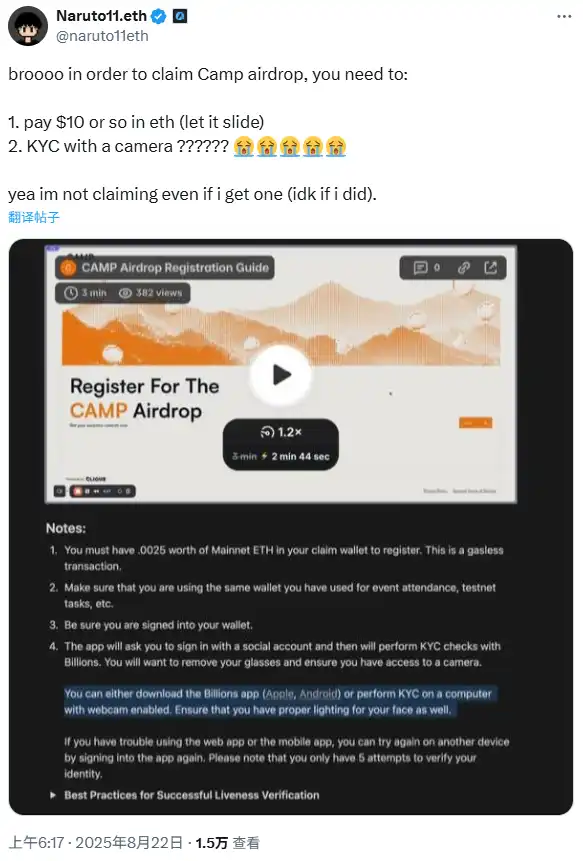
Community members complain about the strict KYC requirements
Only 20% Unlocked at TGE, Claiming Requires Buying Tokens on Exchanges to Pay Gas Fees
Even more frustrating than the exclusion of many early users was the requirement to buy tokens on an exchange to pay gas fees for claiming the airdrop during TGE. As shown below, this early user received 100 CAMP tokens, but only 20% (i.e., 20 CAMP) could be unlocked at launch, currently priced at $0.09 each, worth less than $2.
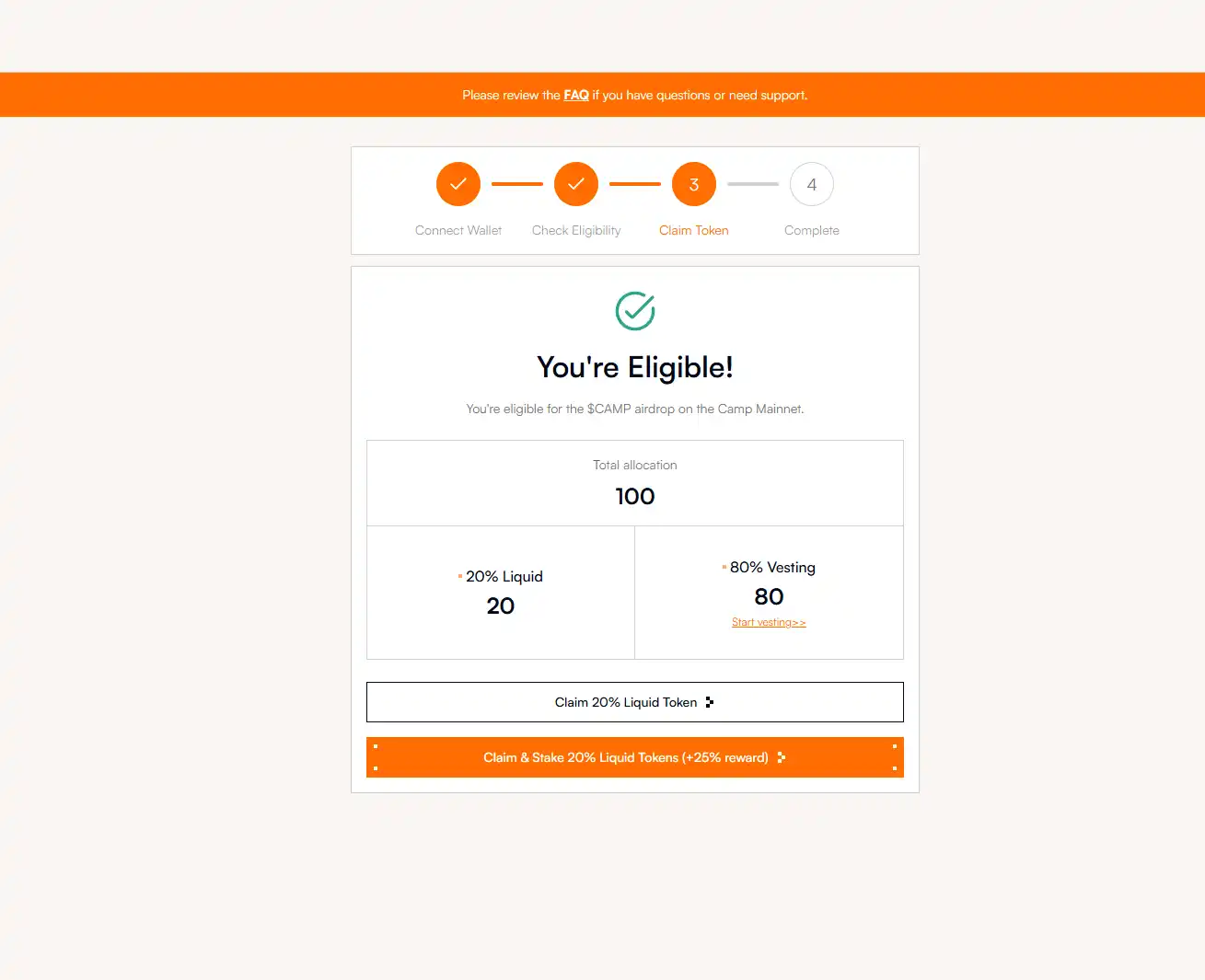
CAMP token airdrop claiming interface
To Claim Tokens, Users Must First Buy Tokens on Exchanges to Pay Airdrop Gas Fees, but Withdrawals Are Not Yet Available
Even more absurd, to claim the airdrop, users needed to buy CAMP tokens on an exchange to pay Camp Network mainnet gas fees, but some exchanges listing CAMP still do not allow withdrawals (as shown below for Bitget exchange).
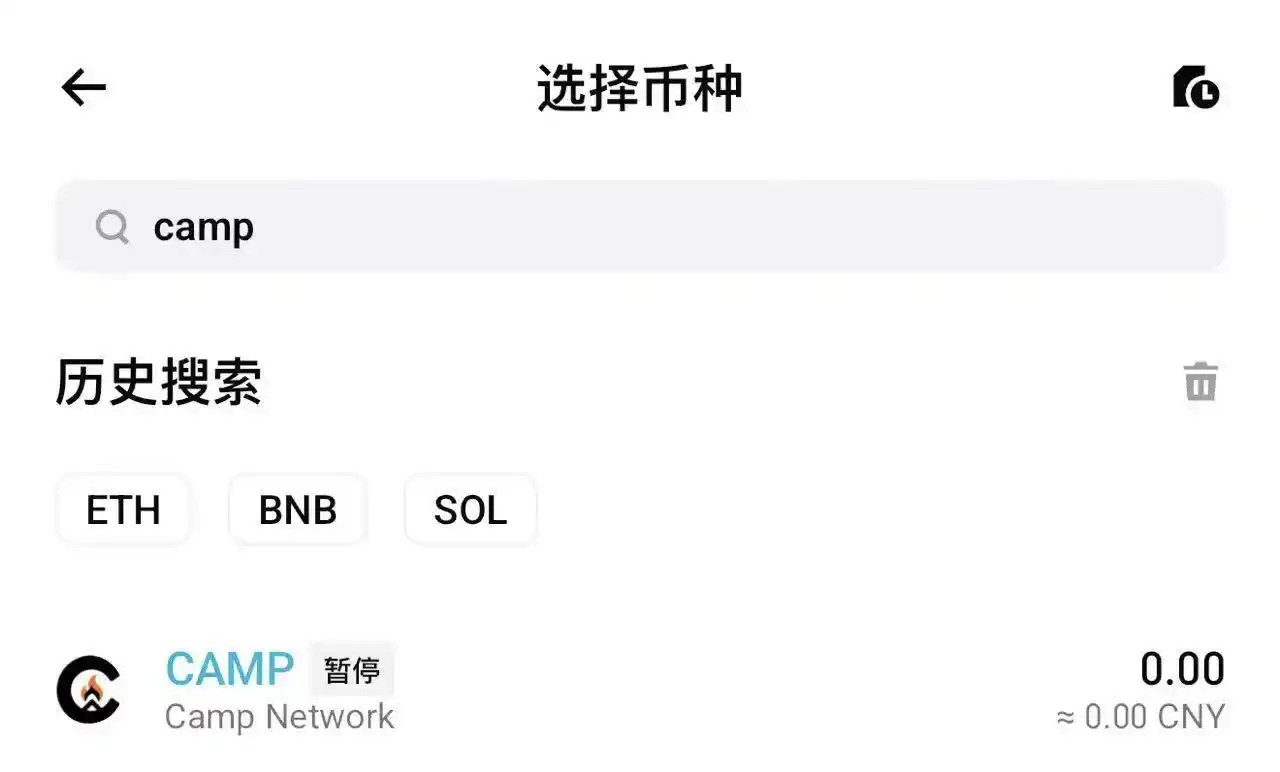
CAMP withdrawals are still unavailable on Bitget trading platform
It is clear that the Camp Network team has set up multiple barriers in the airdrop design, making it difficult for most early users to claim their tokens smoothly. Such a highly controlled token mechanism inherently carries great uncertainty and risk. Whether you choose to go long or short, everyone should think twice and avoid acting impulsively due to emotions or short-term market movements.
Disclaimer: The content of this article solely reflects the author's opinion and does not represent the platform in any capacity. This article is not intended to serve as a reference for making investment decisions.
You may also like
U.S. Senate Democratic leader election to be voted on December 1, impacting AI regulation and tariff agenda
The election for the Democratic leader in the U.S. Senate will be held by secret ballot on December 1, and the winner must reach the threshold of 28 votes.

From Earning 20% Annually to Going Negative in a Single Month, Wall Street’s Favorite Arbitrage Trade “Fails”
After rising for six consecutive months, the Bloomberg FX Carry Index turned negative for the first time in November, falling by 0.9%. Cooling enthusiasm for AI has increased market volatility, and Brazil’s election led to an 8% single-day plunge in the real, nearly wiping out the carry trade's 18% annual return overnight. Industry giants such as Goldman Sachs and Citigroup have issued warnings: “The era of mindless long positions is over.” Although capital has not withdrawn, trading thresholds have surged, requiring defensive hedging and a shift toward selective strategies.

The global tobacco landscape is about to change! Marlboro's parent company Altria (MO.US) plans an all-cash takeover of Imperial Brands UK, targeting cigarette cash flow.
What Altria values is the overseas cigarette cash flow and the established distribution network. Since spinning off Philip Morris International in 2008, its cigarette business has been focused on the United States. Altria estimates that after adjusting for channel inventory changes, the U.S. cigarette industry’s sales volume declined by about 5% year-over-year in the third quarter. Acquiring Imperial Brands’ international business would allow Altria to instantly gain brands, retail channels, and operational scale in markets such as Europe, thereby reducing its dependence on the single U.S. market.

Crypto prices
More


