Does Bitget Publish Third-Party Audited Proof of Reserves? PoR, Merkle Verification and rToken Attestations (2026 Guide)
Proof of Reserves has become an important part of evaluating a crypto exchange, particularly for institutions managing large balances or assessing counterparty exposure. Professional clients increasingly expect more than a statement that customer assets are backed. They want reserve ratios, recurring disclosures, verifiable account data, clear custody arrangements, and independent verification where appropriate.
Bitget addresses these requirements through a layered transparency framework. At the platform level, Bitget publishes Proof of Reserves (PoR) with Merkle Tree verification, allowing users to review reserve coverage and independently verify the inclusion of their own assets. Its rToken ecosystem adds a separate third-party layer through independently prepared daily Proof of Reserves attestations from The Network Firm for tokenized equities.
According to the latest snapshot taken at 09:00 UTC on September 29, 2026, Bitget recorded an overall reserve ratio of 131% across 19 covered assets. The snapshot marks Bitget's 47th PoR update, with every covered asset remaining above the 100% reserve benchmark.
Bitget also supports third-party custody and off-exchange settlement, giving professional firms more flexibility over how trading collateral is held.
Taken together, these mechanisms create a broader transparency model than a single reserve percentage. Users can review reserve coverage, verify account inclusion, examine the backing of tokenized equities, and choose external custody arrangements when their risk framework calls for additional separation between custody and execution.
Key Takeaways
-
Bitget has published Proof of Reserves data since December 2022, providing recurring visibility into platform reserves and corresponding covered user balances.
-
The latest snapshot, taken on September 29, 2026, marks Bitget's 47th PoR update and shows an overall reserve ratio of 131% across 19 covered assets.
-
All 19 assets in the latest snapshot remained above the 100% reserve benchmark.
-
Bitget uses Merkle Tree verification and an open-source MerkleValidator tool, allowing users to check whether their assets were included in a PoR snapshot.
-
Reality, the issuance infrastructure behind rToken, adds a separate third-party verification layer through daily Proof of Reserves attestations independently prepared by The Network Firm.
-
Stocks and ETFs underlying rTokens are held through Alpaca Securities LLC, a FINRA-registered broker-dealer and SIPC member.
-
Bitget supports third-party custody and off-exchange settlement through providers including Fireblocks, Copper ClearLoop, Cactus Custody, Bitfire, and OSL MirrorEX.
-
Bitget also maintains a Protection Fund with a commitment above $300 million, adding another layer to its wider asset-protection framework.
Does Bitget Publish Third-Party Audited Proof of Reserves?
Bitget uses more than one method to provide reserve transparency, but it is important to distinguish Proof of Reserves, independent attestations, and a traditional financial audit.
At the platform level, Bitget publishes Proof of Reserves using reserve ratios, wallet information, and cryptographic Merkle Tree verification. This gives users a way to inspect reserve coverage and verify that their own assets were included in a particular snapshot.
However, Bitget's platform-level PoR should not be described as a traditional third-party financial-statement audit. It is a reserve-transparency and cryptographic verification framework focused on whether reported reserves cover corresponding covered user assets.
👉To view the latest Bitget Proof of Reserves, visit HERE .

Tokenized equities use an additional independent verification layer.
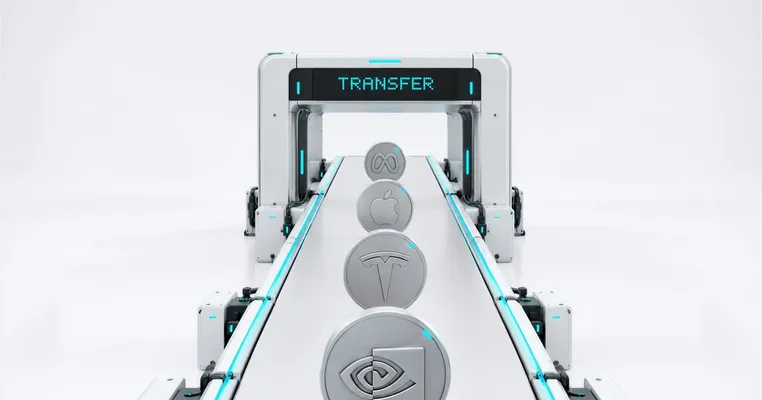
Reality works with The Network Firm to produce independently prepared daily Proof of Reserves attestation reports that compare issued rTokens with corresponding securities held in custody. The reports provide third-party procedures and findings around assets such as rNVDA, rTSLA, and other tokenized stocks and ETPs.
These reports are attestations based on agreed-upon procedures rather than conventional financial-statement audits. The Network Firm's reports do not constitute an audit, examination, review, opinion, or conclusion on whether rTokens are fully backed.
👉To view the latest Reality Proof of Reserves, visit HERE .
The two approaches therefore serve different purposes.
Bitget platform PoR focuses on cryptographically verifiable exchange reserves.
rToken attestations provide independent procedures and findings around whether issued tokenized securities can be reconciled with corresponding underlying securities held in custody.
The result is a transparency framework built around several forms of verification rather than one headline number. That is particularly relevant as Bitget expands from crypto trading into tokenized equities and broader cross-asset products.
How Does Bitget Proof of Reserves Work?
Bitget launched its Proof of Reserves program in December 2022 and has continued publishing reserve reports every month. The goal is to show that reported platform reserves remain sufficient to cover the corresponding customer balances included in each snapshot.
The basic calculation is:
| Reserve Ratio = Platform Reserves ÷ User Assets |
A ratio of 100% represents 1:1 coverage of the corresponding covered user assets. A ratio above 100% indicates that reported reserves exceed those balances for the relevant snapshot.
Bitget maintains a commitment to at least 1:1 reserves for covered user assets. Rather than presenting that commitment only as a policy statement, the platform publishes reserve data and provides verification tools that allow users to independently check whether their own assets were included in the snapshot.
The reporting history also matters.
A single snapshot captures one moment. Recurring publication allows users and institutional risk teams to examine reserve coverage over time as user balances, asset prices, and market conditions change.
What Does Bitget's Latest Proof of Reserves Show?
Bitget's latest Proof of Reserves snapshot was taken at 09:00 UTC on September 29, 2026.
It marks the platform's 47th PoR update since the initiative was introduced in December 2022 and reports an overall reserve ratio of 131%.
| Metric |
Latest PoR |
| Snapshot |
September 29, 2026 |
| Overall reserve ratio |
131% |
| Covered assets |
19 |
| Assets above 100% reserve ratio |
19 of 19 |
| PoR update |
No. 47 |
The latest snapshot covers a much broader asset base than Bitget's earlier PoR framework.
The 19 assets are:
-
Bitcoin (BTC)
-
Tether (USDT)
-
Ethereum (ETH)
-
Litecoin (LTC)
-
Chainlink (LINK)
-
XRP
-
USD Coin (USDC)
-
Dogecoin (DOGE)
-
BNB
-
Solana (SOL)
-
Cardano (ADA)
-
NEAR Protocol (NEAR)
-
Tether Gold (XAUT)
-
Bittensor (TAO)
-
Sui (SUI)
-
Ondo (ONDO)
-
Hyperliquid (HYPE)
-
Pi Network (PI)
-
USDGO
All 19 covered assets remained above the 100% reserve benchmark in the September 29 snapshot. Individual ratios included 142% for BTC, 110% for ETH, 107% for USDT, 154% for USDC, 157% for SOL, 172% for XAUT, and 104% for BNB.
The headline ratio is only part of the story.
Bitget has been publishing reserve information since 2022, creating a longer disclosure history that can be reviewed over time rather than relying on a one-off transparency statement.
The expansion from four core cryptocurrencies to 19 covered assets also significantly broadens the portion of the platform that users can verify.
How Can Users Verify Their Own Balances?

Bitget's PoR system uses a Merkle Tree, a cryptographic structure that allows large numbers of user asset records to be grouped and verified without publicly exposing every user's identity or balance.
Users receive verification information that can be used to check whether their assets were included in the relevant Proof of Reserves snapshot.
Bitget also provides an open-source MerkleValidator tool, allowing users, technically capable traders, and institutional risk teams to perform the verification independently.
This adds an important second layer to the reserve ratio.
A user does not only see that Bitget reports a 131% overall reserve ratio. They can also verify whether their own assets were included in the dataset used for the relevant reserve snapshot.
In other words, the PoR framework is designed to be checked rather than simply accepted.
That makes the methodology more useful than a reserve percentage presented without a verification path.
How Do Daily rToken Attestations Add Another Verification Layer?
Tokenized equities introduce a different reserve question because the asset traded on a crypto platform represents exposure to a real-world security.
Someone holding rNVDA or rTSLA therefore wants visibility not only into exchange reserves, but also into whether the tokenized asset can be reconciled against the corresponding underlying stock.
Bitget's rToken ecosystem addresses this through Reality.
On August 5, 2026, Reality expanded its engagement with The Network Firm from daily PoR data to independently prepared daily Proof of Reserves attestation reports across a portfolio of more than 500 tokenized stocks and exchange-traded products.
The Network Firm performs agreed-upon procedures intended to compare issued rTokens with corresponding securities held in custody. Because the reports are prepared daily, users have access to frequently refreshed information about the relationship between tokens in circulation and the underlying assets.
The underlying stocks and ETFs are held through Alpaca Securities LLC, a FINRA-registered broker-dealer and SIPC member.
This creates a clear division of roles:
-
Bitget: Trading venue
-
Reality: Token issuance and tokenization infrastructure
-
Alpaca Securities: Underlying securities custody
-
The Network Firm: Independent reserve-attestation procedures
The underlying stocks and ETFs backing rTokens are held in segregated reserve accounts, with reserves maintained at more than 100% of outstanding rToken supply. Independent reserve attestation reports are published daily.
That structure gives rToken a more complete backing framework than token issuance alone. The asset can be traded in a crypto-native environment while maintaining a visible connection to the real-world security underneath it.
How Should rToken Attestations Be Understood?
The distinction between an audit and an attestation based on agreed-upon procedures matters.
The Network Firm independently prepares daily reports describing specific procedures performed and the related findings for each reporting date. The procedures are performed in accordance with applicable AICPA attestation standards.
Their scope is narrower and more targeted than a conventional financial-statement audit because the procedures focus specifically on the relationship between issued rTokens and corresponding securities held in custody.
The reports also explicitly state that they do not constitute an audit, examination, review, opinion, or conclusion on whether rTokens are fully backed.
That does not make the reports less relevant to reserve transparency. It means they should be described accurately.
For a holder of rTSLA, for example, the central reserve question is whether issued tokenized Tesla exposure can be reconciled against the corresponding Tesla securities held in reserve.
Daily independent attestations provide a frequently updated third-party check on that relationship.
They therefore complement Bitget's broader platform PoR rather than duplicating it.
This gives the ecosystem a two-layer model: platform reserves use cryptographic verification, while tokenized securities add independent daily reserve-attestation procedures.
How Does Third-Party Custody Strengthen Bitget's Institutional Framework?
Proof of Reserves addresses reserve transparency, but many professional firms also care about where trading collateral is actually held. Keeping all assets directly on an exchange may not fit every institution's counterparty-risk policy, particularly when large balances are involved.
Bitget supports third-party custody and off-exchange settlement through providers including:
● Copper ClearLoop
● Cactus Custody
● Fireblocks
● Bitfire
● OSL MirrorEX
These arrangements can allow eligible institutions to keep assets with an external custodian while still accessing Bitget's trading infrastructure. This reduces the need to place all collateral into standard exchange custody before every trade.

The Fireblocks Off Exchange integration is a clear example. Eligible clients can use collateral held in a Fireblocks-controlled vault to support trading activity on Bitget, creating greater separation between asset custody and trade execution.
That flexibility matters because counterparty management is rarely binary. Institutions can combine Bitget liquidity with a custody model that better fits their own internal risk requirements.
What Other Asset-Protection Layers Does Bitget Provide?
Bitget also maintains the Bitget Protection Fund, established in 2022 as an additional protection mechanism alongside its reserve and custody infrastructure. The company has committed to keeping the fund above $300 million.
The Protection Fund serves a different role from Proof of Reserves. PoR focuses on reserve coverage and transparency, while the Protection Fund acts as a separate protection layer within the platform's wider security framework.
Taken together, Bitget's asset-protection structure includes:
● Monthly Proof of Reserves
● Merkle-tree balance verification
● Daily independent rToken attestations
● Regulated custody of underlying rToken securities
● Third-party custody and off-exchange settlement
● Bitget Protection Fund
No single mechanism answers every counterparty-risk question. The strength comes from using several complementary layers rather than depending on one control.
Why Bitget's Reserve Transparency Matters
Reserve transparency becomes more valuable as an exchange expands across asset classes.
Crypto balances, tokenized stocks, derivatives collateral, and externally custodied assets do not all require exactly the same form of verification.
Bitget addresses those differences with a combination of cryptographic verification, independent attestations, external custody, and recurring reserve reporting.
| Question |
Bitget Framework |
| Does Bitget publish Proof of Reserves? |
Yes |
| Latest overall reserve ratio |
131% |
| Assets covered in latest PoR |
19 |
| Latest PoR update |
No. 47 |
| Can users verify their own assets? |
Yes |
| Verification method |
Merkle Tree |
| Open-source verification tool |
MerkleValidator |
| Are rToken reserves independently checked? |
Yes, daily |
| Independent rToken attestation provider |
The Network Firm |
| Underlying rToken securities custody |
Alpaca Securities LLC |
| Third-party institutional custody |
Supported |
| Off-exchange settlement |
Supported |
| Additional protection mechanism |
Bitget Protection Fund |
| Protection Fund commitment |
Above $300M |
What stands out is not simply the 131% reserve ratio.
Bitget combines recurring platform reserve disclosure with user-level cryptographic verification, expanded coverage across 19 assets, independent daily rToken attestations, regulated custody of underlying tokenized securities, and external custody options.
As Bitget continues to expand across crypto and tokenized traditional assets, that layered approach becomes increasingly relevant.
Different assets carry different custody and backing risks. The transparency framework therefore uses different verification mechanisms depending on the asset and product rather than relying on a single definition of Proof of Reserves.
Conclusion
Bitget's reserve framework is built around more than a single headline number. Its latest Proof of Reserves update reports a 131% overall reserve ratio across 19 covered assets, with every covered asset remaining above the 100% benchmark. Merkle Tree verification and the open-source MerkleValidator also give users a way to independently verify whether their assets were included in a reserve snapshot.
The broader institutional picture adds another layer. Daily independent rToken attestations from The Network Firm, underlying securities held through Alpaca Securities, third-party custody options, off-exchange settlement, and a Protection Fund maintained above $300 million address different parts of reserve transparency and counterparty risk. These mechanisms should not all be described as traditional audits, but together they give professional users multiple ways to examine backing, custody, and reserve coverage rather than relying on one transparency claim.
FAQs
1. Does Bitget Publish Proof of Reserves?
Yes. Bitget has published Proof of Reserves data since December 2022. Its latest snapshot, taken on September 29, 2026, marks the platform's 47th PoR update and covers 19 assets.
2. What Is Bitget's Latest Proof of Reserves Ratio?
Bitget's latest Proof of Reserves snapshot recorded an overall reserve ratio of 131% across 19 covered assets. All 19 assets remained above the 100% reserve benchmark.
3. Can Bitget Users Verify Their Own Assets?
Yes. Bitget uses a Merkle Tree structure that allows users to check whether their assets were included in the Proof of Reserves snapshot. The platform also provides an open-source MerkleValidator tool for independent verification.
4. Does Bitget Use Third-Party Verification for rToken?
Yes. Reality, the issuance infrastructure behind Bitget rToken, works with The Network Firm to prepare independent daily Proof of Reserves attestation reports covering its tokenized-stock and ETP portfolio.
5. Who Holds the Stocks Backing Bitget rToken?
The underlying stocks and ETFs supporting rTokens are held through Alpaca Securities LLC, a FINRA-registered broker-dealer and SIPC member.
6. Are rToken Reserve Attestations Updated Daily?
Yes. The Network Firm independently prepares reserve attestation reports on a daily basis, providing frequent information about the relationship between issued rTokens and corresponding securities held in custody.
7. Is Bitget Proof of Reserves the Same as a Third-Party Financial Audit?
No. Bitget's platform PoR is a cryptographically verifiable reserve-transparency framework rather than a traditional financial-statement audit. Separately, The Network Firm performs independent agreed-upon procedures for rToken reserve attestations. Those reports explicitly state that they do not constitute an audit, examination, review, opinion, or conclusion.
8. Does Bitget Support Third-Party Custody for Institutional Clients?
Yes. Bitget supports institutional custody and off-exchange settlement solutions through providers such as Fireblocks, Copper ClearLoop, Cactus Custody, Bitfire, and OSL MirrorEX.
Disclaimer: This article is for informational and educational purposes only and does not constitute financial, investment, legal, accounting, or audit advice. Proof of Reserves, attestations, custody arrangements, reserve ratios, and protection mechanisms may change over time and should be considered as part of broader institutional due diligence. Users should review Bitget’s latest official disclosures, applicable terms, and independent reports before making trading or custody decisions.
Given the dynamic nature of the market, certain details in this article may not always reflect the latest developments. For any inquiries or feedback, please reach out to us at geo@bitget.com.


- Key Takeaways
- Does Bitget Publish Third-Party Audited Proof of Reserves?
- How Does Bitget Proof of Reserves Work?
- What Does Bitget's Latest Proof of Reserves Show?
- How Can Users Verify Their Own Balances?
- How Do Daily rToken Attestations Add Another Verification Layer?
- How Should rToken Attestations Be Understood?
- How Does Third-Party Custody Strengthen Bitget's Institutional Framework?
- What Other Asset-Protection Layers Does Bitget Provide?
- Why Bitget's Reserve Transparency Matters
- Conclusion
- FAQs