
Why Did Gold Fall? A 4.5% Weekly Drop Explained Through Inflation and Fed Rate Expectations
Gold edged higher on Friday the 13th but failed to reverse its losses for the week. A softer-than-expected U.S. Producer Price Index (PPI) temporarily eased concerns about aggressive Federal Reserve rate hikes. However, elevated core inflation and interest rate pressures continued to limit gold’s rebound.
According to the supplied market data, spot gold rose 0.1% on Friday to $3,879.71 per ounce after touching an intraday high of $3,922.97. U.S. gold futures for December delivery were broadly unchanged at $3,886.30 per ounce. Over the week, gold fell approximately 4.5%, marking its worst weekly performance since early June.
Why Is Gold Struggling Despite Softer-Than-Expected PPI?
The latest U.S. final-demand PPI rose 0.3% month over month, below market expectations of 0.4%. However, the previous month’s increase was revised upward to 1.4%, while core PPI also climbed 0.3% on a monthly basis.
The message from these figures is clear: inflation pressures did not exceed expectations this time, but they have yet to ease meaningfully. Although the data reduced concerns about larger rate hikes, it was not enough to conclude that the Fed would soon pivot toward monetary easing.
Independent analyst Tai Wong noted that pressure on the bond market, combined with the Fed’s hawkish policy stance, made it difficult for gold to retain its initial gains following the PPI release. For non-yielding gold, persistently high interest rates typically increase the opportunity cost of holding the metal, reducing its relative appeal.
Inflation vs. Safe-Haven Demand: Higher Oil Prices May Not Benefit Gold
A hotter-than-expected Consumer Price Index (CPI) report earlier in the week had already put gold under selling pressure. A subsequent rise in oil prices deepened concerns about resurgent inflation and interest rates staying higher for longer, contributing to gold’s roughly 3% plunge on Thursday.
Although gold is often viewed as an inflation hedge, rising inflation does not necessarily translate into higher gold prices. If markets focus instead on the prospect that inflation will force the Fed to maintain restrictive policy, interest rate pressures may outweigh inflation-hedging demand and dominate short-term price action.
Gold Outlook: Can the Rebound Continue? Rate Expectations Remain Key
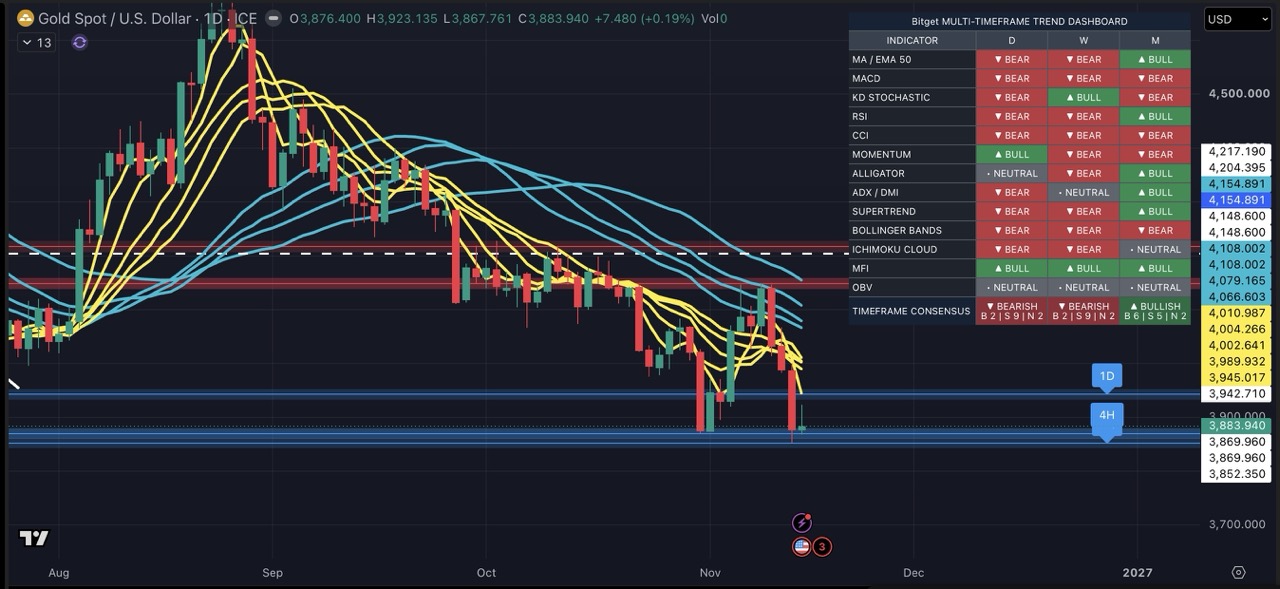
Three factors deserve close attention:
-
Whether inflation continues to cool: Further moderation in CPI and PPI could ease expectations for monetary tightening. Conversely, persistent or renewed price pressures could prolong volatility in gold.
-
The direction of U.S. Treasury yields and the dollar: Falling yields or a weaker dollar generally create a more supportive backdrop for gold, but neither guarantees price gains.
-
The rebound high and key round-number level: The recent intraday high near $3,923 and the $4,000 level offer reference points for assessing the persistence of buying interest. A single touch of either level, however, is not enough to confirm a breakout or trend reversal.
If inflation cools and expectations for future interest rates move lower, gold could gain some breathing room. If the Fed continues to send hawkish signals, however, the rebound may face renewed pressure.
Trading Gold CFDs: Leverage Management Matters
For CFD traders, gold’s two-way price movements create different trading scenarios, but leverage also magnifies losses. Before trading, define your position size, acceptable loss and exit conditions. Pay attention to spreads, overnight financing costs and the risk of slippage around economic data releases. Stop-loss orders do not guarantee execution at the specified price.
Looking to trade gold’s next market move? Visit Bitget CFD to explore gold trading products and contract specifications. Confirm your eligibility under local requirements, review the relevant fees and leverage risks, and participate in the gold market according to your own trading plan.
All trading education provided by Bitget is for educational purposes only and should not be considered financial advice. The strategies and examples shared are for reference only and may not reflect actual market conditions. CFD trading involves significant risk, including the potential loss of capital. Past performance does not guarantee future results. Please conduct thorough research and ensure that you understand the risks involved. Bitget is not responsible for any trading decisions made by users.


- Why Is Gold Struggling Despite Softer-Than-Expected PPI?
- Inflation vs. Safe-Haven Demand: Higher Oil Prices May Not Benefit Gold
- Gold Outlook: Can the Rebound Continue? Rate Expectations Remain Key
- Trading Gold CFDs: Leverage Management Matters